
Wallet organization ideas matter most at the checkout line, when you are digging through a thick stack of cards, old receipts, and coins for the one card you actually need. Most wallets do not get messy all at once. They fill up one card at a time — a loyalty card here, a folded receipt there, a few coins in the zip pocket — until the wallet will not close flat and finding anything takes a full minute.
The fix is not a new wallet, at least not yet. It is one honest empty-out, a simple rule for what goes back in, and a home for the wallet when it is not in your pocket. These wallet organization ideas slim a fat wallet in about ten minutes, and the monthly habit at the end keeps it that way.
Empty It Out First
You cannot organize a wallet while everything is still inside it. Tip the whole thing out onto a table and look at what you actually carry. Most people find at least five cards they have not used in months, three receipts from last season, and a coin pile that belongs in a jar, not a pocket.
Sort what is on the table into three piles. The first pile is the daily group: your ID, your main debit or credit card, and one backup card. The second pile is the sometimes group: a gym card, a work badge, a transit card, or a loyalty card you use every week. The third pile is the bin: expired cards, old gift cards with no balance left, receipts you will never need, and business cards from people you do not remember. Anything with your name and a number on it should be shredded, not tossed straight in the trash.
This empty-out is the part people skip, and it is the part that does all the work. A wallet can only stay slim if it starts empty, so take the ten minutes now and your wallet organization ideas will actually stick instead of sliding back to a stuffed mess by next week.
Sort Your Cards by How Often You Use Them
The mistake most people make is sorting cards by type — all the credit cards together, all the loyalty cards together. That looks tidy, but it is not how you use a wallet. You reach for the same two or three cards almost every day, and the rest sit there for weeks.
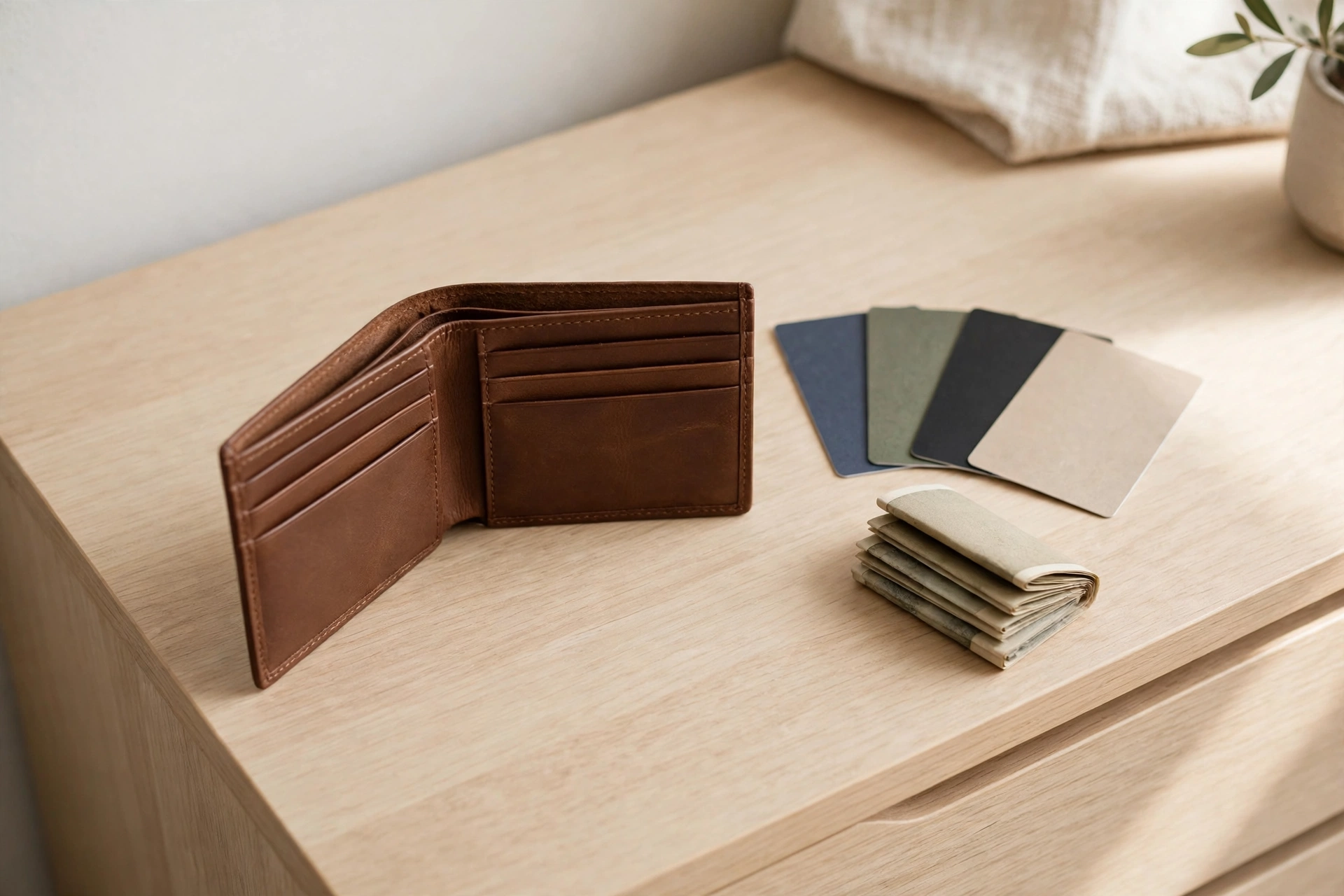
Put your most-used card in the easiest slot, right at the front. Your ID goes next to it, because those two are the pair you reach for together. The backup card goes behind them, and the sometimes cards go in the back slots or in a separate card holder that stays in your bag. The cards you use once a month or less do not belong in your wallet at all — keep them in a drawer at home or in a small card case in your bag.
If two cards look alike, mark one of them. A small colored dot on the corner of the backup card, or a different colored card sleeve, tells your fingers which card is which without you having to pull the stack out and look. Sorting by use instead of by type is one of the simplest wallet organization ideas there is, and it is the one that saves you the most time at the register. Ekster’s wallet organization hacks walk through the same zone method — daily, use-soon, and emergency groups — if you want a second take on the layout.
Give Cash and Coins Their Own Spot
Cash and coins are what make a wallet bulge, because they have no fixed place and end up stuffed wherever there is room. Give them a home and the wallet stays flat.
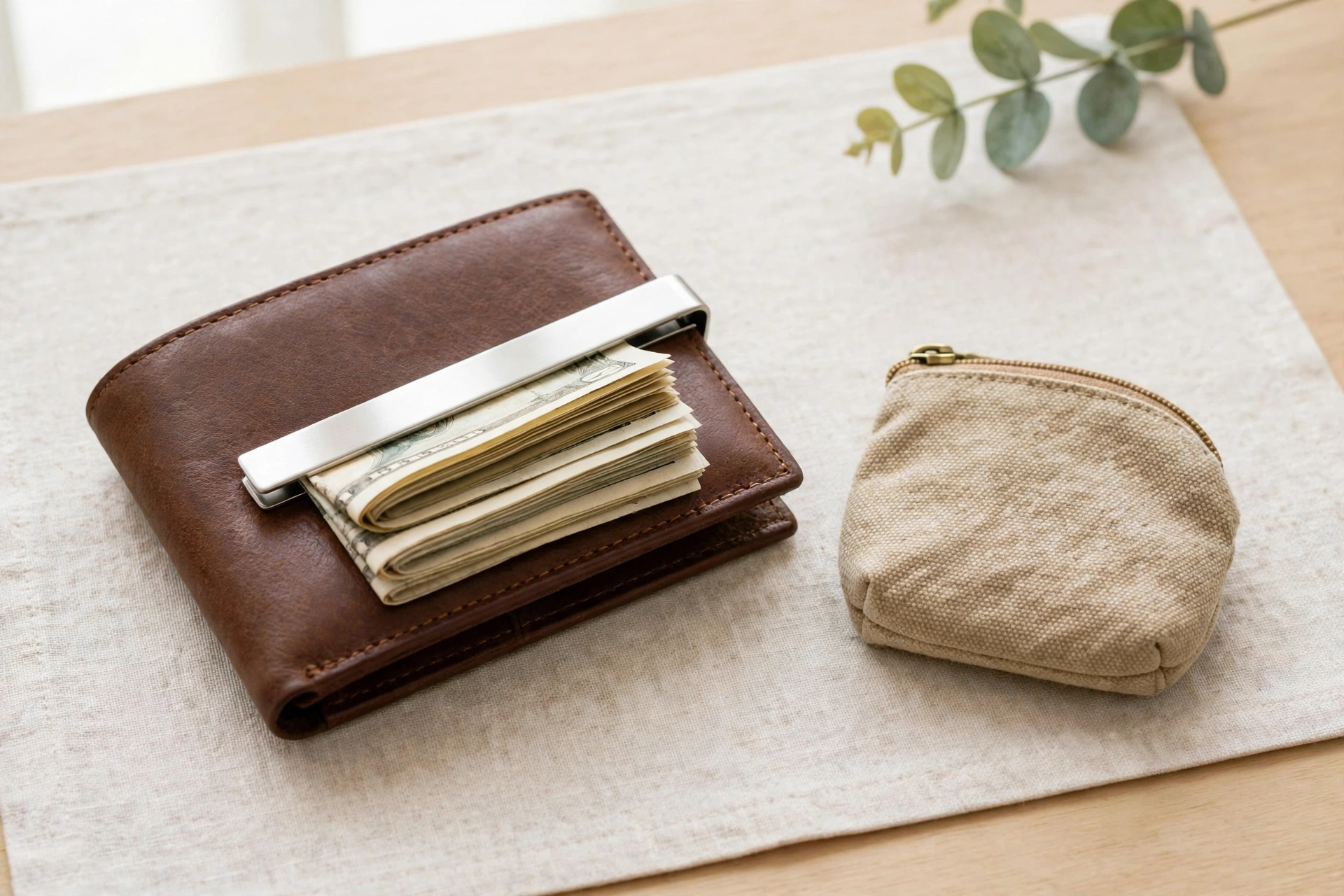
Fold cash the same way every time — in half, largest bills at the back, smallest at the front — and keep it in one slot behind the cards, not scattered through the card slots. A money clip or a thin elastic band around the folded bills works even better in a slim wallet, because it holds the cash flat without adding a whole compartment. Keep one emergency bill folded behind your ID, out of sight but always there.
Coins need their own pocket or they will end up everywhere. If your wallet has a zip coin pocket, use it only for coins and keep the count small — a handful of coins for parking and tips, not a week’s worth of change. If your wallet has no coin pocket, carry a tiny coin pouch in your bag and empty it into a jar at home every night. The rule is simple: coins live in one spot, and that spot gets emptied often. A wallet with a flat cash fold and a small coin pile is a wallet that still closes, and that flat fold is one of the easiest wallet organization ideas to keep up day after day.
Stop Receipts From Taking Over
Receipts are the quiet clutter in every wallet. They slip in with every purchase and pile up fast, and a wad of crumpled paper pushes cards out of line and makes the wallet thick. The fix is a decision at the moment you get one.
Ask yourself one question at the register: do I need this receipt? If the answer is no, bin it right there. If the answer is yes — a return, a warranty, a work expense — fold it flat once and put it in one slot, and deal with it the same night. Snap a photo of receipts you need to keep, then toss the paper. A photo in your phone does the same job as a paper slip, and it does not take up space in your wallet.
Set a hard limit: no more than two receipts in the wallet at any time. When a third one comes in, the oldest one goes — photographed first if it matters, binned if it does not. These wallet organization ideas only work when receipts have a daily exit, because receipts are the one thing that refills a wallet faster than you can clean it out.
Pick the Right Wallet for Your Life
Sometimes the wallet itself is the problem. A big leather wallet with twelve card slots invites you to fill all twelve, and a wallet that is too small for your real life forces you to cram things in. The right wallet fits what you actually carry, with one slot to spare. That fit is the whole point of wallet organization ideas — the system has to match the wallet, not the other way around.
| Wallet type | Best for | Watch out for |
|---|---|---|
| Slim bifold | Daily cards, a little cash | Easy to overstuff if you keep adding cards |
| Minimalist wallet | 4–6 cards and folded cash | No room for coins or many receipts |
| Card holder | Cards only, no cash | Needs a separate cash clip or pouch |
| Zip-around wallet | Lots of cards, coins, and receipts | Gets heavy fast; audit it often |
| Money clip wallet | Cash-first carry, 2–3 cards | Cards can slide out if the clip is loose |
A wallet insert can rescue a wallet you already like. A thin sleeve with two or three extra slots turns a tight bifold into a working system without buying a new wallet, and a slim card sleeve keeps the sometimes cards in your bag instead of in your pocket. If you switch to a minimalist wallet, keep the old wallet in a drawer for a month — if you never reach for it, the smaller wallet is the right one. The small closet organization ideas guide uses the same keep-it-for-a-month test for clothes, and it works for wallets too: if you do not miss the extra slots, you did not need them.
Give Your Wallet a Home at the Door
A wallet that has no home at home ends up on the kitchen counter, the couch, or the bottom of a bag — and then you spend five minutes hunting for it every morning. Give it one spot and the search ends.
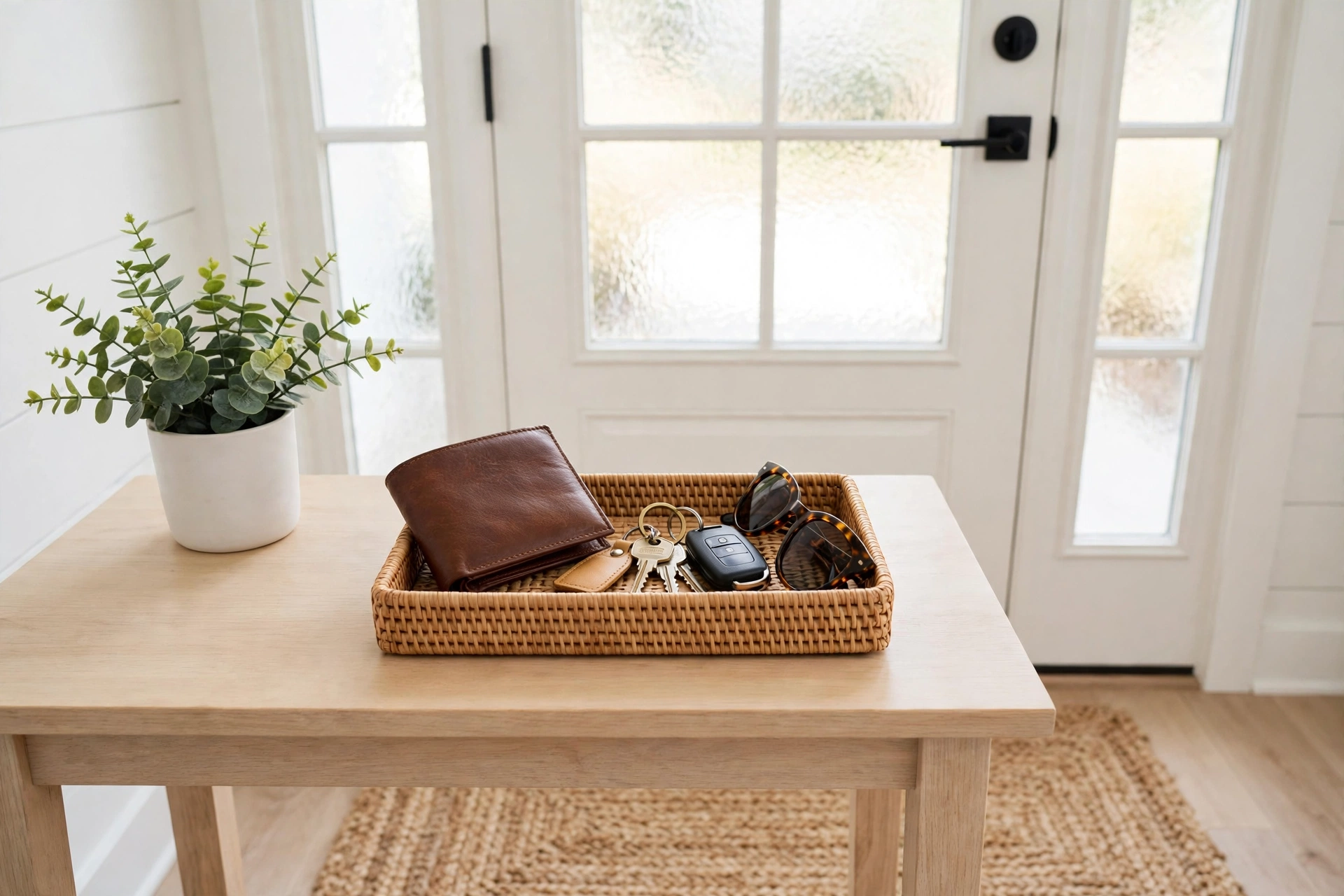
A wallet tray on the entryway table is the simplest version. The wallet goes in the tray the minute you walk in, next to your keys, and it is the first thing you grab on the way out. A small dish, a shallow basket, or a wall hook by the door does the same job. The point is not the tray itself — it is the habit of putting the wallet in the same spot every single time, and that habit is one of the wallet organization ideas that saves you the most time in the morning.
The dresser organization ideas guide uses the same one-spot rule for the top of a dresser, and it works in a bedroom too: one tray, one wallet, one pair of keys, nothing else on the tray. If you live with other people, give each person their own small tray or hook so the wallets do not pile into one heap. A wallet with a home is a wallet you never lose, and it is the last piece of the everyday carry puzzle — the wallet, the keys, and the phone all leave the house together from the same spot.
The 5-Minute Monthly Wallet Audit
A wallet stays organized only if someone checks it now and then. Build a five-minute audit into the first of every month, and the wallet never gets bad enough to need another big purge:
- Empty the wallet onto a table and toss expired cards, dead receipts, and old coupons.
- Count the cards — if the number has crept past six, move the least-used ones to the drawer.
- Fold the cash flat again and empty the coin pocket into the jar.
- Wipe the card slots clean of dust and lint so cards slide in and out easily.
- Check the wallet itself for worn stitching or a stretched slot, and fix or replace it before it fails at the wrong moment.
Tie the audit to something you already do, like your weekly cleaning schedule or your monthly bill-paying day, so it does not depend on remembering. Five minutes a month is all it takes, and it is the habit that turns a one-time cleanup into wallet organization ideas that still work a year from now.
Frequently Asked Questions
How many cards should I carry in my wallet?
Most people need four to six cards: an ID, one main payment card, one backup card, a transit or work badge, and one loyalty card you actually use every week. Anything beyond that should live at home or in a separate card holder in your bag. If your wallet has twelve slots, that is a ceiling, not a target — the slots you leave empty are what keep the wallet slim. That is the core of wallet organization ideas: carry what you use, store the rest.
How do I stop my wallet from getting fat again?
These wallet organization ideas work when you empty the wallet once a month and keep receipts to a two-slip limit. Fold cash the same way every time, keep coins in one small pocket and empty it often, and sort cards by how often you use them instead of by type. The monthly five-minute audit is the habit that stops the slow refill, because it catches the clutter while it is still small.
What is the best way to organize receipts in a wallet?
Decide at the register whether you need the receipt, and bin the ones you do not. For the ones you keep, fold them flat once, keep them in a single slot, and photograph them the same night so the paper can go. Never let more than two paper receipts sit in the wallet at once — the third one in means the oldest one goes out. That daily exit is what makes wallet organization ideas last.
Should I switch to a minimalist wallet?
A minimalist wallet works well if you carry four to six cards and a little folded cash, and you are willing to keep the rest at home. Try it for a month and keep your old wallet in a drawer — if you never reach for the old one, the smaller wallet fits your life. If you carry coins, many receipts, or a dozen cards for work, a slim bifold with a wallet insert will serve you better than a card holder that is too small. Either way, the wallet organization ideas in this guide work the same — sort by use, keep cash flat, and audit once a month.
A Wallet That Works as Hard as You Do
A good wallet does not make you think. You reach in, the right card is right there, the cash is flat, and the wallet closes without a fight. Start tonight: empty the wallet, keep the four to six cards you actually use, give the cash and coins a home, and put the wallet in a tray by the door. One small sort turns a stuffed wallet into a tool that works — and these wallet organization ideas keep it that way with five minutes a month.