
Dresser organization ideas sound simple until you open the top drawer and find a tangle of socks, three phone chargers, and a shirt you forgot you owned. You know the clothes are in there somewhere, but getting dressed still takes ten minutes of digging, and the drawer never quite shuts all the way.
The fix is not a bigger dresser or a shopping trip for fancy organizers. It is a clear job for every drawer, a folding method that lets you see what you own, and a few dividers that keep things from sliding back into a pile. These dresser organization ideas work for a tall six-drawer dresser, a low wide one, or a small kids dresser, and most of them take one afternoon to set up.
Start With an Empty Dresser
Every good dresser reset starts the same way: take everything out. Pull every drawer out of the dresser, lay the clothes on the bed, and wipe the empty dresser drawers clean. It looks worse for about twenty minutes, and that is fine. You cannot organize clothes you cannot see, and a drawer you have not emptied in a year is hiding at least five things you no longer wear.
Sort the pile into three groups: keep, donate, and toss. Keep the clothes that fit, feel good, and got worn in the last few months. Donate the ones in good shape that you keep passing over. Toss the stained, stretched, or single socks with no partner. That honest look is the whole point of dresser organization ideas: a smaller pile is easier to keep tidy than a stuffed one, and every piece you keep should earn its drawer space.
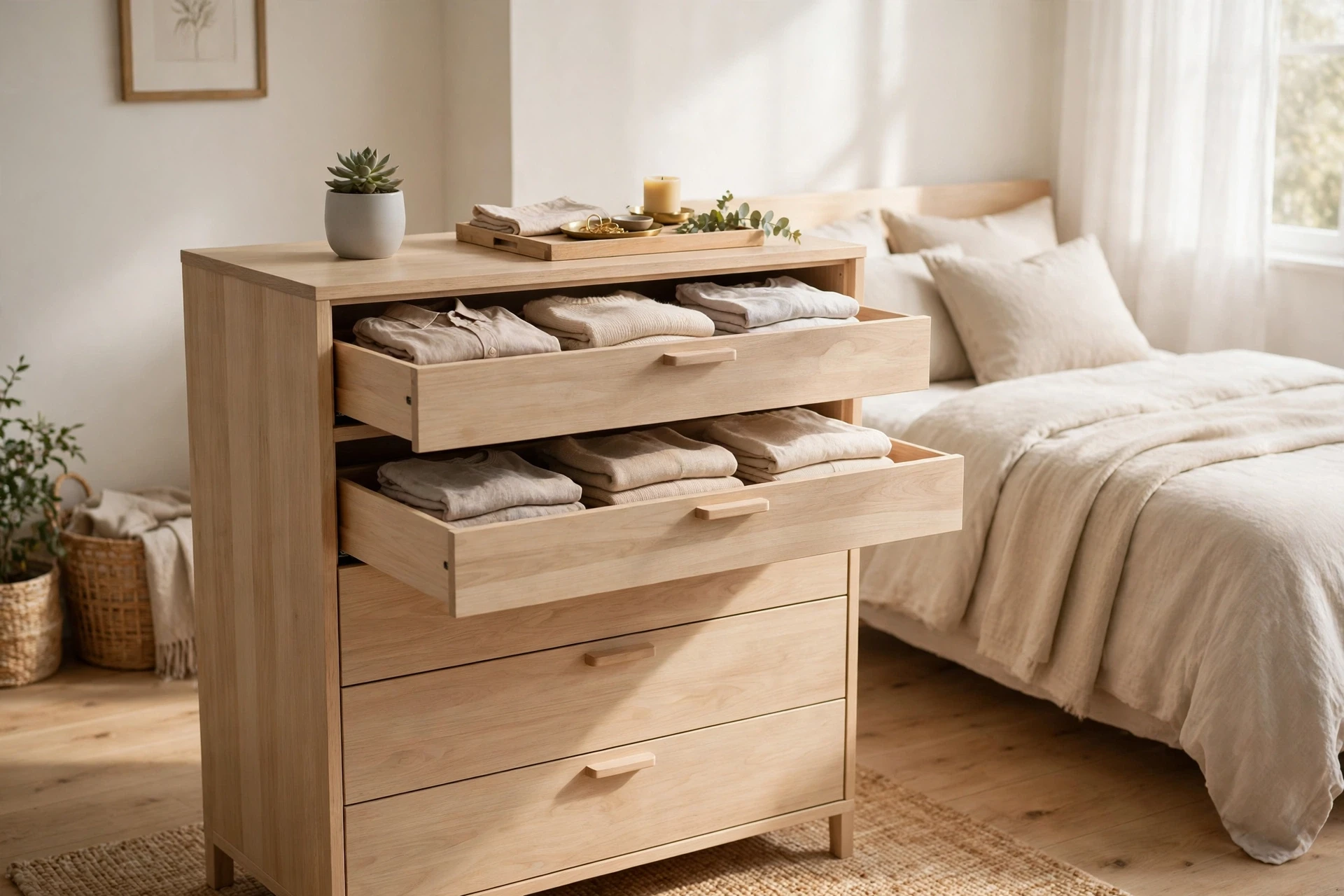
One Drawer, One Job
Give every drawer a single job and write it down. When a drawer holds a bit of everything, it ends up holding a mess of everything, because nothing has a place to return to. A simple layout for a six-drawer dresser looks like this:
- Top drawer: underwear and socks — the things you reach for first. A small divided section keeps pairs together, and the full sock drawer organization ideas guide covers pairing and folding in more detail.
- Second drawer: everyday t-shirts and tops, filed upright so you can see them all.
- Third drawer: pajamas and workout clothes, kept apart from day clothes.
- Fourth drawer: pants, shorts, and skirts, folded flat in neat rows.
- Fifth drawer: sweaters and heavier tops that do not belong on hangers.
- Bottom drawer: out-of-season clothes, swimwear, or spare bedding for the guest room.
One drawer, one job is the rule that holds every one of these dresser organization ideas together. If the dresser still overflows after the sort, the closet is usually the real problem — the small closet organization ideas post covers the overflow fix, and moving bulky sweaters to hangers can free a whole drawer overnight.
| Drawer | What goes in | Best divider setup |
|---|---|---|
| Top drawer | Underwear, socks | Small divided tray or fabric boxes |
| Second drawer | T-shirts, everyday tops | Two long dividers, file-folded rows |
| Third drawer | Pajamas, workout clothes | One divider, two loose zones |
| Fourth drawer | Pants, shorts, skirts | Three dividers, folded flat |
| Fifth drawer | Sweaters, heavy tops | No dividers, stacked in pairs |
| Bottom drawer | Off-season, swimwear | One large bin or no dividers |
Fold So You Can See Everything
Most dressers fail because of how clothes are folded, not how many clothes there are. Flat stacks hide the bottom half of the drawer. You pull one shirt out and the whole stack leans over, and the shirts at the bottom never get worn because you forget they exist.
Fold your clothes into small flat rectangles and stand the folded clothes on their sides in a row, like files in a drawer. Each folded piece shows its top edge, so you can scan the whole drawer in one glance and pick what you want without disturbing the rest. File folding is the skill that makes the rest of these dresser organization ideas actually stick, and it works for t-shirts, pajamas, kids clothes, and even thin sweaters. Roll the pieces that will not stand on their own — socks, underwear, and soft leggings roll into neat tubes that sit in a row without a divider to hold them.

Dividers That Actually Hold
A drawer without dividers is a drawer that drifts back into a pile within a week. A good drawer organizer does more than split a drawer in half — it gives every folded stack a wall to lean on, and that is why drawer dividers show up in nearly every list of dresser organization ideas worth following.
Pick dividers that fit the drawer, not the other way around. Adjustable bamboo dividers work in most standard drawers and slide to fit. Fabric boxes are better for the underwear drawer, because they keep soft things from sliding under the divider.
Small trays work in the top drawer for jewelry, watches, and the bits that usually end up loose. Labeled drawers help too — a small label on the inside edge of each drawer reminds everyone in the house where things go, and it stops the clean-laundry pile from landing in the wrong drawer. Measure the inside of the drawer before you buy anything, and leave a finger-width gap at the top so the drawer still slides shut easily.
Clear the Top of the Dresser
The dresser top is not a drawer, but it decides whether the whole dresser looks tidy or not. A clear top makes the room feel calm. A top covered in chargers, loose change, half-read books, and yesterday’s mail makes even a perfectly sorted drawer feel messy. You do not need a dresser makeover or new furniture to fix a messy dresser top.
Keep three things on the dresser top and nothing else: a lamp or a small plant, a tray for the bits you use every day, and one thing you like looking at. A small tray holds jewelry, keys, and loose change, so those items stop wandering around the room. Everything else — the charging cables, the water glass, the stack of papers — goes somewhere with a real home.
Keeping the top clear is one of the easiest dresser organization ideas to keep, because you see the result every time you walk into the room. If the top keeps filling up, the fix is not a bigger tray. It is a five-minute clear-out every night before bed.
Kids Dressers Need a Different System
A kids dresser follows the same rules, but the drawers need to work for small hands, and these dresser organization ideas shrink down well for a child’s room. Put the clothes your child picks every day in the top two drawers, where they can reach them without climbing. Use picture labels instead of words for younger kids — a small drawing of a shirt on the shirt drawer, a sock on the sock drawer — so getting dressed does not turn into a drawer-emptying event.
Keep the system loose on purpose. One drawer for tops, one for bottoms, one small divided drawer for socks and underwear, and one drawer for pajamas is enough. Roll instead of fold for small clothes, because a rolled shirt is easy for a child to grab and easy to put back. Check the drawers once a month for clothes that no longer fit, and move them straight to a pass-on bag. Apartment Therapy’s guide to organizing dresser drawers covers the same file-folding and divider tricks with photos from professional organizers, so check it if you want a second look before you buy dividers.

The 10-Minute Weekly Reset
Even the best dresser drifts. A sock lands in the wrong drawer, a folded stack leans over, and the top drawer collects two chargers and a hair tie. The fix is a ten-minute reset once a week, not a full reorganization every month:
- Open each drawer and straighten the rows — push the folded stacks upright again.
- Pull out anything that belongs in another drawer or another room.
- Match the stray socks and toss the ones with no partner.
- Wipe the dresser top and put back only the three things that live there.
- Fold that quick reset into your weekly cleaning schedule during laundry day, and the system holds itself together without a big seasonal overhaul.
Do a bigger sort twice a year, when the seasons change. Swap the heavy sweaters out and the light tops in, check for clothes that no longer fit, and give the empty drawers a wipe. That small seasonal swap is the quiet engine behind dresser organization ideas that still work a year later: the drawers always hold the clothes you actually wear this month, instead of last season’s leftovers.
Frequently Asked Questions
How many clothes should fit in one dresser drawer?
Fewer than you think. A drawer should close without pushing, and you should see the top edge of every folded piece. If you have to press the pile down to shut the drawer, move the overflow to the closet or a labeled bin. A good rule for dresser organization ideas is one layer of file-folded clothes per drawer, with a finger-width gap at the top.
What is the best way to fold clothes for a dresser?
File fold them. Fold each piece into a small flat rectangle and stand it on its side in a row, like files in a cabinet. That way you can see every item at a glance, and pulling one out does not disturb the rest. Roll socks, underwear, and soft leggings instead — they hold their shape as tubes and sit neatly in a row.
Do I need to buy drawer dividers?
You do not have to, but they help a lot in wide or deep drawers. Adjustable bamboo dividers, fabric boxes, and small trays all work, and even a cut-down shoe box can hold socks and underwear in place. Start with the top drawer, where small items slide around the most, and add dividers to the rest only if the stacks keep falling over.
How do I keep a kids dresser organized?
Keep it simple and low. Put everyday clothes in the top two drawers where your child can reach them, use picture labels for younger kids, and roll small clothes instead of folding them. Check the drawers once a month for outgrown clothes, and let your child help with the reset — a system they helped build is one they will actually use.
Mornings Get Easier
A tidy dresser changes the first ten minutes of your day. You open the drawer, you see the shirt you want, and you get dressed without the dig. Start with one drawer this weekend: empty it, keep only what you wear, fold the rest into neat upright rows, and add a divider to hold them in place. One drawer turns into two, and by the end of the afternoon the whole dresser works the way it should — quiet, simple, and ready every morning.