

Seasonal Clothing Storage Ideas That Keep Your Closet Organized All Year
Seasonal clothing storage ideas are the difference between a closet you can actually use and a closet stuffed with sweaters in July and shorts in January. Every year the same thing happens: the weather turns, you dig through a pile of out-of-season clothes to find the one jacket you need, and the closet ends up messier than when you started. The fix is simple — pack away the clothes you will not wear for months, keep the ones you will within reach, and use a system you can repeat twice a year. These seasonal clothing storage ideas will help you do exactly that, without buying a whole new closet.
Most closet mess comes from mixing seasons, not from having too many clothes. When summer dresses hang next to wool coats, nothing is easy to find, and the clothes you need are always buried behind the ones you do not. A short seasonal closet swap — one afternoon, twice a year — solves most of it, and that is the whole point of seasonal clothing storage ideas.
1. Start With a Seasonal Closet Swap
Good seasonal clothing storage ideas start with the swap itself, not with buying bins. Pick a day when the weather has clearly turned — the first warm week of spring or the first cold snap in fall — and take every item out of your closet. Yes, all of it. The empty closet is what makes the rest of the system work.
Sort everything into three piles: keep for this season, store for next season, and let go. The keep pile is what you will actually wear in the next few months. The store pile is out-of-season clothes in good shape. The let-go pile is anything stained, stretched, missing buttons, or unworn for a year — donate it, and the closet gets lighter before you pack a single box. A seasonal closet rotation only works when the clothes you keep earn their spot, and the swap is the moment to be honest about what you really wear.
A quick rule that helps: if you did not wear it last season, you probably will not wear it next season either. The fall closet organization ideas post uses the same swap-first habit for a smaller space — the idea is identical, just scaled to your closet.
2. Wash and Dry Everything Before You Pack It
Never pack dirty clothes. Sweat, food spots, and body oil set into stains over months in storage, and a small mark you barely notice now can become a permanent stain by next season. Wash or dry-clean every item before it goes into a bin — even the ones that look clean.
Make sure everything is fully dry before packing. A slightly damp sweater in a sealed bin grows mildew fast, and mildew smell is hard to wash out. Dry clothes on a rack for an extra day if you are unsure, and skip the fabric softener on items going into long storage — it can leave a film that attracts dust. Storing seasonal clothes clean and dry is the single best way to keep them fresh for months.
Check pockets before you wash anything. A tissue in a coat pocket becomes confetti in the wash, and a forgotten pen can ruin a whole load. It is the boring part of off-season clothing storage, but most seasonal clothing storage ideas come down to this wash-first habit — ten minutes now saves a bin full of ruined clothes in six months.
3. Pick the Right Container for Each Type of Clothing
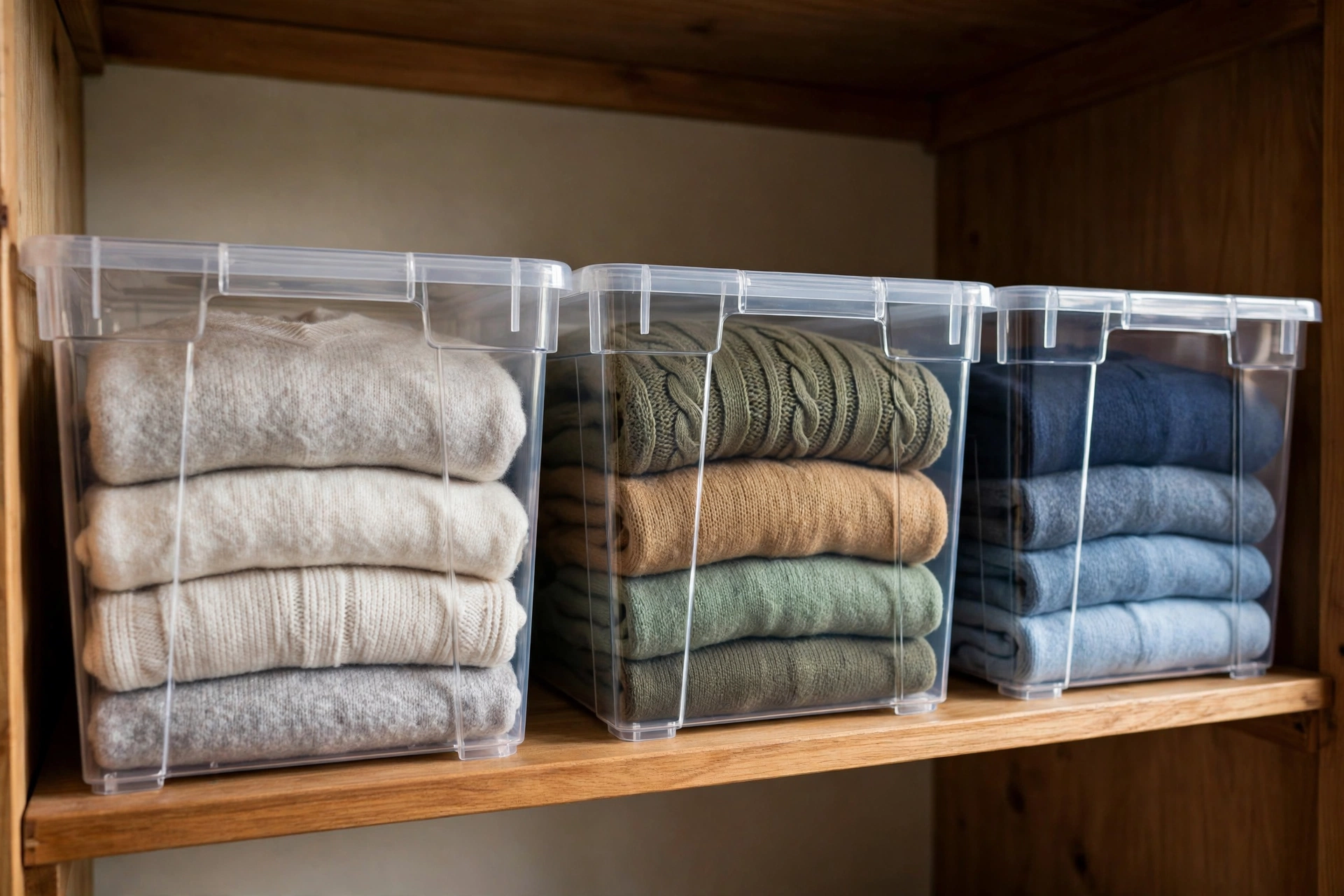
The container matters as much as the folding. Clothing storage bins with lids that snap shut keep dust, damp, and bugs out, and clear bins let you see what is inside without opening every lid. For most clothes, a sturdy plastic bin is the safest choice — it stacks well, it will not tear, and it keeps moisture out.
Vacuum storage bags are great for winter clothes storage — bulky things like puffer jackets and thick sweaters shrink to a third of their size. But do not use them for everything: vacuum-sealed storage bags can crush delicate fabrics, and they can leave deep creases in wool and leather that are hard to press out. Use vacuum bags for bulky basics, and keep the good stuff in a regular bin.
Breathable garment bags are the right home for coats and dresses you want to hang. A breathable cotton garment bag keeps dust off while letting air move, which stops musty smells. Skip the thin plastic dry-cleaner bags — they trap moisture and can yellow light fabrics over time. These seasonal clothing storage ideas all point the same way: the container should match the fabric, not the other way around.
| Container | Best for | Watch out for |
|---|---|---|
| Clear bin with lid | Most clothes, easy finding | Label the short end, not the top |
| Vacuum storage bag | Bulky jackets, thick sweaters | Crushes delicate fabrics and wool |
| Breathable garment bag | Coats, blazers, dresses | Needs room to breathe, do not cram |
| Under-bed bin | A whole season, out of sight | Measure the bed height first |
4. Fold Heavy Things, Hang the Rest
Sweater storage starts with the fold — heavy knits should be folded, never hung. A wool sweater on a hanger stretches out of shape over months, and the shoulder bumps it picks up are hard to fix. Fold sweaters loosely, stack them no more than four or five high, and put a sheet of plain tissue paper between layers to stop creases.
Coats, blazers, and dresses keep their shape better on hangers, so hang them in breathable garment bags and give them room to breathe. Do not cram them tight — packed coats wrinkle, and wrinkles set in over months. If you store coats in a bin, fold them loosely and lay them on top, never under heavy things.
Storing sweaters folded and storing coats hung is the basic split in most seasonal clothing storage ideas, and it keeps both in good shape. The small closet organization ideas post uses the same fold-versus-hang rule for a small closet — it works because it follows how clothes are made, not how much space you have.
5. Keep Moths and Damp Away
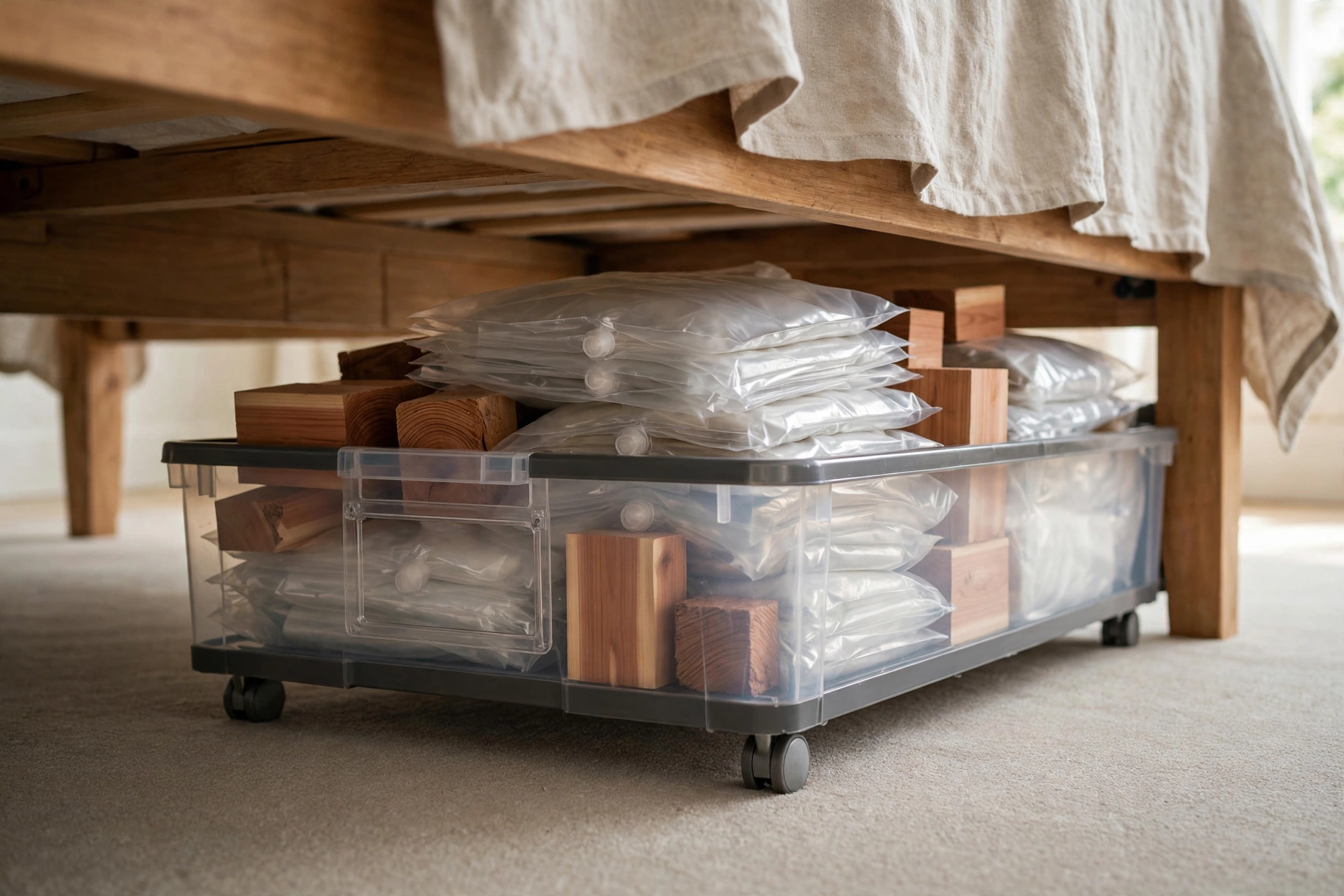
Clothes moths love dark, still closets full of wool and silk, so protecting your stored clothes starts before the bin closes. Clean clothes first — moths are drawn to sweat and food spots, not to clean wool — and then add cedar blocks for clothes or lavender sachets to the bin. Cedar is a natural moth deterrent, and it smells better than mothballs, which can leave a strong smell that lingers for weeks.
Check the bins once a season for signs of trouble: small holes, webbing in corners, or a musty smell. If you spot damage, wash the clothes, clean the bin, and replace the cedar before you pack anything else away. Mothproof clothing storage is mostly about clean clothes, a sealed bin, and a cedar block — that is the heart of seasonal clothing storage ideas for moths, and it needs no sprays or special gear.
Damp is the other enemy. Do not store clothes in a damp basement or a hot attic without checking the space first: damp grows mildew, and heat can set stains and fade colors. The attic organization ideas post covers the same heat problem for everything stored up there — if the attic bakes, keep the fragile pieces downstairs, and the basement organization ideas post covers the damp-first rule the same way.
6. Label Every Bin So You Can Find Things Fast
Labels are the whole system. Without them, every bin is a mystery box, and mystery boxes are how you end up buying a third black sweater you already own. A good label says three things: what is inside, what season it belongs to, and how many pieces — “Winter sweaters — 6” beats “clothes” every time, and it takes ten seconds to write.
Put the label on the short end of the bin, not the top, so you can read it when bins are stacked on a shelf. Add the year you packed them if you rotate clothes in and out. Clothing storage labels work best when they match how you search: if you always reach for the same coat first, label the bin with the coat’s name and put it on top.
Take a quick photo of each bin’s contents before you close the lid, and keep the photos in a folder on your phone. It takes thirty seconds and tells you at a glance which bin holds the winter coats and which one is summer clothes storage. These seasonal clothing storage ideas live or die by the labels — a good label is the difference between finding your coat in five minutes and spending an afternoon digging through the closet.
7. Use the Space You Already Have
The best storage spots are the ones you already own. Under-bed clothing storage is the easiest win in most homes: a low, flat bin slides under the bed, stays out of sight, and holds a whole season of folded clothes. Measure the space first — most beds fit a bin about six inches tall — and pick a bin with a lid so dust stays out.
A high closet shelf works for summer clothes storage the same way: out-of-season bins go up high, in-season clothes stay at eye level, and the swap is just moving bins down and up. If the shelf is deep, put the current season’s bin in front and the next season’s bin behind it, and the under bed storage ideas for small spaces post covers the same low-bin trick for tiny rooms.
Do not forget the top of a wardrobe, the space above a door, or a spare shelf in a linen closet. Good seasonal clothing storage ideas use dead space well, and storing clothes long term is mostly about that habit: a bin on a high shelf you check twice a year beats a bin on the floor you trip over every day. Keep the bins you open most often at waist height, and the ones you open twice a year up high.
8. A 30-Minute Seasonal Swap Routine That Works Every Year
The best seasonal clothing storage ideas are the ones you actually follow, so keep the swap short. Thirty minutes, twice a year, right when the weather turns — that is all it takes to keep the closet working, and the routine below is the whole job.
- Take everything out of the closet and sort it into keep, store, and let go.
- Wash and dry everything in the store pile, and let it dry fully.
- Fold heavy knits; hang coats and dresses in breathable garment bags.
- Pack by season and label each bin with what is inside and how many pieces.
- Add a cedar block or lavender sachet to every bin with wool or silk.
- Put out-of-season bins up high or under the bed; keep this season at eye level.
- Take a photo of each bin’s contents and keep it on your phone.
That is it. Thirty minutes, twice a year, and the closet stays calm. The weekly cleaning schedule post covers the same short-routine idea for the rest of the house — small jobs done on time stay small, and a short routine you actually do beats a perfect system you skip.
Frequently Asked Questions
Can I store seasonal clothes in vacuum bags?
Yes, for bulky basics like puffer jackets and thick sweaters — vacuum bags shrink them to a third of their size and keep dust out. But do not use them for everything: delicate fabrics, wool, and leather can crease or crush under vacuum pressure. These seasonal clothing storage ideas use vacuum bags for the bulky basics and regular bins for the good stuff, and every bag should hold clean, fully dry clothes.
How do I keep moths out of stored clothes?
Wash everything before you pack it, use a bin with a lid that closes tight, and add cedar blocks or lavender sachets. Moths are drawn to sweat and food spots, not to clean wool, so clean clothes are the real protection. The simplest seasonal clothing storage ideas for moths are clean clothes, a sealed bin, and a cedar block — check the bins once a season for holes or webbing, and replace the cedar when its smell fades.
Where is the best place to store off-season clothes?
A dry closet shelf or under the bed beats a damp basement or a hot attic. These seasonal clothing storage ideas work in any dry spot — the key is steady temperature and no damp, not the room itself. Keep bins off the floor on a low shelf if the basement is your only option, and check after heavy rain.
How often should I do a seasonal closet swap?
Twice a year, when the weather clearly turns — once in spring and once in fall. A short seasonal closet swap takes about thirty minutes: take everything out, sort it into keep, store, and let go, wash the store pile, and label every bin. Doing it on the same weekends every year turns it into a habit instead of a chore.
Next Season Starts With a Closet That Already Works
Seasonal clothing storage ideas are not about buying the perfect bin. They are about washing what you pack, folding the heavy things, hanging the rest, labeling honestly, and keeping the bins somewhere dry until you need them again. Swap twice a year, keep the current season at eye level, and put the rest up high or under the bed. Do that, and the next season starts with a closet that already works.