

Basement Organization Ideas That Turn a Damp, Cluttered Basement Into Real Storage Space
Basement organization ideas matter most the day you walk downstairs looking for the holiday lights and find a damp pile of boxes you cannot tell apart. The basement is often the biggest storage space in a home, and it is also the messiest, because everything with no other home ends up there. You carry things down, shut the door, and forget about them until the next time you need something.
It does not have to stay that way. With dry storage, sturdy bins, and a simple plan for what goes where, a basement can hold holiday decor, out-of-season clothes, and keepsakes without turning into a damp mess. The basement organization ideas below work for small basements and big ones, and they start with dryness, not shopping — because the best bins in the world will not help if water gets in.
1. Start With a Cleanout, Not a Shopping Trip
Before you buy a single bin, empty the basement. A basement cleanout sounds like a big job, and it is — but it is the only way to see what you actually own. Things multiply down there quietly. A box of baby clothes, a lamp with no bulb, a stack of old magazines, a suitcase with a broken wheel. Each one took up space and slowed you down, and none of them had a label telling you what was inside.
Set a timer for an hour and sort fast into three piles: keep, donate, toss. Keep only what you use, love, or truly need to store. Donate the rest while it still works. Toss anything broken, stained, or missing parts. A basement declutter is the first of these basement organization ideas for a simple reason: every system works better when it only has to hold the good stuff.
Bring gloves, a dust mask, and a flashlight, and work with a partner if you can. Basements are dusty, dim, and full of low pipes and beams. Take breaks, drink water, and carry boxes up one at a time instead of rushing. If something is too heavy to carry up the basement stairs safely, leave it and ask for help — a strained back is not worth a box of old books.
2. Deal With Damp Before You Store Anything
Good basement organization ideas start with dry floors and dry air. Most basements get damp — a little water after heavy rain, condensation on cold walls, or a musty smell that never quite goes away. Before you store anything, find where the water comes from. Check the walls after rain, look for stains near the floor, and check the corners where the floor meets the wall.
A basement dehumidifier is the single best buy for a damp basement. It pulls water out of the air, keeps the musty smell down, and protects fabric, paper, and wood from mold. Run it through the damp months, empty the tank often, and keep it away from the wall so air can flow around it. If your basement has a floor drain, a dehumidifier with a hose that drains itself saves you the daily emptying.
Basement moisture is the enemy of everything you store, so fix the water first and buy bins second. Basement waterproofing is the bigger fix, and it is worth doing before you build shelves or stack bins. Seal small cracks in the walls, make sure gutters send rain away from the house, and keep the ground around the foundation sloping away from the walls. If water keeps coming in, call a pro — no bin can protect your things from a leak that keeps coming back.
3. Pick Bins and Shelves That Survive a Basement
Basement storage bins need to be tougher than the ones in your closet. Damp air can warp cardboard, soak paper labels, and grow mold on fabric. That is why good basement organization ideas start with the bin, not the shelf. Look for sturdy plastic bins with lids that snap shut, not open crates or cardboard boxes that fall apart in damp.
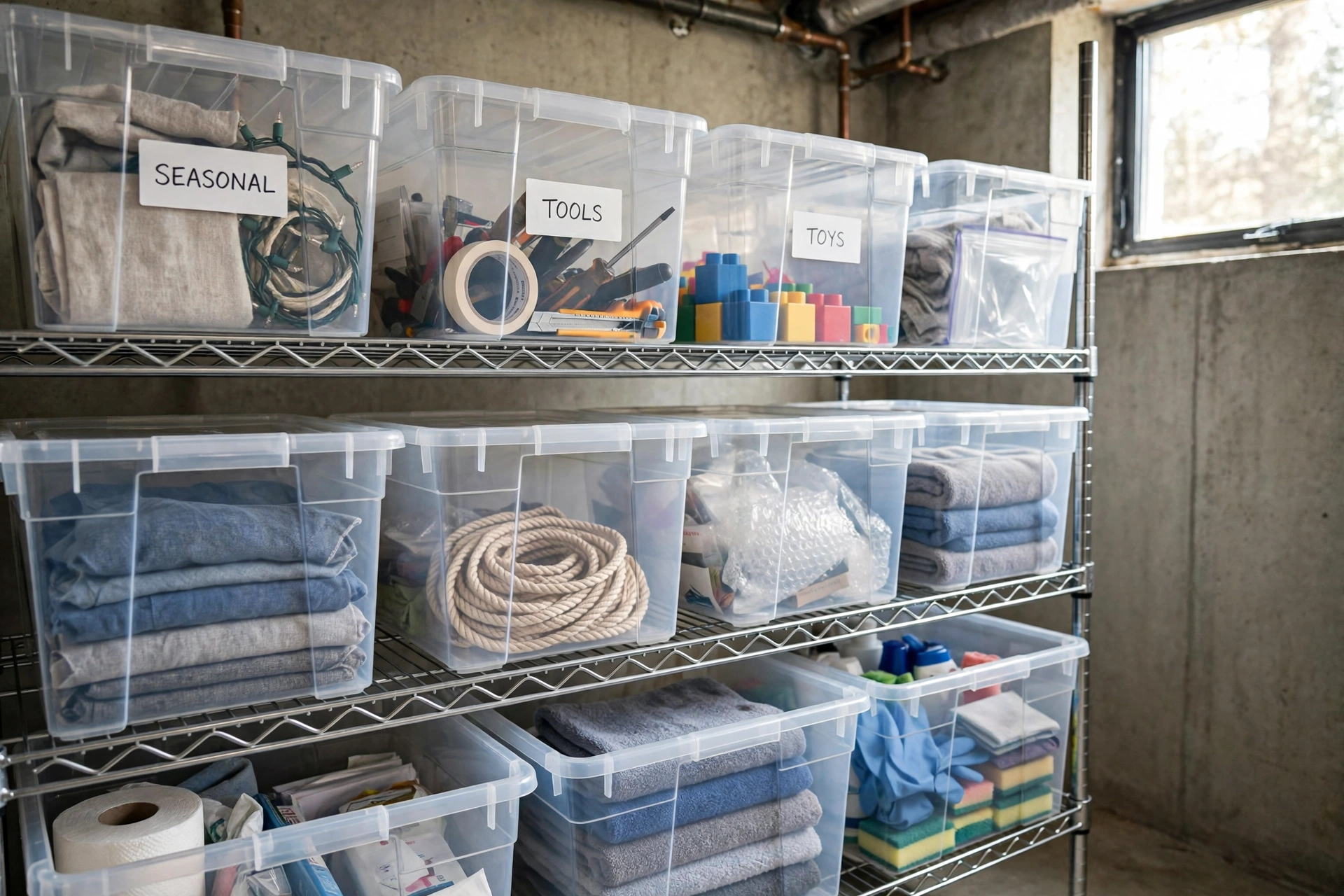
Clear plastic bins are the best choice for most basement storage, because you can see what is inside without opening six lids. If you already own solid-colored bins, that is fine too — just label them well, which is the next step. One rule that saves a lot of trouble: one kind of thing per bin, or one holiday per bin. Mixing Halloween decor with Christmas lights in the same box guarantees a mess next October.
Basement shelving ideas are worth the effort because a low shelf along the wall holds the bins you reach for most, and it keeps them off a floor that might get wet. Basement storage shelves work best when they match the bin size. Measure your bins first, then build or buy shelves to fit them, with a little room above each bin so you can lift the lid without pulling the whole bin out. Keep shelves off the wall by an inch or two so air can move behind them, and never put cardboard boxes directly on a concrete floor — a pallet or a low shelf keeps them dry.
Keep the heaviest bins on the lowest shelf and closest to the stairs. Light bins go up high. Metal shelves beat wood in a damp basement, because wood soaks up water and can grow mold. A shelf, a zone map, and honest labels together make simple basement organization systems that actually last.
4. Zone the Basement Like Rooms in a House
Think of the basement as a small house with rooms, and give each zone one job. One zone for seasonal storage, one for holiday decoration storage, one for keepsakes, and one for out-of-season clothes. When every zone has one job, you always know where to look, and you never have to move five bins to reach the one you want. These basement organization ideas work because the map is simple enough to remember, and a map you can remember is a map you will actually use.
Put the things you need first closest to the stairs. The current season’s bin sits at the front, and the far-off holidays sit at the back. If your basement holds the Christmas tree, do not bury it behind the Halloween bin in July. A little planning at pack-up time saves a lot of shuffling later, and the same idea shows up in the seasonal decor storage ideas post — the things you use most should be the easiest to grab. Keep the basement zones simple — four zones are plenty for most homes.
Keep a short stored items inventory for the basement. It can be a single page: each zone, the bins in it, and the big pieces inside each bin. “Near stairs: Christmas — Bin 1: ornaments and topper. Bin 2: lights and garland.” Tape the list near the basement stairs or keep it in a note on your phone. The attic organization ideas post uses the same idea for a different space — knowing what you own stops you from buying it twice — and it works just as well down in the basement.
| Zone | Best for | Keep in mind |
|---|---|---|
| Near the stairs | Things you grab often — seasonal bins, holiday decor | Keep this zone clear and easy to reach |
| Middle, dry wall | Taller stacks, shelving, bigger bins | Best headroom in the basement, so use it well |
| Far corners | Things you rarely need — keepsakes, old files | Check for damp after heavy rain |
| Away from water heater and pipes | Anything that hates damp — photos, fabric, paper | Check for leaks after heavy rain |
5. Label Everything So You Can Read It From the Stairs
Labels are the whole system. Without them, every bin is a mystery box, and mystery boxes are how you end up buying a third set of the same string lights. Good labeled storage bins say three things: what is inside, what season it belongs to, and where it goes in the house. “Christmas — living room — ornaments and tree topper” beats “Christmas stuff” every time.
Print your labels if you can, or write them with a thick marker on painter’s tape. Put the label on the short end of the bin, not the top, so you can read it when bins are stacked on a shelf. Add the year you packed it if you rotate pieces in and out. These basement organization ideas live or die by the labels, and a good label is the difference between finding the Halloween bin in five minutes and spending an afternoon digging through the basement.
Take a quick photo of the bin’s contents before you close the lid, and tape the photo to the outside or keep it in a folder on your phone. It takes thirty seconds and saves you from opening four bins to find the one wreath you want.
6. Light It Up and Make the Stairs Safe
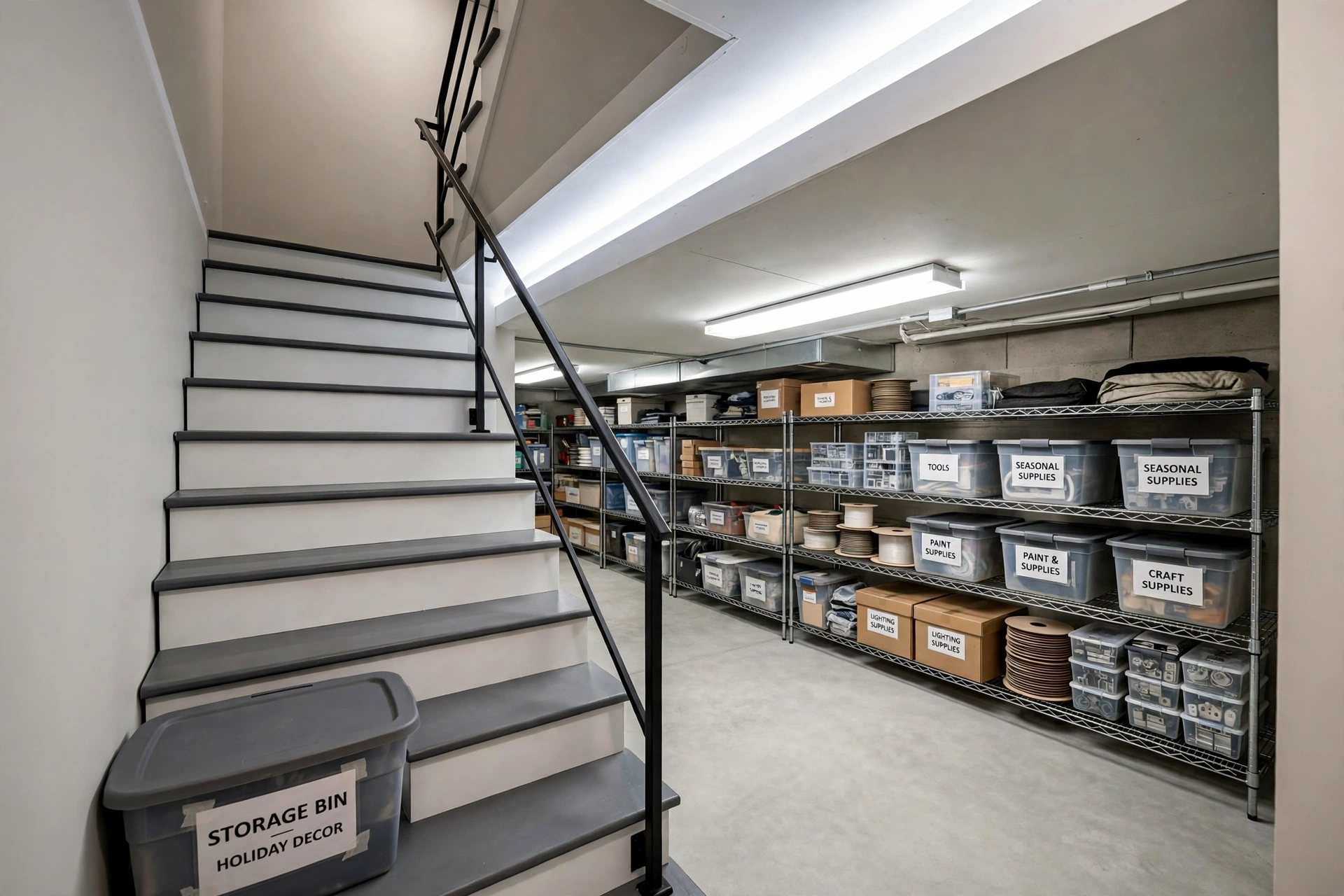
Basements are dark, and dark storage is storage you will avoid. Basement lighting makes a real difference: a bright LED bulb near the stairs, plus one more at the far end, turns a scary corner into a normal room. If your basement has no light at all, a battery-powered LED light stuck to a beam near the stairs works fine for short trips. Good light is one of the cheapest basement organization ideas, and it pays off every time you go downstairs.
Basement safety also means a clear path and a solid floor. Keep the path from the stairs to every stack of bins clear, and never block the stairs with boxes. If the basement floor is uneven, lay a flat piece of plywood where you walk so bins sit level. Watch for low pipes and beams — a bump on the head is the fastest way to hate going downstairs. If the stairs feel steep or the handrail is loose, fix the rail before you carry anything heavy up or down.
7. Keep Pests and Water Out
Basement pests love a quiet, dark basement full of cardboard. Mice chew through cardboard boxes and nest in fabric, so sealed plastic bins beat cardboard every time. Sealed bins are one of the simplest basement organization ideas for keeping mice out of your things. Check the basement twice a year for droppings, chewed corners, or nests, and seal any gaps around pipes and wires with caulk or steel wool. Keep food out of the basement entirely — even sealed pet food will draw mice.
Water is the other thing to watch. Check the basement after every heavy rain, and keep anything you care about off the floor — a low shelf or a pallet is cheap insurance. These basement organization ideas only work if the things you store stay dry, so a quick check after rain is part of the routine. If you find a leak, move the bins first and fix the leak second — wet bins can wait a day, but a wet box of photos cannot.
8. A Simple Routine That Keeps It Working
Systems fail when they need too much effort, so keep the basement routine short. Twice a year — once in spring and once in fall — spend thirty minutes down there. That is all it takes to keep the basement working, and these basement organization ideas stay useful only if the routine is short enough to actually do.
- Pull out only the bin for the new season — leave the rest stacked.
- Put the old season’s things away first, before you bring the new ones down. Clean pieces as you pack them.
- Check bins for cracks, chewed corners, or damp, and replace any that are damaged.
- Update the label if anything moved bins, and fix the stored items inventory list.
- Put the outgoing bin back in its exact spot, label facing out, path clear.
That is it. Thirty minutes, twice a year, and your basement stays a storage space instead of a junk pile. The weekly cleaning schedule post covers the same short-routine idea for the rest of the house, and the home library organization ideas post shows how knowing what you own stops duplicate buys — the principle is the same everywhere: put things away properly once, and you never have to fix the mess later. The under bed storage ideas for small spaces post covers the same swap-and-store rhythm for clothes that rotate with the seasons.
Frequently Asked Questions
Can I store clothes in the basement?
Yes, if they are clean, dry, and sealed in plastic bins with tight lids. Damp air can damage fabric over time, so keep everyday clothes in a closet and use the basement only for out-of-season pieces. Add a cedar block or lavender sachet to keep moths away, and check the bins once a year for damp or pests. A basement dehumidifier helps a lot here, and these basement organization ideas work best when bins stay dry and sealed.
How do I organize a small basement with low ceilings?
Use short, wide bins that slide under the beams, and keep the tall stacks near the middle where the headroom is best. A small basement works fine with these basement organization ideas — the zones just get smaller. Keep the path from the stairs clear, and store only what you truly need down there.
What should never go in the basement?
Photos, important papers, and anything that damp can ruin are safer in a closet inside the house, unless your basement stays dry all year. Never store paint, fuel, or aerosol cans near a water heater or furnace. If you are unsure about an item, ask whether a damp day would damage it — if yes, keep it upstairs.
How much does it cost to organize a basement?
Most basements need only bins, labels, and a shelf or two. These basement organization ideas work on a small budget — start with three or four sturdy clear bins, a roll of painter’s tape, and a marker. Add shelving later, one shelf at a time, as the budget allows.
A Calm Basement, Every Season
Basement organization ideas are not about buying the perfect bin. They are about knowing what you own, keeping the fragile pieces dry, and putting everything back where it belongs before the next season sneaks up on you. Sort once, label honestly, protect the breakables, and keep a short list of what you have. Do that, and next time you walk down the basement stairs you will grab the right bin in minutes — instead of digging through a pile and wondering where the holiday lights went.