

Gift card organization ideas matter because most of us are sitting on money we forgot about. A coffee card in the glove box, a restaurant card at the bottom of a purse, a store card tucked into last year’s holiday card — add them up and the average household has real money hiding in drawers. The cards are not lost. They are just scattered, and a scattered gift card is a gift card you will never spend.
The fix is not a fancy app or an expensive organizer. It is a simple system: every card lives in one home, the balance is written on the card, and once a month you check the pile. That is the whole plan, and that is why gift card organization ideas that start with a single home tend to stick — when you always know where the cards are, you actually use them.
Gather Every Card in One Place
Start by finding them all. Check your wallet, your purse, the glove box, the desk drawer, the junk drawer, the coat pockets from last winter, and the stack of holiday cards from last year. Gift cards hide in an embarrassing number of spots, and the full pile is usually worth more than you expect. Lay them all out on the table so you can see what you actually have.
Sort the pile into three groups as you go. Group one: cards you will use soon, for stores and restaurants you visit every month. Group two: cards you might use someday, for places you visit a few times a year. Group three: cards you will honestly never use — a shop in another state, a store you never liked, a restaurant that closed. The third group is not trash; it is regift or resale material, and we will get to that below.
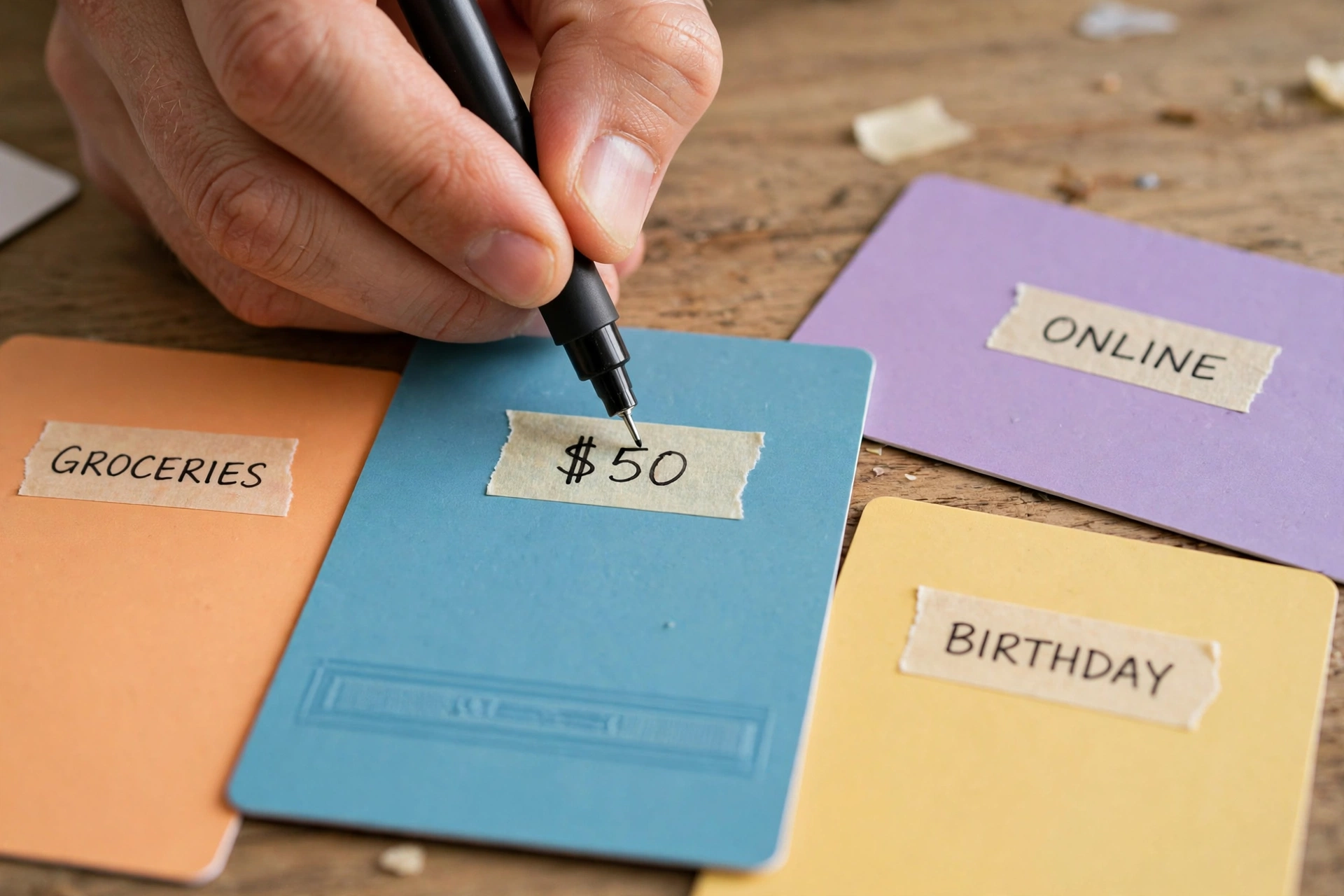
Check the balance on any card you are unsure about. Most stores let you check online or by phone in under a minute, and knowing the number matters — a card with an unknown balance gets avoided, while a card with a clear number gets spent. Write the balance on a small sticker or a piece of masking tape on the front of the card, leaving the store logo visible, and note the date you checked it.
Give Them One Home, Not Three
Here is the rule that makes the whole system work: every gift card lives in exactly one home, and a card found anywhere else gets moved to that home the same day. The home can be simple. A small zip pouch in one drawer, a business card holder in your purse, a binder clip on the fridge, or a dedicated slot in your wallet — pick the one that fits how you live, then stop inventing new spots for cards.
A business card holder is the easiest home for most people. It is small, it fits in a purse or a bag, and it holds gift cards and loyalty cards side by side so everything for a shopping trip lives in one place. If you have a lot of cards, a small binder with business card page protectors works the same way: slide one card into each pocket, group them by category, and flip through the binder when you are heading out. Andrea Dekker’s gift card organization method uses the same idea — a sticker with the balance on each card, stored in one small holder — and she has used it for about fifteen years without losing a card.

If you would rather keep the cards at home, a labeled envelope or a small index card box with divider tabs does the job. File them by category — restaurants, clothes, home, coffee — and keep the box in the same drawer every day. The container matters far less than the habit: one home, same spot, every card.
Sort by How Soon You Will Use Them
Inside that one home, order matters. Put the cards you will use soonest in front: the coffee shop you visit every week, the grocery store, the restaurant down the street. Put the occasional ones behind them. When the front of the pile is full of cards you actually use, you reach for a gift card first instead of cash or a credit card — and that is the whole point.
Group the cards by category so you can find one in seconds. Restaurants together, clothes together, home stores together, coffee together. If you have more than one card for the same store, stack them with the smallest balance on top so you spend the little ones first and stop carrying a card with three dollars left on it for two years.
Keep one or two cards in your wallet and the rest at home. The wallet cards are the ones you use this week. The home pile is the reserve. When a wallet card is spent, pull the next one from the reserve. This keeps your wallet thin and your cards safe — a wallet full of gift cards is a wallet full of cash, and losing it hurts just as much.
Write the Balance on the Card
This is the single habit that saves the most money. After every use, cross out the old balance on the sticker and write the new one below it, with the date. A card with a visible number gets spent; a card with a mystery balance gets left in the drawer because you do not want the awkward moment at the checkout when the card covers only part of the bill.
Do the same for cards you have not used yet. The day a card comes into your life, write its starting balance on it. Birthday cards, holiday cards, thank-you cards — they all get a sticker the day they arrive, before they have a chance to wander off into a drawer. If the card came with a receipt, tuck the receipt behind the card in the holder or the binder pocket so the numbers match up later.
Never write full card numbers or PINs on a shared list or a family tracker. If you keep a list of your cards, record only the store, the balance, where the card lives, and the date you last checked it. A masked note like the store name plus the last four digits is enough to match the entry to the card.
Digital Gift Cards Need a Home Too
Half the gift cards people receive now never touch paper. They arrive by email, they live in an app, or they sit as a code in a text message — and they are even easier to forget than the plastic ones. E-gift cards need the same one-home rule, just in digital form.
Make one folder in your email called gift cards, and move every e-gift card there the day it arrives. Forward codes from text messages to yourself by email so they land in the same folder. For stores with an app or an online account, load the card into the account right away and note in your tracker that it lives there, then you can throw the physical card away if you have already loaded it.
Keep a simple tracker for all of it — paper and digital together. A notebook page or a phone note with four columns does the job: store, balance, where it lives, date last checked. Our budget organization ideas guide shows how a small monthly money check fits into a home routine, and the gift card tracker slots right into that same check. Once a month, open the tracker, open the email folder, and spend two minutes matching the list to the cards.
The Holiday Pile: New Cards Coming In
November and December are gift card season, and that is why this system matters most right now. Cards arrive with every holiday gathering — stocking stuffers, thank-you gifts, Secret Santa swaps, cards from relatives who live far away. Without a home waiting for them, the new cards join the old scattered pile, and by January you cannot remember which ones you got.
Set the home up before the holidays start. Clear out the old pile first: spend the small balances, regift the ones you will never use, and throw away the empty ones. Then, when a new card arrives, it gets a balance sticker and a slot in the holder the same day. A five-minute habit in December saves an hour of hunting in January, and it keeps holiday shopping simple — you check the holder before you buy anything with cash.
The holiday pile is also a good time to sort your other paper. Holiday cards, gift receipts, and the cards themselves tend to arrive together, so give them one landing spot by the door for the first week, then file them into their homes. Our holiday card organization ideas guide covers the cards themselves, and the same one-home rule keeps the gift cards from getting mixed in with them.
Use It, Regift It, or Let It Go
Some cards will never get used, and that is fine — but a card sitting in a drawer helps nobody. If a card is for a store you will never visit, regift it to someone who will use it, with the balance written on the front so the gift is honest. A twenty-dollar card to a shop you never visit is a great birthday gift for a friend who shops there every week.
You can also sell a card you will not use through a gift card resale site, or swap it for store credit at a shop you do visit. Check the terms first: some cards lose value to fees, and a few have expiration dates or dormancy fees after a year of no use. In the United States, federal rules generally require gift cards to stay valid for at least five years from purchase or the last load, though store policies and state rules vary — so check the fine print before you assume a card is dead.
Throw away the empty ones. A card with a zero balance is clutter, and keeping it in the holder makes the pile look bigger than it is. When a card hits zero, take it out of the holder the same day and recycle it. Our coupon organization ideas guide uses the same rule for expired coupons: once it cannot be spent, it leaves the pile.
The 10-Minute Monthly Check
Once a month, run the whole system in one pass. It takes about ten minutes. Pull out the holder, check the balance on any card you used since last month, update the stickers, and move one card into your wallet to actually spend this week. Then check the email folder for e-gift cards, update the tracker, and toss any card that hit zero.
Pick the same day every month so it becomes a habit — the first Sunday, the day the rent is due, whatever you already remember. Add it to your weekly cleaning schedule as a once-a-month line so it shows up with the other home routines instead of living on a separate list you never open. A small routine, done on the same day, is what keeps a system alive after the first week.
If you find a card you forgot about, spend it that week. The monthly check is not just bookkeeping; it is a reminder that the pile is money, not paper. A card you rediscover and spend is twenty dollars back in your pocket, and that is a good reason to keep the habit going.
Which Home Fits Which Card?
Use this table to match each kind of card to its best home, so nothing ends up in the wrong spot.
| Card type | Best home | Why it works |
|---|---|---|
| Cards you use weekly | Wallet slot | Always with you, spent first |
| Restaurant and coffee cards | Business card holder in purse | Easy to grab on the way out |
| Occasional store cards | Binder with page protectors | Visible, grouped by category |
| Cards kept at home | Labeled envelope or index box | One spot, filed by category |
| E-gift cards and codes | One email folder + tracker | Searchable, nothing lost in the inbox |
| Cards to regift | Front of the holder, marked | Easy to find when a gift is needed |
| Empty cards | Recycling bin | Zero balance is clutter, not money |
A card stored the right way gets spent, and a card stored the wrong way gets forgotten. Match the card to the home, keep the balance visible, and check the pile once a month.
Gift Card Organization Checklist
Run through this list once, and these gift card organization ideas keep working all year.
- Gather every card: wallet, purse, glove box, desk drawer, junk drawer, coat pockets
- Check the balance on any card you are unsure about
- Write the balance and date on a sticker on each card
- Pick one home: holder, binder, envelope, or wallet slot — and move every card there
- Sort by category and by how soon you will use each card
- Keep one or two cards in your wallet; the rest stay in the home pile
- Set up one email folder for e-gift cards and a simple tracker
- Regift or sell the cards you will never use; recycle the empty ones
- Run the 10-minute monthly check on the same day every month
- Spend one rediscovered card this week
Frequently Asked Questions
Where should I store physical gift cards?
Keep them all in one home: a business card holder in your purse, a small binder with page protectors, or a labeled envelope in one drawer. Pick the home that fits how you live, then move any card found elsewhere into that home the same day. Keep one or two cards in your wallet for the week and the rest in the home pile.
How do I keep track of gift card balances?
Write the balance on a sticker or a piece of masking tape on the front of each card, with the date you checked it. After every use, cross out the old balance and write the new one below it. Keep a simple tracker too — store, balance, where the card lives, date last checked — and never write full card numbers or PINs on it.
How do I organize digital gift cards?
Make one folder in your email called gift cards and move every e-gift card there the day it arrives. For stores with an app or account, load the card into the account right away and note in your tracker that it lives there. Forward codes from text messages to yourself by email so they land in the same folder.
What should I do with gift cards I will never use?
Regift them to someone who shops at that store, with the balance written on the front so the gift is honest, or sell them through a gift card resale site. Check the terms first, since some cards carry fees or expiration dates. If a card is empty, recycle it — a zero-balance card is clutter, not money.
Stop Leaving Money in Drawers
The best gift card organization ideas do not need fancy gear or a big budget. They need one home, a balance written on every card, and a ten-minute check once a month. That is why gift card organization ideas that start with a gather-and-sort session tend to stick: know what you own, give every card a home, and spend the ones you forgot about.
Pick one thing this week. Gather the pile, write the balance on each card, and move them all into one holder. Then spend one card you rediscovered — the coffee is on the gift card you forgot you had.