Herb storage ideas matter the moment you open the fridge and find the parsley you bought three days ago turned into a sad, slimy bunch at the back of the crisper. You bought the herbs because a recipe needed a handful, and now the rest of the bunch is limp, dark at the edges, and headed for the bin — along with the money you spent on it. That is the slow waste bad storage makes — not one big mistake, but a little freshness lost every day the herbs sit in the wrong spot.
You do not need a bigger fridge. You need one fixed home for every bunch, a jar of water or a wrapped bundle that never moves, and a habit that takes ten seconds: the herbs go back in their home the moment you get home from the shop. This guide walks through jars, fridge tricks, drying, and freezing, so your herbs stay fresh, green, and ready to cook with. Follow it once, and these herb storage ideas will keep your fresh herbs fresh for weeks.
Why Fresh Herbs Go Bad So Fast
Fresh herbs are mostly water, and that is both their charm and their problem. The leaves are thin, they lose water fast, and once they start to wilt they do not bounce back on their own. A bunch left loose in the fridge drawer dries out at the edges and turns slimy in the middle, all in the same week. A bunch left on the counter in a warm kitchen wilts by dinner. The damage is quiet and steady — a little moisture lost here, a little bruising there — until the bunch you meant to use is past saving. That slow damage is exactly what good herb storage ideas prevent, because the harm happens between shopping trips, not during cooking.
Heat, air, and wet leaves do most of the damage. Warm air speeds up wilting, dry fridge air sucks the moisture out of tender leaves, and leaves that stay wet grow slime and mould. Basil is the worst of the lot: cold turns it black, so the fridge that saves your parsley kills your basil in two days. Woody herbs like rosemary and thyme are tougher, but even they go limp and grey when they sit loose in a bag for a week. None of it happens in a single afternoon — it builds up, a little at a time, until the herbs you loved will not perk up again. Good herb storage ideas protect the leaves and the stems too, because the stem is what keeps the bunch drinking.
The other problem is the hunt. When herbs have no home, finding them takes longer than cooking with them — you check the drawer, the door shelf, the bag on the counter, and then you give up and cook without them. Herbs you cannot find are herbs you stop using, and a bunch you stop using is a bunch you throw away. One home per bunch ends the hunt, and that is why the simplest herb storage ideas work so well: they give every bunch a home before the waste ever starts.
Pick the Right Home for Your Herbs
Every bunch needs one home, and the right home depends on how the herb grows. A tender bunch like parsley or cilantro wants a jar of water in the fridge, where it drinks like a cut flower. A woody bunch like rosemary or thyme wants a dry wrap in the crisper, where it stays cool without sitting in water. A basil bunch wants a jar on the counter, never the fridge, because cold turns it black. When every bunch has one home, putting it away takes ten seconds, and the habit sticks. That is the first rule of herb storage ideas that actually last: one bunch, one home, every time.
Think about where you cook. If you reach for herbs while you stand at the stove, the home belongs beside the stove — a jar on the counter for basil, a small herb keeper on the fridge shelf for parsley. If you cook once a week and shop in bulk, the home belongs in the fridge, where the jars stand in a row on one shelf. The spice organization ideas guide uses the same rule for every jar: store it where you use it, and the habit forms on its own. The bread storage ideas guide keeps loaves in one spot for the same reason — a bunch stored in its home lasts longer than one left loose in a bag.
| Home | Best for | Watch out for |
|---|---|---|
| Jar of water in the fridge | Parsley, cilantro, dill, mint | Change the water every few days |
| Dry wrap in the crisper | Rosemary, thyme, sage, oregano | Keep the towel dry, not damp |
| Jar on the counter | Basil only | Never put basil in the fridge |
| Freezer bag or ice cube tray | Surplus bunches, chopped herbs | Label it, or you will forget what is inside |
| Airtight jar in the cupboard | Dried herbs | Keep it cool, dry, and dark |
Match the home to the herb, and the herb storage ideas in this guide stay simple no matter how many bunches you buy.
The Jar Method: Store Fresh Herbs in Water
A herb jar is the simplest home a bunch can have, and it is popular for a reason. The stems stand in an inch of water, the leaves stay above the waterline, and the whole bunch stays green for a week or two — which means you actually use it instead of throwing it away. A jar also costs almost nothing and takes no shelf space at all. That visibility is the whole point: a home you can see is a home you use, and that is what makes a jar one of the most forgiving herb storage ideas for beginners.
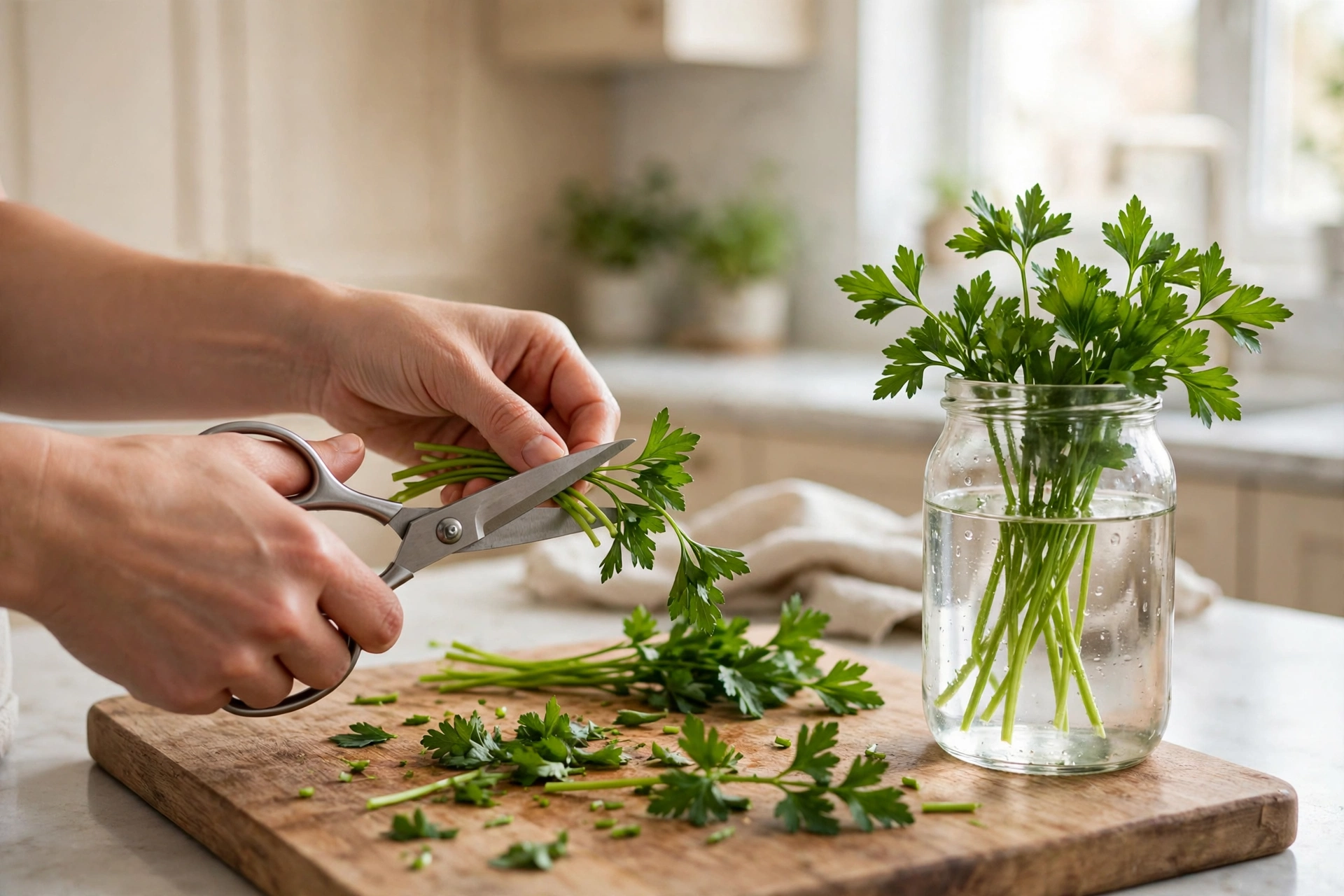
Trim the stems first. Cut a half inch off the bottom of every stem, the way you would trim a bunch of flowers, so the stems can drink again. Stand the bunch in a jar or a deli container with an inch of water — just the stems, never the leaves, because leaves sitting in water turn slimy fast. Loosely cover the leaves with a plastic bag or the container lid, to keep the cold air out, and stand the jar on a lower fridge shelf, where the air is coolest and the bunch has room to stand tall. Fresh herb storage this way keeps parsley and cilantro green for up to three weeks, and it is the method every good herb keeper copies.
Change the water when it turns cloudy. Cloudy water means bacteria, and bacteria means slime, so tip the jar out every two or three days, rinse it, and refill it with fresh cold water. A quick rinse of the stems while you are at it keeps the bunch drinking clean. Store fresh herbs this way and the jar does the work for you — the bunch stays upright, the leaves stay dry, and the stems keep drinking. That is the whole point of herb storage ideas built on one jar: the system is so simple you never skip it. That habit is one of the simplest herb storage ideas here: fresh water, dry leaves, and a jar that never moves.
Fridge Storage for Tender and Woody Herbs
Tender herbs and woody herbs need different homes, and mixing them up is the most common mistake in herb storage in fridge. Tender herbs — parsley, cilantro, dill, mint, chives — are soft, leafy, and thirsty, so they want the jar method above. Woody herbs — rosemary, thyme, oregano, sage — are sturdy, with small stiff leaves, so they want a dry wrap, not a jar. Put a woody bunch in water and it goes limp; put a tender bunch in a dry wrap and it wilts. Two families, two homes, and the fridge stays simple once you know which is which.
For woody herbs, wrap the bunch in a dry paper towel and tuck it into a plastic bag or a small herb storage container. The towel soaks up the surface moisture that would turn to slime, and the bag keeps the dry fridge air from sucking the leaves dry. Keep the bundle in the crisper drawer, where the air is a little damper than the rest of the fridge, and check the towel every few days — if it feels damp, swap it for a dry one. Fresh woody herbs kept this way stay good for up to three weeks, and the bundle takes up no more room than a sandwich.
Basil is the one herb that breaks the fridge rule. Cold turns basil black in a day or two, so keep it in a jar of water on the counter, out of direct sun, and change the water every couple of days. A herb garden windowsill is the perfect spot for a basil jar — bright, warm, and right where you cook — and a small pot of basil on the same sill means you never have to buy a bunch at all. That exception is one of the herb storage ideas most people learn too late — after the fridge has already blackened a favorite bunch.
Drying Herbs for the Pantry Shelf
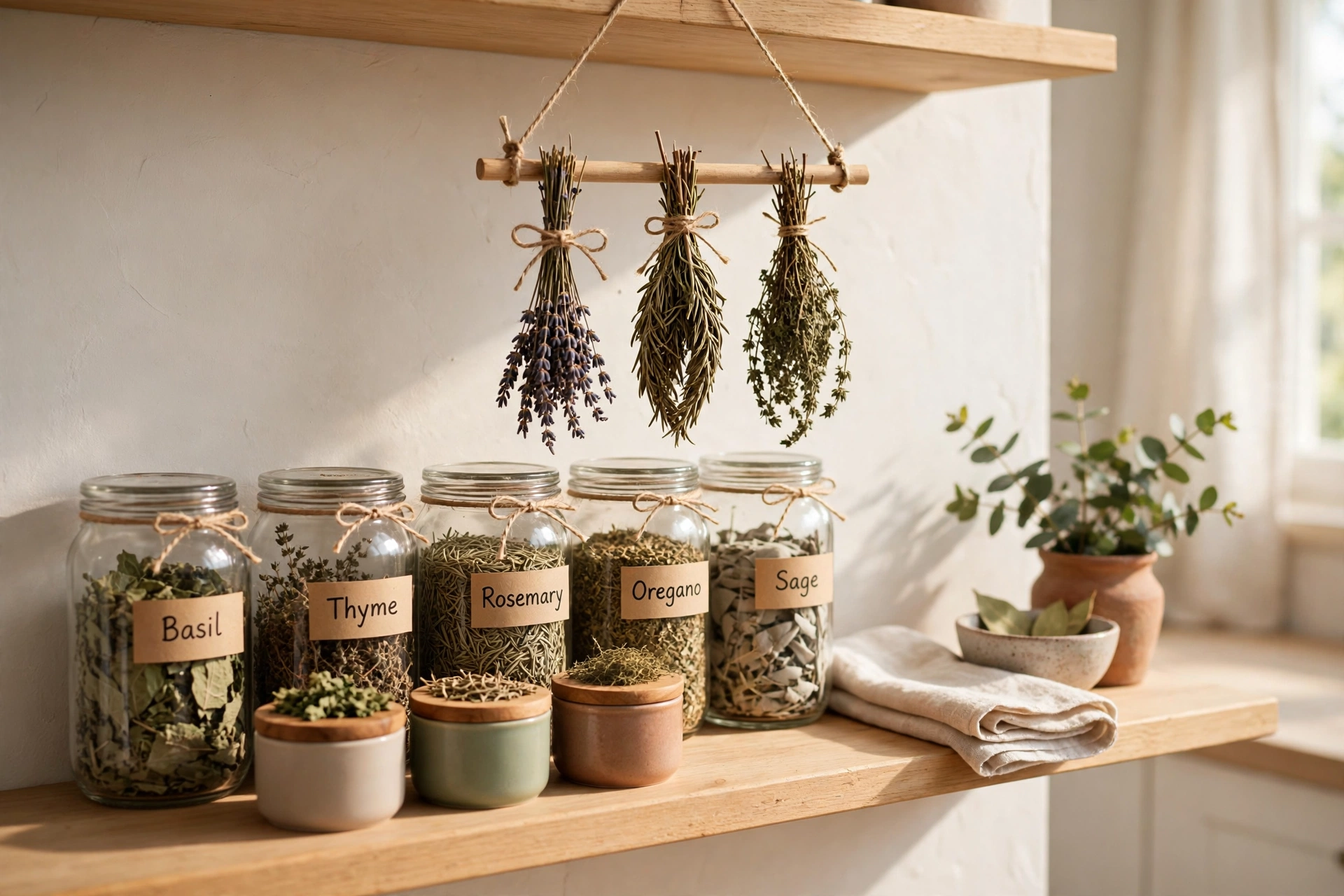
Drying herbs is the answer when you have more than you can use fresh. A big bunch from the garden, a sale at the market, a pot on the sill that grew faster than you could cook — all of it can dry into jars that last a year. Drying works best for sturdy herbs like rosemary, thyme, oregano, sage, and lavender, because their leaves are low in water and dry without moulding. Tender herbs like dill, tarragon, basil, and mint hold too much water for open-air drying, and they often turn dark or mouldy before they dry. That is why drying herbs starts with the right herb, and it is one of the most practical herb storage ideas for a cook who buys in bunches.
Wash and dry the herbs first, then tie small loose bunches with string and hang them upside down in a warm, dry place out of direct sunlight. A paper bag with holes punched in it, hung over the bunch, keeps the dust off while the air still moves. Check the bunches often — they are done when the leaves feel crispy and the stems snap instead of bending, usually after a week or two. Strip the leaves into a labeled airtight jar and store it in a cool, dry, dark cupboard, the same way the bread storage ideas guide keeps a loaf away from heat and light. A jar of dried herbs kept this way stays good for up to a year, and one jar replaces a dozen sad bunches. That is the quiet payoff of herb storage ideas that plan ahead.
Keep one jar per herb, and label the lid you can see. Rosemary in one jar, thyme in another, oregano in a third — the label is what turns a row of jars into a system. If the collection keeps growing, a herb drying rack is the next step up: a small hanging rack with hooks that holds the bunches in one place, out of the light, with room to grow. A rack costs little, it hangs on a hook or a cupboard door, and it is the home that ends the overflow — one rack, one harvest, everything in its place.
Freezing Herbs So Nothing Goes to Waste
Freezing herbs is the quiet workhorse of a big harvest. It holds the surplus — the bunches you love but cannot use this week — chopped, frozen, and labeled, out of the bin. Freezing works best for tender leafy herbs like dill, parsley, mint, and chervil, which freeze well without blanching and keep their flavour for six to twelve months. Basil turns black in the freezer and cilantro loses its flavour, so dry those two instead — or turn them into pesto and freeze the pesto. Pick the method that fits the herb, and the herb storage ideas in this guide stay simple no matter how much you grow.
Chop the washed herbs, pack about a tablespoon into each compartment of an ice cube tray, and fill with water or olive oil. Once frozen, pop the cubes into a labeled freezer bag, and drop a cube straight into a soup, sauce, or roast — no thawing needed. Woody herbs freeze well whole in a bag, with no chopping at all. The University of Saskatchewan’s guide to harvesting and storing herbs gives the same advice — tender leafy herbs freeze well with no blanching, dried herbs are done when the leaves are crispy and the stems snap, and dried herbs keep up to a year in an airtight container in a cool, dark cupboard — and the herb storage ideas in this section are built on it. Keep the bags flat in the freezer, label every bag with the herb and the date, and the freezer becomes a pantry that never wastes a bunch.
Check the freezer twice a year for frost and forgotten bags. A bag with no label is a bag with no name — you will open three wrong bags before you find the right one, and the habit dies. Write the herb and the date on the bag in plain letters, and the freezer becomes a library you can actually use. A frozen cube that stays labeled is a cube that gets cooked with, and that is the whole point of freezing herbs in the first place.
The Five-Minute Weekly Herb Check
A herb home that never gets checked slowly fills with cloudy water, damp towels, and dead leaves, and a messy jar is a jar nobody wants to use. Once a week, take five minutes: change the water in the jars, swap any damp towel for a dry one, snip off dead leaves, and put every stray bunch back in its home. Five minutes is all it takes, and these herb storage ideas stay working because the check never lets the system slide.
- Change the water in every herb jar, so the stems drink clean water, not cloudy water.
- Swap damp paper towels for dry ones in the woody-herb bundles — a damp towel grows slime faster than a dry leaf wilts.
- Snip off any dead or yellow leaves and trim the stems again, so the bunch keeps drinking.
- The weekly cleaning schedule already includes a quick fridge wipe — that is the natural moment to check the herb jars and make sure every bunch is home, green, and ready to cook with.
Frequently Asked Questions
How long do fresh herbs last in the fridge?
It depends on the herb and the home. Parsley kept in a jar of water in the fridge can last up to three weeks, and cilantro kept the same way lasts about two. Woody herbs wrapped dry in the crisper last up to three weeks too. Basil is the exception — it turns black in the fridge in a day or two, so keep it in a jar of water on the counter instead, where it lasts about a week. The herb storage ideas in this guide use the jar for tender herbs and the wrap for woody ones, so each bunch gets the home that keeps it green longest.
Should I wash herbs before storing them?
Wash them only if you can get them fully dry. A salad spinner plus a pat with a towel works — wet leaves in a bag are slime in two days, so air-drying on the counter does not count. If you cannot dry them properly, store them unwashed and wash them when you cook with them. The deciding factor is drying, not washing: whatever method you use, water sitting on the leaves is the fastest way to lose a bunch.
Can I store herbs on a windowsill instead of the fridge?
Yes, for two things: a pot of growing herbs, and a jar of basil. Herb pots on a sunny windowsill — parsley, basil, mint, chives — give you fresh leaves to snip all season, and they need nothing more than light and a weekly water. A jar of basil on the same sill stays green for a week, because basil wants warmth, not cold. Every other fresh bunch belongs in the fridge, where the cool air slows wilting. A windowsill is a home for living herbs, not a fridge for cut ones. Either way, the herb storage ideas in this guide start with the same question: is this bunch alive, or is it cut?
How do I keep dried herbs fresh?
Store them in a labeled airtight jar in a cool, dry, dark cupboard, and they will keep for up to a year. Dried herbs are done when the leaves feel crispy and the stems snap instead of bending — if a stem still bends, the herb is not dry yet, and it will mould in the jar. Keep the jar away from the stove, where heat and steam fade the flavour, and crush the leaves only when you cook with them, so the flavour stays in the leaf until you need it.
A Home for Every Bunch
The best herb storage ideas are the ones you finish in a single afternoon: pick one home for each bunch, give the jars fresh water and the bundles dry towels, and check the shelf for five minutes each week. That is it — no costly system, just one jar or wrap, one rack for drying, and a habit that takes ten seconds a day.
Your herbs hold the flavour you bought them for. A little care now means they will keep cooking for weeks, instead of ending up a slimy bunch at the back of the crisper. Pick the jar, trim the stems, and let the habit do the rest — these herb storage ideas work because they are simple enough to keep.