
Bread Storage Ideas That Keep Every Loaf Fresh Longer
Bread storage ideas matter the moment a good loaf starts going stale on your counter. You buy a crusty sourdough on Saturday, a soft sandwich loaf on Sunday, and by Tuesday one is dry and the other has a spot of mold. It feels like bread has a two-day life, and most of us just accept it.
You do not need a bigger kitchen or a special gadget to fix it. You need a simple system where every loaf has one home, and where you know which breads go in a box, which go in a bag, and which go straight into the freezer. This guide walks through that system step by step — cool the loaf first, pick the right spot, keep soft and crusty bread apart, freeze what you will not eat this week, and revive the slices that went stale anyway. Follow it once, and these bread storage ideas will keep your bread soft, your crust crisp, and your freezer full of ready slices.
Why Bread Goes Stale So Fast
Bread goes stale for a simple reason: the starch inside it slowly lets go of the water it soaked up in the oven. As the starch firms up again, the crumb dries out and turns hard. Air speeds the whole thing up, which is why an open loaf on the counter goes stale in a day while a wrapped loaf lasts three or four.
Mold is the other enemy, and it loves warmth and damp. A loaf wrapped while still warm traps steam inside the bag, and that damp is exactly where mold starts. A loaf left in a hot kitchen in summer can mold in two days, while the same loaf in a cool pantry lasts twice as long. Heat, air, and damp decide how fast your bread fails — and a good storage spot controls all three.
That is why good bread storage ideas start with the loaf itself, not with a container. Until you know whether your bread is soft or crusty, how fast your household eats it, and how warm your kitchen runs, no box or bag will solve the problem. Look at the bread first, and the storage plan writes itself.
Let the Loaf Cool Before You Store It
Never wrap a warm loaf. Fresh bread straight from the oven or the bakery feels warm for a reason: steam is still leaving the crumb, and that steam has to go somewhere. Put a warm loaf in a bag and the steam turns into damp on the crust, which softens a crusty loaf and feeds mold on a soft one.
Let every loaf cool fully on a rack before it goes away. A rack lets air move under the loaf too, so the bottom crust stays crisp instead of going soft against the counter. For a big artisan loaf, cooling takes an hour or more, and it is worth the wait. Slice only after the loaf is cool, because cutting a warm loaf crushes the crumb and lets more moisture escape.
This one habit does more than any container, and it is the simplest of all bread storage ideas. A cool loaf wrapped right lasts days longer than a warm loaf wrapped fast, and it costs nothing but patience. If you bake at home, set the loaf on the rack and walk away — the bread will still be there when it is cool.
Bread Box, Bag, or Drawer: Pick Your Spot
The bread box is the classic of all bread storage ideas, and it earns its place on the counter. A wooden or metal bread box keeps the loaf out of the light, slows the air moving past it, and holds just enough moisture to keep the crumb soft without turning the crust soggy. A bread keeper with a roll-top lid works the same way, and a bread drawer in a kitchen cabinet does the job too — dark, still air, easy to reach.
A bread bag is the cheaper answer, and it works well for soft bread. A plastic bag or a reusable beeswax wrap locks in moisture, which is exactly what a soft sandwich loaf needs. A linen bread bag sits in the middle: it lets the loaf breathe a little, so the crust stays firmer than it would in plastic, while still slowing the drying. For a crusty loaf, a paper bag beats plastic for the first day, because plastic kills the crust within hours.
Pick one spot and keep it. A bread box on the counter, a bread drawer in the cabinet, or a single shelf in the pantry — the spot matters less than the habit. When every loaf lives in the same place, you stop finding half a loaf behind the cereal boxes, and you stop buying a new loaf while the old one goes stale in a drawer you forgot to open. The small pantry organization ideas guide uses the same rule for every food on a shelf: one spot, always the same spot, so putting things away takes five seconds and finding them takes none.

| Storage spot | Best for | Watch out for |
|---|---|---|
| Wooden bread box | Everyday loaves, crusty and soft | Needs a wipe-out once a week or crumbs build up |
| Plastic bag or beeswax wrap | Soft sandwich bread, rolls | Softens a crusty loaf fast |
| Linen bread bag | Crusty loaves for a day or two | Dries soft bread out faster than plastic |
| Bread drawer | Small kitchens, no counter space | Dark and warm — check loaves often in summer |
| Paper bag | Crusty bread, first day only | Lets the loaf dry out after a day |
How to Store Soft Sandwich Bread
Soft sandwich bread is the easiest bread to store, because it wants the opposite of what crusty bread wants. A soft loaf needs moisture locked in, so an airtight bag is its best friend. Slip the loaf into a plastic bag or a beeswax wrap, press out the extra air, and close it with a bread clip or a twist tie. At normal room temperature, a soft loaf kept this way stays fresh for three to five days, and a sourdough sandwich loaf lasts even longer.
Keep the bag on the counter or in the pantry, somewhere between 60 and 80 degrees. A hot kitchen speeds up mold, and a cold fridge dries the bread out — more on that below. If your household eats a loaf in two days, a bag on the counter is all you need. If a loaf lasts a week, freeze half of it on day one and keep the rest in the bag, so the second half is as fresh as the first. These bread storage ideas work because they match the storage to the bread, not the other way around.
Sliced bread needs one more trick: slice from the middle, not from the end. Cut the loaf in half, take slices from the cut faces, then press the two halves back together before you bag it. The crust faces out, the cut faces face each other, and no open crumb is left to dry out. It is a small change, and it keeps a sliced loaf fresh a full day longer.
How to Store Crusty Bread and Sourdough
Crusty bread and sourdough need air first and a bag second. A crusty loaf left uncovered on a rack stays crisp for the first 12 hours, and a big bowl or a cake cover over it keeps the inside moist for up to a day while the air keeps the crust crisp. After 24 hours, the loaf needs a bag — paper first, then plastic if you need a few more days.
Sourdough storage is a little kinder than other breads, because the acid in the starter slows mold and keeps the crumb soft longer. A soft sourdough in an airtight bag can last up to a week at room temperature, and a crusty sourdough round keeps for three or four days if you bag it after the first day. The King Arthur Baking guide to storing sourdough makes the same point: give a crusty loaf air for its first day, then bag it airtight, and freeze anything you will not eat in a few days — it is worth a read before you pack a loaf away for the week.
These bread storage ideas treat crusty and soft bread as two different jobs, because they are. A plastic bag that saves a sandwich loaf will ruin a baguette, and a paper bag that keeps a crust crisp will dry out a soft loaf. Match the wrap to the bread, and both stay fresh longer.
Freeze What You Won’t Eat This Week
Freezing is the part of bread storage ideas that saves the most money, because it stops the clock entirely. Bread frozen well keeps for up to three months, and a slice toasted straight from the freezer tastes almost like fresh. The trick is to freeze early, before the loaf starts going stale, and to freeze in portions you can actually use.
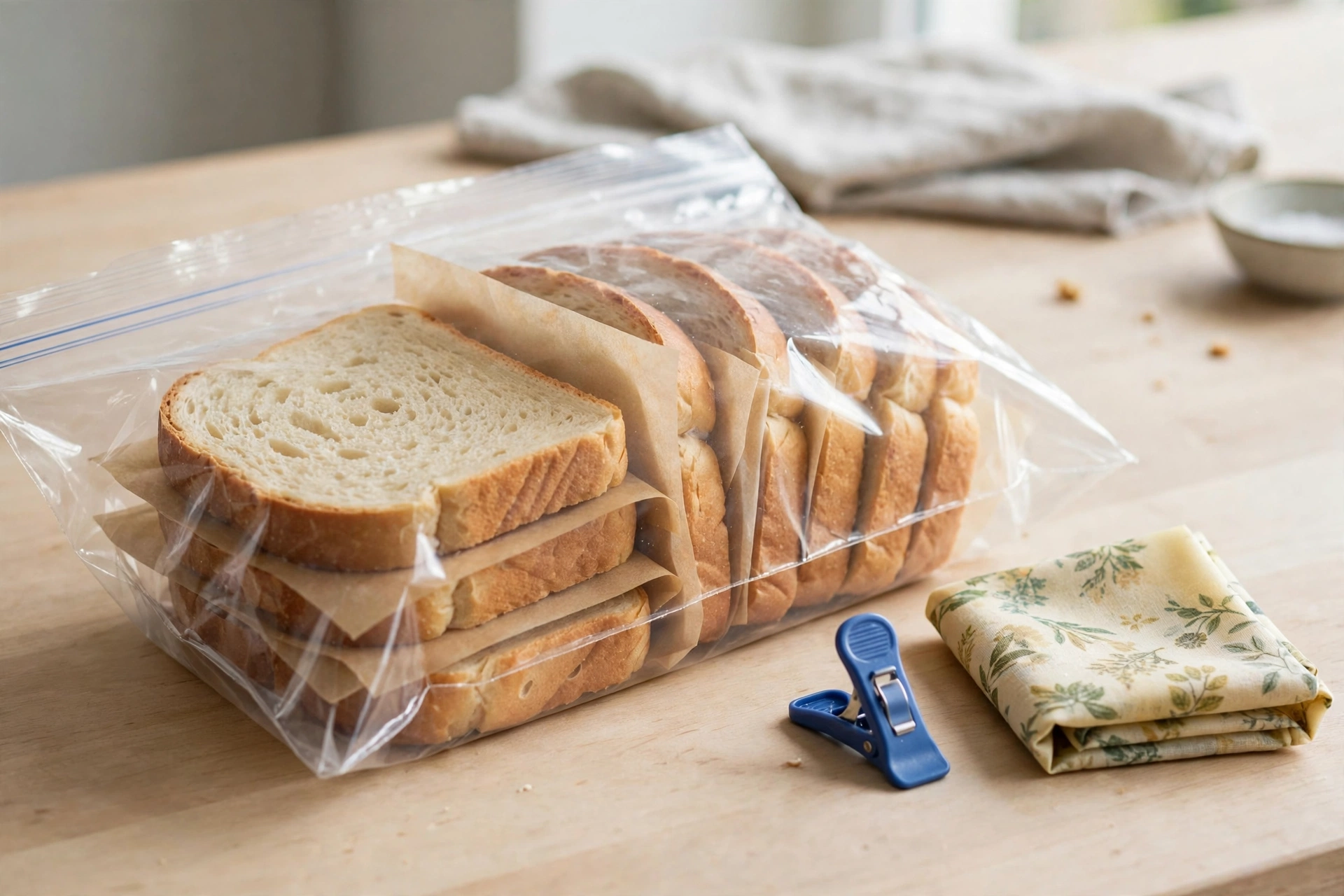
Slice the loaf before you freeze it, and slip a small piece of parchment between every one or two slices so they do not stick together. Bag the slices airtight, press out the air, and label the bag with the date. Put the bag in the coldest part of the freezer, away from the door, where the temperature stays steady. A whole loaf freezes fine too, but slices are faster to thaw and you only take out what you need.
To use frozen bread, toast slices straight from frozen — they need no thawing at all. A whole frozen loaf thaws at room temperature in about three hours, wrapped, and a quick warm-up in a 350-degree oven brings back the crust. Freezer bread storage works for every kind of bread: sandwich loaves, sourdough, rolls, bagels, and even the heels nobody wants — save the heels in a freezer bag and turn them into breadcrumbs later. That is why the freezer sits at the heart of these bread storage ideas: it turns a loaf you would have thrown away into breakfast for a month.
The Fridge Myth: Why Cold Air Hurts Bread
The fridge feels like the safe place for food, but for bread it is the worst spot in the kitchen. Bread goes stale faster in the fridge than on the counter, because the cold speeds up the starch firming that causes staling. A loaf in the fridge dries out in a day or two, while the same loaf on the counter stays soft for three or four.
The one exception is a very hot, humid kitchen in summer, where mold wins the race against staling. If your kitchen runs over 80 degrees and loaves mold in two days, the fridge can buy you time — but wrap the bread airtight first, and expect a drier crumb. For most homes, the counter or the freezer beats the fridge every time. Room temperature for this week, freezer for the rest: that is the whole rule. It is the simplest of the bread storage ideas to remember, and it saves more loaves than any box or bag.
If a loaf does grow mold, throw the whole loaf away. Mold on bread is not a spot you can cut around — the tiny threads reach deep into the soft crumb where you cannot see them. A dry, stale loaf can be saved as toast, croutons, or breadcrumbs. A moldy loaf cannot be saved at all.
Small-Kitchen Bread Storage That Actually Works
A small kitchen does not mean giving up fresh bread — it means storing it smarter. One bread box on the counter holds the loaf you are eating now, and one labeled freezer bag holds the rest. A wall-mounted shelf above the counter turns dead wall space into a bread spot, and a narrow cabinet shelf works just as well, as long as the loaf is easy to reach and nothing heavy sits on top of it. That shelf and a freezer bag are the whole system — the simplest bread storage ideas need no more room than that.
If bread has to share a shelf with other food, give it one cubby or one labeled bin and keep the bag clipped shut. A small basket under the counter holds spare bags, clips, and beeswax wraps, and a hook on the pantry door holds the linen bread bag when it is empty. The fall pantry organization ideas guide uses the same one-bin-per-job thinking for every shelf, and bread fits it neatly: one box, one bag, one freezer spot, nothing loose.
That one-box habit is what makes bread storage ideas actually work in a small kitchen, because a system you cannot find is just a tidier pile, and a small kitchen has no space for a pile. Label the freezer bag, clip the counter bag, and wipe the box out once a week — three small habits, and the bread takes care of itself.
The Five-Minute Bread Check That Keeps It Fresh
A stored loaf is not a forgotten loaf. Once a week, take five minutes and check the bread: is the box clean, are the bags clipped shut, is anything in the freezer older than three months? A loaf that has drifted past its best gets toasted, turned into croutons, or frozen as breadcrumbs before it goes stale for good.
A bag with a torn corner gets replaced before the bread inside dries out. The whole check takes five minutes, and it stops a small problem from becoming a wasted loaf. A five-minute check is the habit that keeps bread storage ideas working week after week.
- Check the box first — wipe out the crumbs, and look for any damp or mold before a new loaf goes in.
- Press the bags shut and check the bread clip — an open bag dries a loaf out overnight.
- Move any loaf older than three days into the freezer, sliced and labeled, before it turns.
- The weekly cleaning schedule already includes a five-minute pantry check — that is the natural moment to look at the bread box and make sure every loaf is home, wrapped, and ready.
Frequently Asked Questions
How long does bread last on the counter?
A soft sandwich loaf in a sealed bag lasts three to five days at room temperature, and a soft sourdough can last up to a week. A crusty loaf stays good for one day uncovered, then needs a bag for two or three more days. Warm kitchens shorten both times, so a cool pantry spot helps. Most bread storage ideas come down to the same thing: keep the air and the damp out, and keep the loaf cool and dry.
Can you freeze bread without ruining it?
Yes — freezing is one of the simplest bread storage ideas for a loaf you will not finish in a few days. Slice it first, put parchment between slices, bag it airtight, and freeze for up to three months. Toast slices straight from frozen, or thaw a whole loaf at room temperature for about three hours.
Should bread go in the fridge?
No, not if you can help it. The fridge dries bread out faster than the counter, so a loaf kept cold goes stale in a day or two. Room temperature is better for the bread you are eating this week, and the freezer is better for the rest. These bread storage ideas skip the fridge entirely, except in a very hot kitchen where mold is the bigger risk.
How do you keep a crusty loaf crusty?
Give it air for the first day: leave it uncovered on a rack, or under a big bowl so air can move around it. After 24 hours, bag it — paper first, then an airtight bag if you need a few more days. Never put a crusty loaf straight into plastic, or the crust turns soft within hours.
A Loaf Worth Keeping
The best bread storage ideas are the ones you finish in a single afternoon: let the loaf cool on a rack, pick one spot for it — a box, a bag, or a drawer — keep soft and crusty bread apart, freeze half of every loaf you will not eat this week, and check the box once a week. That is it — no special cabinet, no costly gadget, just one spot per loaf and a clip on the bag. Your bread carried a hundred good sandwiches in. A little care now means it will still be soft and fresh when you reach for it again.
