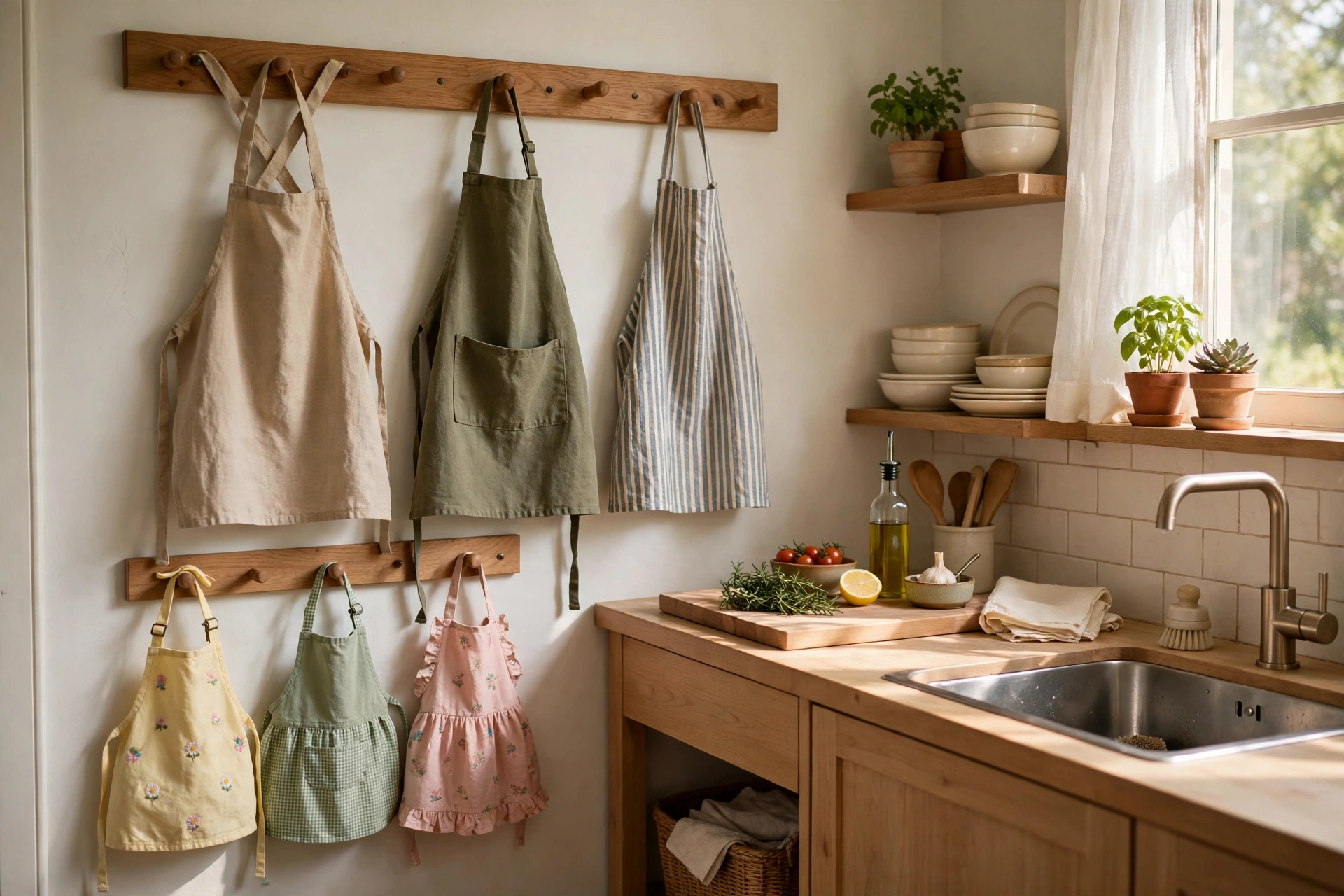
Apron storage ideas matter the moment you reach for your apron and find it crumpled behind the cereal boxes, still damp from last night’s dishes, and smelling faintly of garlic. You need it now, the pasta water is about to boil over, and instead of a clean apron you get a wrinkled ball of fabric that has been living on a chair back for a week. That is the slow mess poor storage makes — not one big disaster, but a small one, every single day.
You do not need a bigger kitchen. You need one fixed home for the apron, a hook or a drawer spot that never moves, and a habit that takes ten seconds. This guide walks through hooks, peg rails, drawer folds, kids’ aprons, and garden aprons, so your aprons stay clean, dry, and easy to grab. Follow it once, and these apron storage ideas will keep your kitchen tidy and your aprons ready every time you cook.
Why Aprons End Up Everywhere
Most aprons do not get ruined by cooking. They get ruined by how they are stored after cooking. An apron tossed over a chair back slides to the floor. One draped over a cabinet handle picks up dust and grease from the stove. One stuffed in a drawer with the dish towels comes out smelling like the sponge that lives beside it. None of it happens in a single moment — it builds up, a little at a time, until the apron is not worth wearing. That slow wear is exactly what good apron storage ideas prevent, because the damage happens between meals, not during them.
Dampness is the quiet culprit. An apron hung up wet stays damp for hours, and damp fabric smells. A wet apron folded into a drawer stays damp even longer, and the drawer starts to smell too. The fix is small: shake the apron out, hang it where air can reach it, and let it dry before it goes into its home. These apron storage ideas start with a dry apron and a fixed spot, because a dry apron lasts years longer than a damp one.
The other problem is the pile. When an apron has no home, it lands wherever your hands are when you take it off — the chair, the counter, the oven handle, the back of the door. Each landing spot is a little worse than the last, and soon you own three aprons and cannot find any of them. One home ends the pile. That is why the simplest apron storage ideas work so well — they give the apron a home before the pile ever starts.
Pick the Right Home for Your Aprons
Every apron needs one home, and the right home depends on how you use it. A daily cooking apron wants a hook by the stove, where you grab it in one motion. A baking apron wants a peg rail in the pantry, near the flour and the mixing bowls. A rarely used holiday apron wants a folded spot in a drawer or a labeled bin. When every apron has one home, putting it away takes two seconds, and the habit sticks. That is the first rule of apron storage ideas that actually last: one apron, one home, every time.
Think about where you reach for it. If you cook at the stove, the home belongs beside the stove — a hook on the wall, a peg rail by the pantry, a clip on the side of a cabinet. If you bake at the counter, the home belongs near the counter, not across the kitchen. The small pantry organization ideas guide uses the same rule for every item: store it where you use it, and the habit forms on its own. The bread storage ideas guide keeps loaves in one spot for the same reason — a fixed home beats a better container every time.
| Home | Best for | Watch out for |
|---|---|---|
| Wall hook | Daily cooking apron | Keep it away from the stove’s heat and steam |
| Peg rail | Two or three aprons in one spot | Leave space between aprons so they dry |
| Drawer fold | Delicate or linen aprons | Fold flat, never cram |
| Pantry door hooks | Small kitchens, renters | Light aprons only, no heavy canvas |
| Labeled bin | Seasonal and holiday aprons | Label it, or you will forget what is inside |
Match the home to the apron, and the apron storage ideas in this guide stay simple no matter how many aprons you own.
Hooks and Peg Rails: The Kitchen Classic
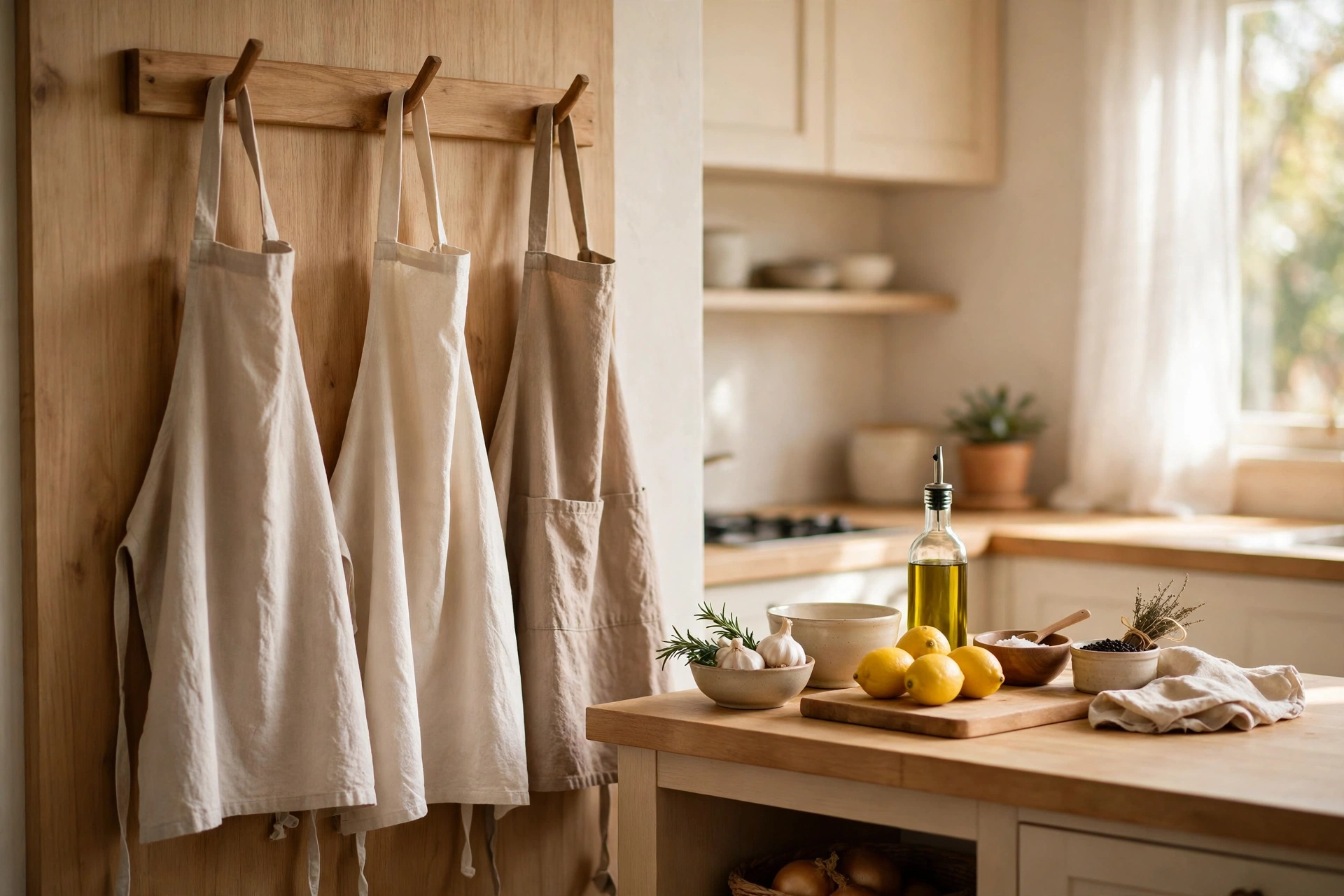
An apron hook is the simplest kitchen apron storage there is, and it is popular for a reason. The apron hangs in its natural shape, it dries fast because air moves around it, and it is always in sight — which means you actually put it back. A hook also costs almost nothing and takes no counter or drawer space at all. That visibility is the whole point: a home you can see is a home you use, and that is what makes hooks one of the most forgiving apron storage ideas for beginners.
Pick a hook that holds the apron’s neck loop without stretching it. A wide wooden peg or a rounded metal hook spreads the weight, while a thin nail pulls at the fabric and leaves a mark. Screw-in hooks hold best, but adhesive hooks work well for renters — no holes, no damage, and they come off clean when you move. Use a hook rated for the apron’s weight, and stick it to a clean, smooth surface. For apron storage for small kitchen layouts, a short apron peg rail on the wall beside the stove holds two or three aprons in the space of one cabinet door.
An apron holder with a small shelf above the hooks does double duty: the hooks hold the aprons, and the shelf holds the oven mitts and the hand towels. If you want one piece of gear that solves apron storage and mitt storage together, a holder with a shelf is the tidy choice — one spot on the wall, everything you grab while cooking in arm’s reach. Keep the rail away from the window, where sun fades cotton and weakens the fabric over time. Start with one hook and one apron, and add a second hook only when the first one is a habit — small steps are how apron storage ideas stick.
The Pantry Door Apron Station
The pantry door is the most underused spot for apron hanging ideas in the kitchen, because it is a wall you already walk past a dozen times a day. A row of over-door hooks holds the daily apron, the kids’ aprons, and the reusable shopping bags, all in one vertical strip that costs zero counter space. The apron hangs flat, it dries between uses, and it is right there when you open the pantry to start cooking.
Keep the hooks light and low. A heavy canvas work apron has no business hanging on a door, and a hook that is asked to hold too much will peel off and take paint with it. Hooks are for the light, everyday things — the cotton apron you wear while you cook, the kids’ apron, the bags you carry to the store. That is the kind of apron storage ideas that work in a rental: nothing is screwed into the wall, nothing needs permission, and the whole station moves with you.
Give each apron its own hook and label them if the family shares the kitchen. Two aprons on one hook tangle their ties, and the one underneath never dries. One hook per apron costs almost nothing and ends the morning hunt for a clean one. For a family kitchen, a row of hooks on the pantry door is the simplest apron storage you can set up in ten minutes.
Drawer Storage: Folding Aprons the Right Way
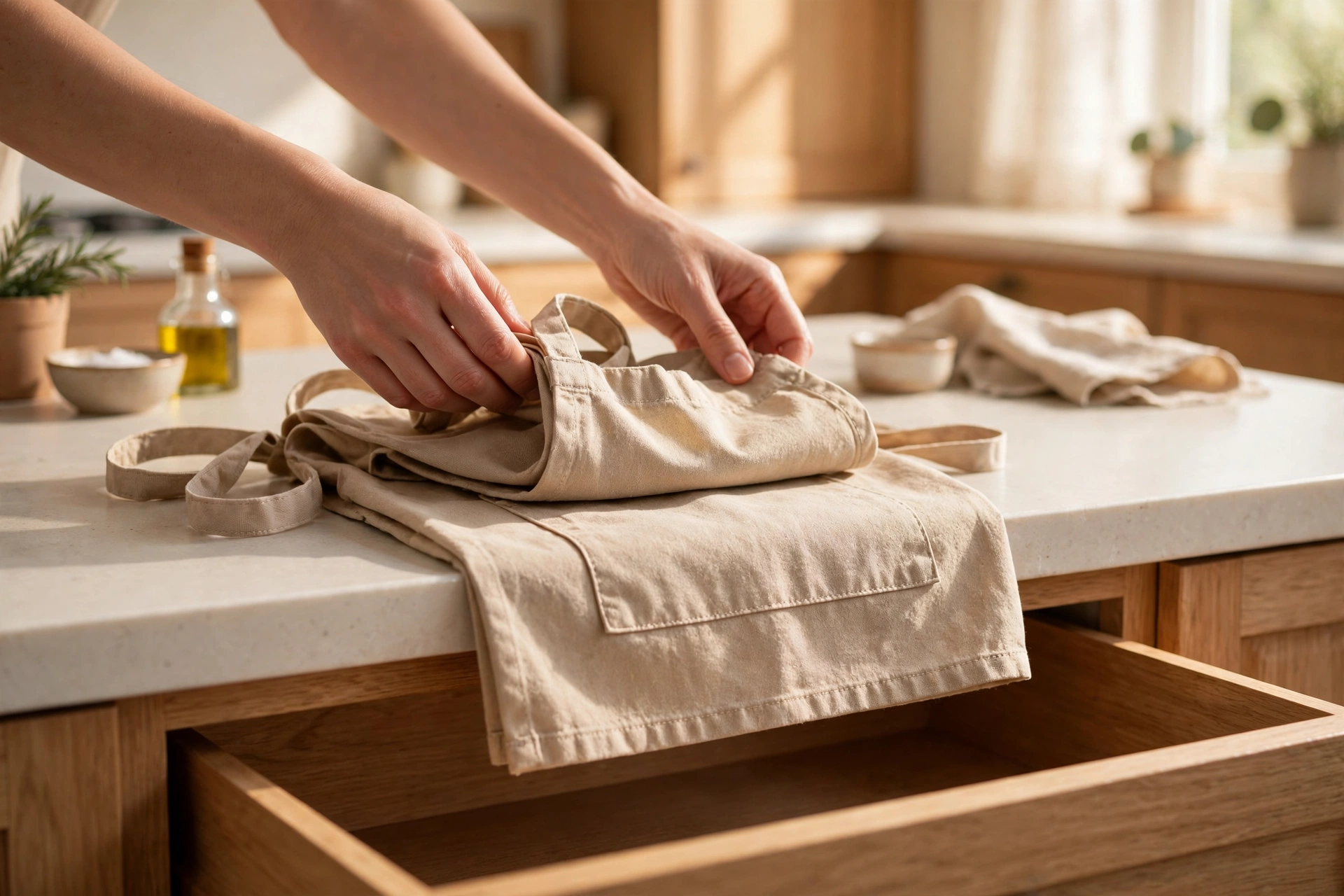
Apron folding is a skill worth learning, because a folded apron takes up less space than a hung one and stays cleaner in a drawer. Lay the apron flat, fold the sides in, tuck the neck loop and waist ties inside the fold, then fold it in thirds. The bundle fits in a drawer, on a shelf, or in a labeled bin, and it comes out without a tangle of strings. Apron drawer organization starts with one rule: one apron per fold, never stacked in a heap.
Drawer storage is the quietest of the apron storage ideas in this guide, and it is the best home for delicate fabrics. Linen and lightweight cotton aprons crease less in a drawer than on a hook, and a drawer keeps them away from kitchen dust and cooking steam. Public Storage’s guide to storing aprons and oven mitts recommends folding aprons into manageable sections or rolling them loosely, tucking the neck loop and waist ties inside the fold, and grouping aprons by occasion — the same three habits this section is built on. Keep the drawer clean and dry, and never store a damp apron in it.
Rolling works too, and it suits thicker fabrics. Roll the apron loosely from the bottom up, tuck the ties inside the roll, and stand the rolls side by side in a drawer or a small bin. A rolled apron unrolls without hard creases, and a row of rolls lets you see every apron at a glance. Folding suits light fabrics; rolling suits heavy ones. Pick one method per drawer and stick to it, so the drawer stays a system instead of a pile.
Kids Aprons: A Spot They Can Reach
Kids apron storage works only if kids can reach it, because an apron on an adult-height hook is an apron a child never hangs up. Put two low hooks on the pantry door or the side of a cabinet, at the height of a child’s shoulders, and let the kids’ aprons live there. When the hook is low enough to reach, putting the apron back becomes part of the cooking game instead of a chore — and that is what makes a low hook one of the kindest apron storage ideas for families.
Keep kids’ aprons separate from the adults’. A small hook with a colored dot or a name tag tells each child which apron is theirs, and the aprons stop migrating to the wrong hook. Washable fabric matters here more than anywhere: kids’ aprons get paint, flour, and spaghetti sauce on them, so pick cotton or a cotton blend that survives the washing machine. Hang the apron to dry after washing, and it goes straight back to its low hook.
Let kids pick their own apron. A child who chose the apron with the strawberries on it will hang it up more often than a child handed a plain one. That sounds small, but the habit is the whole point — the apron that gets hung up is the apron that stays clean, and the child who hangs it up is learning the kitchen habit that lasts.
Garden and Work Aprons Deserve Their Own Hook
Garden apron storage belongs outside the kitchen, because a garden apron carries soil, and soil does not belong near food. Give the garden apron its own hook by the back door, in the garage, or on the shed wall — somewhere you pass on the way out to the garden, not on the way to the stove. The same goes for a workshop apron: it lives where the work happens, with its own hook and its own pocket for seeds or tools.
Keep the garden apron out of the kitchen, and your apron storage ideas stay simple: one home for cooking aprons, one home for garden aprons, and never the two mixed. A garden apron hung beside the cooking aprons sheds dirt onto clean fabric, and a cooking apron hung in the shed comes back smelling of fertilizer. Two homes, two hooks, no mixing — that is the rule, and it costs nothing to follow.
Empty the pockets before you hang it up. Seed packets, twist ties, and garden twine left in a pocket end up in the wash, and a pocket full of soil stains the apron from the inside. Shake the apron out at the door, empty the pockets, and hang it on its hook. Thirty seconds now saves a stained apron later.
Washing and Rotating Aprons So They Stay Fresh
Washable apron storage starts with the wash itself, because an apron that never gets washed is an apron that smells no matter where it hangs. Wash cooking aprons after two or three heavy uses, and wash them right away after raw meat or a big spill. Check the care label first — cotton takes hot water, linen likes it cooler, and a waxed canvas apron should never go in the machine at all.
Keep two or three aprons in rotation, so one is always clean while another is in the wash. A clean apron dries faster and smells better, and that is why washing is part of apron storage ideas, not separate from them. When the clean apron comes off the line, it goes straight to its hook — never to the chair, never to the counter. The hook is the home, and the wash is just a visit away from home.
Air dry whenever you can. A dryer shrinks cotton and sets stains, while air drying keeps the fabric soft and the colors bright. Hang the wet apron on its hook or on a drying rack, smooth out the wrinkles while it is damp, and let it dry fully before it goes into a drawer. A damp apron in a drawer is a smelly drawer, and a smelly drawer is a drawer nobody wants to open.
The Five-Minute Weekly Reset
An apron home that never gets checked slowly fills with dust, and a dusty hook is a hook nobody wants to use. Once a week, take five minutes: wipe the hooks and the rail, check the waist ties for fraying, fold the spare aprons, and put every apron back in its home. Five minutes is all it takes, and these apron storage ideas stay working because the reset never lets the system slide.
- Wipe the hooks, peg rail, and pantry door, so the aprons hang on a clean home, not a dusty one.
- Check the neck loop and waist ties for fraying — a frayed tie is an apron about to fail, and a new tie is cheaper than a new apron.
- Fold the spare and seasonal aprons, and check the labeled bin so you know what is inside it.
- The weekly cleaning schedule already includes a five-minute kitchen check — that is the natural moment to look at the apron hooks and make sure every apron is home, dry, and ready.
Frequently Asked Questions
Should I hang or fold my aprons?
Hang the daily apron and fold the rest. A hook is the best daily home — the apron hangs in its natural shape, dries fast, and goes back in two seconds. A drawer is the best home for delicate fabrics and aprons you use rarely, because folding keeps them clean and free of kitchen dust. The apron storage ideas in this guide use the hook by the stove and the drawer for the spares, so each apron gets the right home for how often you wear it.
Where should I hang an apron in a small kitchen?
On the pantry door or on a short peg rail beside the stove. Both spots use wall space you already have, cost no counter or drawer space, and keep the apron one grab away from where you cook. An over-door hook rack needs no screws, so it works in a rental too. Keep the apron away from the stove’s heat and steam, and away from the sink’s splashes — and that is the whole trick of apron storage ideas for small kitchens: use the wall, not the counter.
How do I keep aprons from smelling?
Dry them fully before they go into their home, and wash them on a regular rotation. An apron hung up damp stays damp, and a damp apron in a drawer makes the whole drawer smell. Shake the apron out after cooking, hang it where air can reach it, and wash it after two or three heavy uses. A clean, dry apron on a clean hook has nothing to smell of.
How many aprons do I need?
Two or three is plenty for most kitchens: one daily cooking apron, one spare for wash day, and one for baking or messy jobs. Add one per child who cooks with you, and one garden apron if you garden. More aprons than that usually means more aprons with no home, and the pile starts again — so count the hooks before you buy another apron.
A Home for Every Apron
The best apron storage ideas are the ones you finish in a single afternoon: pick one home for each apron, give the ties a tuck and the fabric a fold, and reset the station for five minutes each week. That is it — no costly system, just one hook or rail, one drawer for the spares, and a habit that takes ten seconds a day.
Your apron takes the splashes so your clothes do not have to. A little care now means it will keep doing that job for years, instead of ending up a wrinkled ball behind the cereal boxes. Pick the hook, hang it up, and let the habit do the rest — these apron storage ideas work because they are simple enough to keep.