
Stamp Collection Storage Ideas That Keep Every Stamp Safe and Easy to Enjoy
Stamp collection storage ideas matter the first time you open an old album and find a favorite stamp faded, stuck to the page, or curled at the corners, because a stamp is a tiny piece of paper, and paper is fragile in ways a coin or a toy never is. A stamp left in sunlight fades, a stamp touched with bare fingers picks up skin oil that stains it over time, and a stamp stored in a damp drawer can stick to its neighbor and tear when you pull it free. Most collectors start with a shoebox or a desk drawer, and that works for a week, until the stamps pile up, the colors dull, and nobody can find the one stamp they actually wanted to show a friend.
The fix is simple: give every stamp a home in an acid-free album or stockbook, pick it up only with tongs, and keep the albums upright in a cool, dry spot out of direct sun. One album per theme, one pair of tongs on the desk, and one shelf that stays dry. Do that, and these stamp collection storage ideas will keep your stamps bright, flat, and easy to enjoy, instead of faded, stuck, or lost in a drawer.

Why Stamps Need Special Storage
Stamps are printed on thin paper, and paper reacts to almost everything around it. Sunlight fades the ink, damp air makes the paper curl and the gum stick, and heat can yellow the paper in a single hot summer. That is why storing stamps safely starts with the room, not the album, and why these stamp collection storage ideas put the shelf first: a cool, dry shelf beats a hot attic or a damp basement every time, and a stamp kept out of the sun keeps its colors for decades.
This post is about collectible stamps, the ones you keep in albums because you love them, not the postage stamps in a mail drawer waiting to go on an envelope. A postage stamp in a drawer is a supply, and a collectible stamp in an album is a small piece of art, and the two need different homes. The ideas below are for the collection: the albums, the stockbooks, the tongs, and the shelf where it all lives.
7 Stamp Collection Storage Ideas That Actually Work
These seven stamp collection storage ideas cover the whole life of a stamp, from the day it arrives to the day you show it to a friend. You do not need all seven on day one. Start with one album, one pair of tongs, and a dry shelf, and the rest falls into place.
1. One Album Per Theme
The first of the stamp collection storage ideas is also the one that makes the collection fun to look through: keep one album per theme, so each book tells one story. One album for animals, one for trains, one for stamps from a single country, and one for the odd favorites that do not fit anywhere else. A theme per album means you open the right book straight away, instead of flipping through a mixed pile to find one stamp.
The coin collection storage ideas guide runs the same one-home-per-item rule for coins, and it works for the same reason: a collection you can find things in is a collection you actually enjoy. Label the spine of each album with its theme, so the shelf reads like a small library, and leave a few blank pages at the back of each album for new stamps in that theme. One album per theme, a label on the spine, and room to grow is the simplest version of stamp album storage, and it is the one you will notice every time you sit down to look at your stamps.
2. A Stockbook for Duplicates and New Arrivals
A stockbook for stamps is the working book of the collection, the one where new arrivals and duplicates live before they earn a place in an album. A stockbook has clear strips across each page, and a stamp slides into a strip without glue, hinges, or mounts, so you can move it in seconds. That makes it the right home for stamps you have not sorted yet, doubles you plan to trade, and stamps you are still deciding about.
Keep one stockbook on the desk as the inbox for the collection, and move stamps from the stockbook into their theme album once a month. A stamp that sits in the stockbook for a year is a stamp that never got enjoyed, so the monthly move matters as much as the book itself. One stockbook on the desk, one album per theme on the shelf, and a monthly move between them is what makes these stamp collection storage ideas work, instead of letting a growing collection turn into a pile.
3. Handle Every Stamp With Tongs
Stamp tongs are the single cheapest tool that protects a collection, because the oil on your fingers stains paper slowly, and a stain you cannot see today shows up as a brown mark in a year or two. Tongs pick up a stamp by its edge, with no fingers on the printed face and none on the gum, and a pair of tongs with a flat spade tip is gentle enough for even the oldest stamps. Keep the tongs on the desk, next to the stockbook, so they are always the first thing your hand reaches for.
Never pick up a stamp with wet hands, and never lick a finger to grip a stamp, because damp and spit are worse than dry fingers. If a stamp falls on the floor, pick it up with the tongs, not your fingers, and check it for dust before it goes back in the book. One pair of tongs, kept on the desk and used every single time, is the habit that keeps a collection clean, and it is the cheapest of all the stamp collection storage ideas.
4. Mounts or Hinges, Never Tape or Glue
Acid-free stamp mounts and stamp hinges are the two safe ways to fix a stamp to an album page, and the choice between them depends on the stamp. A mount is a clear pocket that holds the stamp without touching its back, so the stamp slides out untouched, and mounts are the right pick for mint stamps and any stamp you want to keep perfect. A hinge is a small folded piece of gummed paper that sticks to the back of the stamp and to the page, and hinges are the classic pick for used stamps where the back matters less.
What never goes on an album page is tape, glue, or a sticky note, because tape yellows and leaves marks, glue soaks into the paper, and both can tear a stamp when you try to move it. Use mounts for the stamps that matter most, hinges for the rest, and keep both acid-free, because ordinary paper and cheap glue turn yellow with age and take the stamp with them. One box of mounts, one pack of hinges, and no tape anywhere near the albums is the rule these stamp collection storage ideas run on: stamps stay removable and safe.
5. Keep the Collection Dry and Out of the Sun
To keep stamps dry, store the albums in a room that stays cool and steady, away from the bathroom steam, the kitchen heat, and any wall that gets damp in the rain. A stamp collection binder left in direct sun fades fast, and a binder left in a damp room can grow mold on its pages, so the shelf matters as much as the album. The Mystic Stamp Discovery Center’s guide to storing your postage stamp collection says the same thing: store your collection in a cool, dry place away from direct sunlight and fluctuating humidity levels.
Protect stamps from sunlight by keeping the shelf away from the window, or by putting the albums in a cabinet with a door, so the sun never falls on the pages. A silica gel packet tucked on the shelf helps in a damp house, and a quick check for a musty smell once a season tells you if the room is too wet. One dry shelf, one closed cabinet or shaded spot, and no sun on the pages is what keeps the colors bright for years, and it is the part of these stamp collection storage ideas that does the most quiet work.
6. Store Albums Upright on a Shelf
A stamp collection album stores best standing upright on a shelf, like a book, instead of lying flat in a stack, because a stack presses stamps against the facing pages and can make them stick. Upright albums also stay easy to pull out, so you actually open them, and a shelf that fits the albums snugly keeps them from leaning and bending the pages. Leave a little space at the end of the shelf for the next album, so a growing collection never ends up in a pile on the floor.
The small home office organization ideas guide runs the same upright rule for books and binders on a desk shelf, and it works for the same reason: things stored upright are things you can see and reach. Keep the heaviest albums at the bottom of the shelf and the stockbook on the desk, so the books you open most are the easiest to grab. One shelf, albums standing upright, and the stockbook on the desk is the setup these stamp collection storage ideas are built on, and it keeps a collection both safe and used.
7. Label, List, and Check Once a Season
The last of the stamp collection storage ideas is the one that keeps the rest working: label each album, keep a simple list of what is inside, and check the collection once a season. A list on paper or in a notebook, with the theme, the number of stamps, and any stamp you are still looking for, means you never buy a duplicate by mistake, and you always know which album holds which stamp. Photograph the best pages as a backup record, so the list survives even if an album is ever lost.
A seasonal check takes ten minutes: open each album, look for curling, sticking, or spots, and smell for damp. A stamp that has started to stick should be eased free with tongs, never pulled, and a page that smells musty should be aired out and moved to a drier shelf. One list, one label per album, and a ten-minute check when the seasons change is what keeps a collection safe for years, and it is the check that keeps all of these stamp collection storage ideas working as they should.
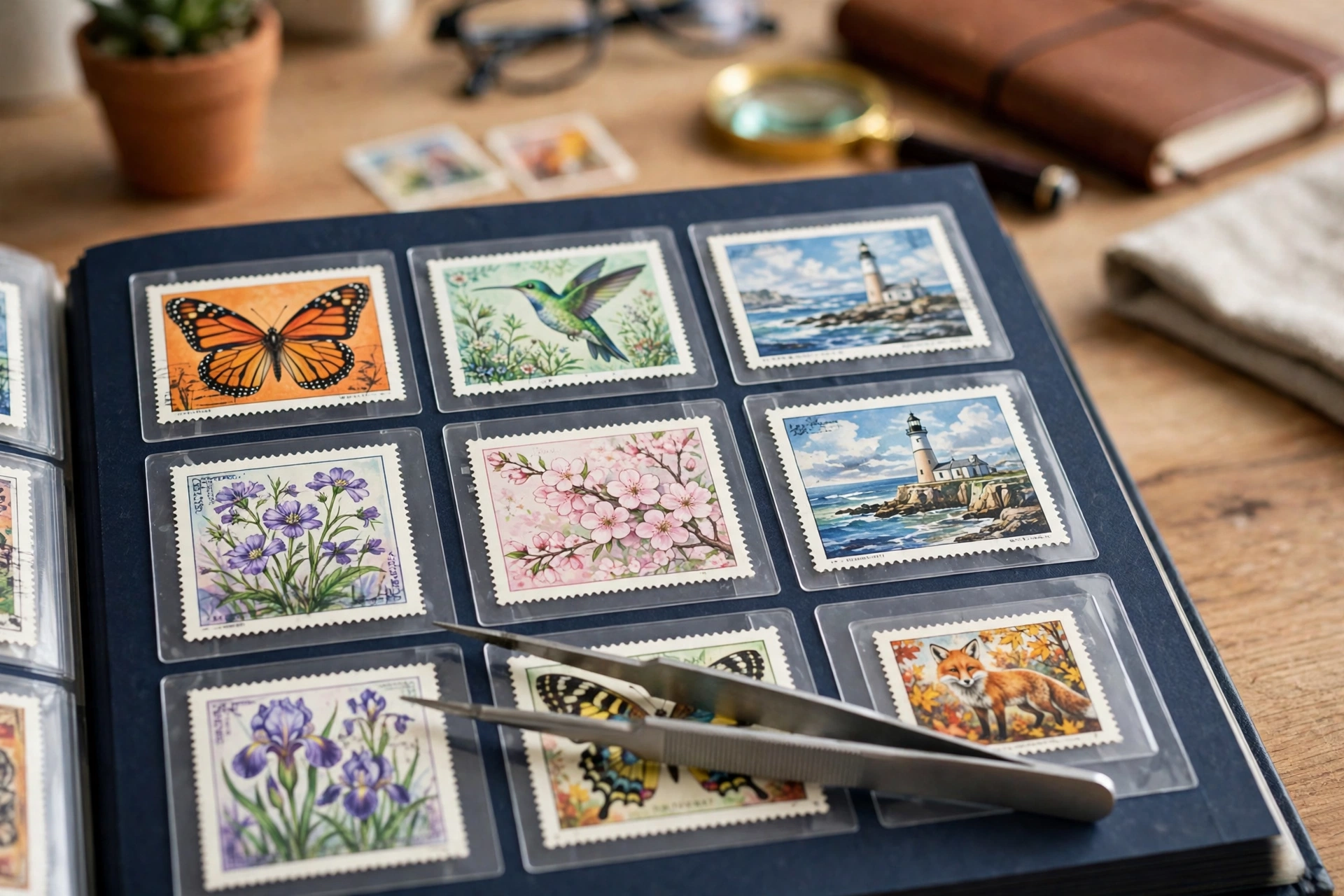
Where to Store a Stamp Collection
Figuring out where to store a stamp collection starts with the sun and the damp, because an album on a sunny windowsill fades, an album in a damp basement molds, and every one of these stamp collection storage ideas fits a different home, so here is how the usual spots compare — and why the stamp collection storage ideas above point to a cool shelf first.
| Storage spot | Best for | Watch out for | Keep it safe by |
|---|---|---|---|
| Home office shelf, upright albums | The main collection | Sun through the window | Albums upright, away from the window |
| Desk, stockbook + tongs | New arrivals, sorting | Dust, coffee spills | Stockbook closed when not in use |
| Closed cabinet with a door | Valuable albums | Damp air inside | Silica gel packet, check each season |
| Cool closet shelf | Extra albums, duplicates | Damp, heat from pipes | Albums upright, off the floor |
| Bank safe deposit box | The most valuable stamps | Hard to enjoy | Only for stamps you rarely show |
| Never: attic, damp basement | Nothing | Heat, damp, mold | Do not store stamps here at all |
| Never: sunny windowsill | Nothing | Faded colors | Do not store stamps here at all |
For a small flat or a rented home, one shelf in the home office and one stockbook on the desk covers almost everything, because the albums hold the collection, the stockbook holds the new arrivals, and neither one takes up more room than a row of books. The fall home office organization ideas guide uses the same desk zone for the things you reach for every day, and a stamp shelf fits right in. A shelf, a stockbook, and a dry spot is the simplest version of stamp collection storage ideas, and it is the one that works in a rented flat, a family home, or a house with a small study alike.

5 Mistakes That Damage Stamp Collections
Even a good storage setup fails when one of these habits slips in. Every one of these mistakes is easy to avoid once you know it, and this system of stamp collection storage ideas is built around avoiding them. The weekly cleaning schedule guide runs the same kind of check for the whole house: a quick look on a regular day catches the small problems before they grow, and the stamp shelf deserves the same ten minutes.
- Touching stamps with bare fingers. Finger oil stains paper slowly, and a fingerprint you cannot see today shows up as a brown mark in a year. Tongs every time, no exceptions.
- Storing albums flat in a stack. A stack presses stamps against the facing pages, and stamps can stick and tear when the book is opened. Albums stand upright, like books.
- Using tape, glue, or sticky notes. Tape yellows, glue soaks in, and both can tear a stamp when you try to move it. Mounts or hinges only, both acid-free.
- Keeping the collection in the attic or a damp basement. Heat yellows paper, damp grows mold, and both ruin stamps quietly over months. A cool, dry shelf in a lived-in room is the only safe spot.
- Never checking the albums. A stamp that starts to stick or a page that starts to smell musty only gets worse if nobody looks. A ten-minute check each season catches it early.
Frequently Asked Questions
How do you store a stamp collection so it stays safe?
How do you store a stamp collection so it stays safe? Keep the stamps in an acid-free album or a stockbook, handle every stamp with tongs, and store the albums upright on a cool, dry shelf out of direct sunlight. Use mounts for mint stamps and hinges for used ones, label each album by theme, and check the collection once a season for curling, sticking, or damp. This is a collection of stamps you keep because you love them, not postage stamps waiting in a mail drawer — those are supplies, and they need a different spot. One album per theme, one pair of tongs, and a dry shelf is the short version, and it is the one that keeps stamps bright and flat.
Album or stockbook: which is better for stamps?
Album or stockbook: which is better for stamps? An album is better for the stamps you want to show and keep, because each stamp has its own space, often with a printed spot and a label, and the pages read like a book. A stockbook for stamps is better for new arrivals, duplicates, and stamps you are still sorting, because the clear strips let you slide stamps in and out without mounts or hinges. Most collectors use both: the stockbook as the inbox on the desk, and the album as the finished home on the shelf. Stamp stockbook pages hold the working stamps, the album holds the keepers, and the monthly move between them keeps the collection tidy.
What is the best way to handle stamps without damaging them?
What is the best way to handle stamps without damaging them? Use stamp tongs, and pick the stamp up by its edge, with nothing touching the printed face or the gum. A flat spade tip is gentle on old stamps, and a pointed tip helps with small stamps in tight mounts. Keep the tongs on the desk next to the stockbook, wash your hands before you sit down, and never touch a stamp with wet fingers. Tongs cost little, last for years, and they are the one tool every collector should own before the first album.
Where should you never store a stamp collection?
Where should you never store a stamp collection? Never store a stamp collection in an attic, a damp basement, a garage, or on a sunny windowsill, because heat yellows the paper, damp grows mold and makes stamps stick, and sunlight fades the ink until the design is hard to see. A cool, dry shelf in a room you live in, with the albums standing upright and out of direct sun, is the safe spot, and a closed cabinet with a door is even better for the most valuable albums. If a room smells damp, the stamps do not belong there.
One Album, One Pair of Tongs, One Dry Shelf
One album per theme, one stockbook on the desk for new arrivals, one pair of tongs used every single time, and a ten-minute check when the seasons change is a setup with one less faded stamp, and it is the acid-free pages, the tongs, and the dry shelf that keep the stamps bright, not the size of the collection. These stamp collection storage ideas work because they are simple enough to repeat without thinking about it. One home for each stamp, the oldest stamps checked first, and a quick look when the seasons change.
Keep one album where you can reach it, keep the stockbook on the desk, keep the tongs beside it, and move any stamp that starts to stick before it tears. That is what good stamp collection storage ideas do: they turn a shoebox of loose stamps into a collection that stays bright, flat, and ready to show, and a shelf where every stamp has a home.