

Photo organization ideas turn a camera roll you dread opening into a library you actually enjoy browsing. If you have ever scrolled for ten minutes looking for one birthday picture, opened three different apps to find a vacation shot, and given up halfway through, you know the problem: the photos are somewhere, but the finding is broken. Most of us carry thousands of pictures now — on a phone, in a cloud account, on an old laptop, and in a box of prints in the closet.
The fix is not a fancier app or a prettier album. It is one system where every photo lives in one place, with a name you can search and a folder you can guess. A simple folder plan, clear file names, and a few tags do more than any new tool, because the tool never mattered as much as the habit. A weekly cleaning schedule pass over the desk keeps the workspace clear, and the same ten-minute habit keeps the photo pile from growing back.
This guide walks through the whole setup: gather every photo, sort it fast, pick a folder system, name and tag each picture so you can find it, sort the prints, scan the old ones, and back the whole library up so one dead phone never erases a decade. By the end of the week, you will know where every favorite lives, and looking for a picture will take seconds instead of an afternoon. That is what photo organization ideas are really for: finding the picture, not filing it.
Why Photos End Up Scattered Everywhere
Photos scatter because they arrive from everywhere. A phone takes one, a friend texts another, a camera card holds a third, and Grandma’s album sits in a box. Each one feels small on its own, so none of them gets a real home — and a few years later you own ten thousand pictures and can find about ten of them.
The second problem is that most photos arrive with no name at all. A file called IMG_4023 tells you nothing, a screenshot has no date you can trust, and a print has no note on the back. When a photo is hard to find, you stop looking for it, and the memories quietly go missing even though the files are right there. Family photo organization starts here: one place, one name, one habit. Photo organization ideas fix the finding part first, because a photo you can find in ten seconds is a photo you will actually look at again.
Gather Every Photo Into One Place First
Before you buy storage or download an app, gather everything. Photo organization ideas start with the roundup, because you cannot sort a collection you have not seen in one place. Pull the photos off the old phone, the camera cards, the laptop, the cloud accounts, and the box of prints, and bring them to one spot — one main folder on your computer or one external drive.
Here is where photos usually hide:
- Phones and tablets: camera rolls, screenshots, saved posts, and photos shared in messages.
- Cloud accounts: Google Photos, iCloud, Dropbox, and Amazon Photos, sometimes all at once.
- Old devices: laptops, camera memory cards, USB sticks, and that old hard drive in a drawer.
- Prints and albums: loose prints, framed photos, old albums, and boxes from family members.
Put it all in one holding folder for now — a temporary spot, not the final system. Whether you use Google Photos organization or an old external drive, the roundup works the same way. A small home office organization ideas pass helps here too: clear one shelf or one drawer for the drive and the print box, so the pile has a home while you sort it. That is the whole point of photo organization ideas: a full picture of what you own, not a perfect system yet.
Keep, Delete, or Digitize: The Quick Sort
Now sort the pile fast. Photo organization ideas keep this step to one sitting, because a sort that drags on for weeks never gets finished. Ask three questions about each photo: is it a keeper, is it a duplicate, and would I miss it if it were gone? Keep the keepers, park the maybes, and let the rest go — photo declutter works best when you decide fast and move on.
- Keep: favorites, family milestones, holidays, trips, and the shots that make you smile.
- Delete: blurry shots, accidental screenshots, near-identical bursts, and photos of things you no longer need.
- Digitize: every print worth keeping, starting with the oldest and most fragile ones.
Be honest about the maybes. Ten near-identical shots of the same sunset are not ten memories — they are one memory with nine copies. Keep the best one and delete the rest, and your library shrinks by a third before you have even started filing. What is left is a photo collection you actually enjoy opening. Photo organization ideas keep the bar that simple: if it makes you smile, it stays; if it doesn’t, it goes.
Pick a Folder System That Fits How You Think
A system only works if it matches the way you remember things. Some people think in years, others in events, and others in people. Photo organization ideas work with any of these patterns, so pick the one that fits your brain, not someone else’s pretty screenshot. The table below shows how the three common setups compare.
| Folder system | Best for | Watch out for |
|---|---|---|
| Year, then month, then event | Timelines, big collections, easy filing | Harder to jump to one person or trip |
| Event first, then date | Trips, holidays, family gatherings | Dates can get messy over time |
| Topic, then year | People, hobbies, kids’ school years | Needs steady naming to stay tidy |

A year-based plan is the simplest start: one folder per year, twelve month folders inside, and an event name on the folder when it matters — “2024-06 Beach Trip” reads clearly at a glance. An event-first plan suits trips and holidays, where the trip name is what you remember. A topic plan suits family photos, where “Kids” or “Grandma” is the first thing you think of. A budget organization ideas check helps here too: start with the photo folders and the free photo app you already have before buying storage or software. Pick one pattern and stick with it — a photo filing system only works when every new photo goes to the same kind of place.
Name and Tag Photos So You Can Find Them
A photo you cannot search for is a photo you will lose, no matter how neat the folders look. Photo organization ideas treat the file name as the real work: give every photo a clear name — date first, then the event — so “2025-06-14_Birthday_Mom_001.jpg” beats “IMG_4023” every time. Add a short event word, and the name tells you what is inside before you open it.
Photo tagging is what makes a big collection feel small. Tag each favorite with a few honest labels:
- People: who is in the photo, by name, so face search finds them later.
- Place: the town, the beach, the house — wherever the memory happened.
- Event: birthday, wedding, holiday, school play, first day of school.
- Use: print-worthy, gift idea, frame it, share with family.
A photo tagged “Mom, birthday, 2025” shows up for a birthday slideshow and for a family album, without living in two folders at once. Most photo management apps read the date from the file and let you add tags in a few taps — do it the day you import, because tagging later never happens. And keep a “Best of” album for each year: one album, your favorites only, updated as you go, so the best pictures are always one tap away. That is digital photo organization at its simplest: names and tags that do the finding for you.
Organize Printed Photos and Old Albums
Prints need the same care as digital files, just with boxes instead of folders. Photo organization ideas cover prints too, because the shoebox in the closet is where the oldest memories live. Start by sorting prints into piles by decade or by event, then into acid-free boxes or albums with labels on the spine — “1990s,” “Kids,” “Holidays” — so you can pull one box without emptying the shelf.
Handle old prints with clean, dry hands, and keep them away from heat, damp, and direct sun. Write names and dates lightly on the back in pencil, never pen, so the ink never bleeds through. A small kids room organization ideas note fits here as well: kids love flipping through old albums, so keep one “family favorites” album low on the shelf where little hands can reach it, and keep the fragile originals higher up. Photo album organization is slow work, so do one box per evening and stop while it still feels fun — a finished shelf beats a perfect system that never gets done.
Digitize Old Photos Before They Fade
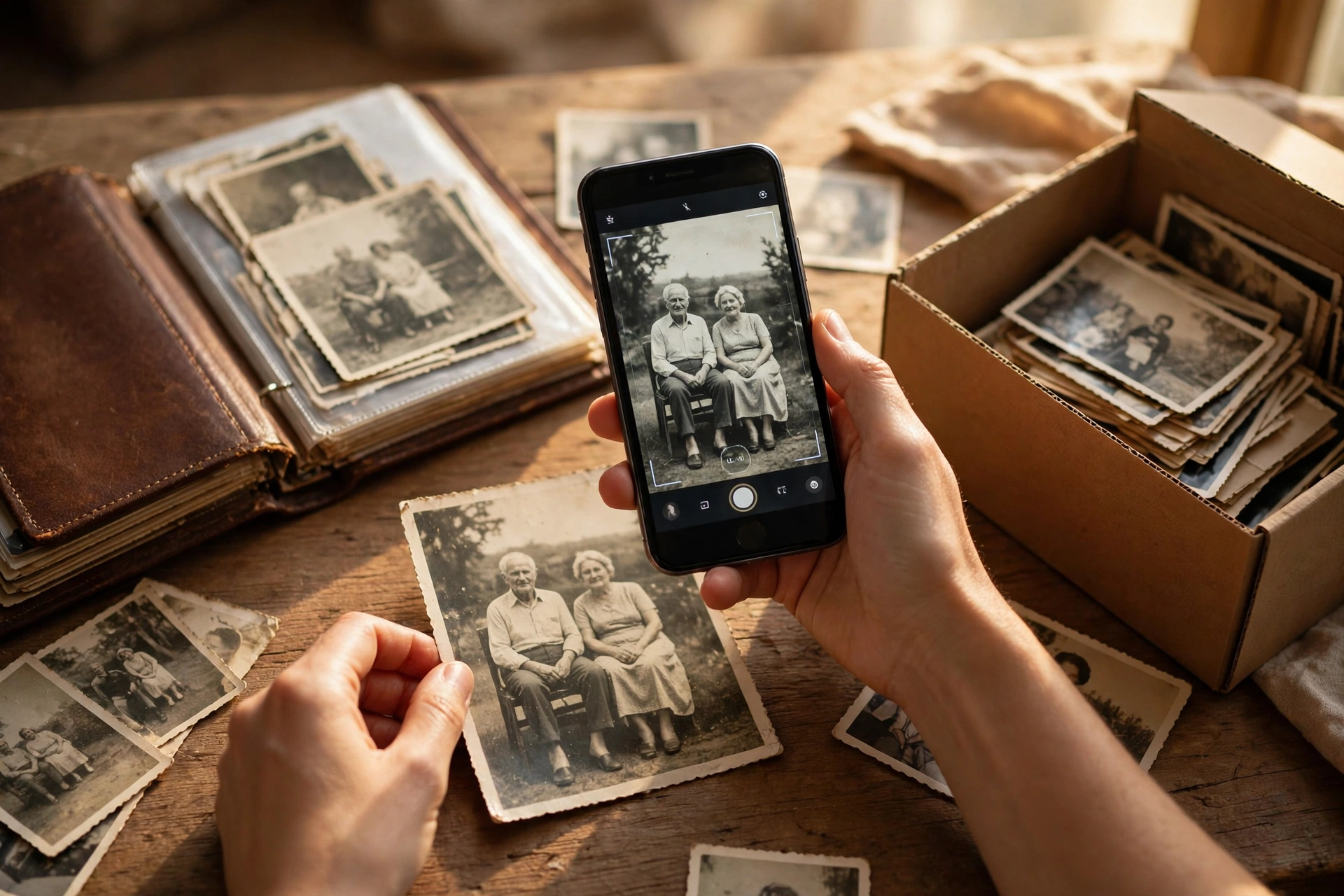
Prints fade, albums get damp, and boxes get lost in moves — and a photo that exists only on paper is one accident away from gone. If you want to organize old photos before the holidays, start with the prints that matter most. Photo organization ideas protect the originals by making a digital copy first: scan or photograph every print worth keeping, starting with the oldest and the ones with no negative or backup. Photo scanning takes less than a minute per print with a phone app, and a flatbed scanner is worth it for a big box.
Scan at a high resolution, save the files with the same date-and-event names as the rest of the library, and file them in the same folder system — scanned photos belong with the digital ones, not in a separate pile you forget about. Keep the original prints too, stored safely, because the scan is the backup and the print is the keepsake. If you want a second opinion on the digitizing steps, the Capture guide to organizing photos walks through the same gather, sort, scan, and tag process with photo-safe storage tips and a long list of ways to sort a collection.
Back Up the Library So One Crash Doesn’t Erase It
A library with one copy is a library with no copy. Photo organization ideas only last if the copies survive, so back everything up with the simple 3-2-1 rule: three copies, on two different kinds of storage, with one copy somewhere else — a cloud account plus an external drive covers it for most families. These photo storage ideas work for any size library, from a few hundred shots to a decade of them. Set the backup to run on its own, so a lost phone or a dead drive is a bad afternoon, not a lost decade.
Check the backup twice a year. Open the drive, open the cloud folder, and make sure the newest photos are actually there — a photo backup you never test is a guess, not a plan. Keep one copy offsite, too: a drive at a family member’s house, or a cloud account, so a fire or flood at home does not take the only copy. And when you print holiday photos for gifts or cards, pull them from the backup copy, not the only original — holiday photo organization starts with the card photo, because that picture is the one everyone asks for, and it should come from a library you trust.
Keep the System Working Week After Week
A photo system fails quietly: a few hundred new photos pile up, the folders fall behind, and suddenly the camera roll is a mess again. Photo organization ideas only last if the upkeep is tiny — ten minutes a week keeps the library calm, not a weekend project. Import new photos the day you take them, delete the duds right away, and tag the favorites while you still remember the day.
Your first week can look like this:
- Tonight: gather every photo into one main folder.
- Tomorrow: delete the duplicates and blurry shots.
- Wednesday: set up the year folders and name the first batch.
- Thursday: scan the oldest prints and file them with the rest.
- Friday: turn on the backup and check that it actually ran.
Do a quick review once a season. Pull the duplicates, check the backup, and update the “Best of” album for the year. Holiday kitchen organization ideas get easier too, once the library is tidy — the holiday card photo is already filed, named, and backed up, so printing cards takes minutes. And ask the family which pictures they want printed or framed — the collection should follow the way you actually live, not the way you wish you filed. A tidy photo library is not the goal; finding the picture you want, when you want it, is.
Frequently Asked Questions
How do I start organizing thousands of photos?
Gather every photo into one main folder first, then delete the duplicates and blurry shots before you file anything. Pick one folder system — year, then month, then event works for most people — and name files with the date and event, so every photo has an address you can guess.
What is the best way to organize digital photos?
Photo organization ideas work best when the system matches the way you remember: folders by year and event for timelines, tags for people and places, and a “Best of” album for favorites. Pick one system, name every file with the date and event, and back the library up in two places.
How do I organize old printed photos?
Sort prints into piles by decade or by event, then into acid-free boxes or albums with labels on the spine. Write names and dates in pencil on the back, scan the oldest and most fragile ones first, and store the originals away from heat, damp, and sunlight.
Should I digitize all my old photos?
Yes, starting with the oldest and the ones with no other copy — a phone scanning app handles a few dozen in an evening, and a flatbed scanner is worth it for a big box. Save the scans with the same date-and-event names as your digital photos, file them in the same folders, and keep the originals stored safely.
A Calmer Library Starts With One Folder
Photo organization ideas are not about a perfect archive or a perfect app — they are about one place where every photo lives, a name you can search, and a habit small enough to keep. Gather the pile, sort it fast, pick your folders, and back it all up. By next Sunday, looking for a picture takes seconds instead of an afternoon, and the photos you love are the ones you can actually find.
Start tonight with the roundup: one folder, one drive, every photo in one place. The tags and the albums can wait until tomorrow — the pile is the first step, and it takes less time than scrolling for one birthday picture.