

Patio organization ideas work best when you treat the patio like a room, not a dumping ground. Most patios get messy the same way: chairs pile up, cushions fade in the rain, garden tools lean against the wall, and the space slowly stops being a place to sit. A few simple zones can fix that, and none of them need a big budget or a full makeover.
The real problem is not a lack of space. It is that the patio has to do too many jobs at once: a place to eat, a place to relax, a place to store the grill, and a place to keep the watering can. When every job shares the same few square feet, clutter wins. This guide walks through simple patio organization ideas that fit real outdoor spaces, from a tiny apartment patio to a big backyard deck.
Pick the ideas that fit your patio, your budget, and the way you use it, and skip the rest. A family that grills every weekend stores things differently than someone who just wants a quiet chair and a book. Start with one zone and add the rest over a few weekends. These patio organization ideas fit any patio, big or small, and your patio can feel like an extra room again, not a storage yard.
Start With Zones, Not Storage Bins
Before you buy a single bin, divide the patio into jobs. Most patios need four zones: seating, eating, gardening, and storing. Each zone holds only the things for its job, so nothing wanders across the patio. This is the same idea behind small patio organization in tiny spaces: one spot, one job, nothing extra.
Put the seating zone where the view is best, even if that is just the corner with the most shade. Put the eating zone near the door, so carrying food out is easy. Put the gardening zone near the plants or the hose, so water stays in one place. Put storage on the wall or corner you use least, so the living areas stay clear.
The four zones to set up:
- Seating: chairs and a small table, with cushions that come inside at night
- Eating: the grill or dining table, close to the kitchen door
- Gardening: pots, tools, and the watering can, near the hose or the sunniest spot
- Storing: a deck box or shed corner on the quietest wall, holding cushions and tools
Good patio organization ideas start with zones, not shopping. Walk through a normal evening in your head: sit down, eat outside, water the plants, and put everything away. If any step makes you cross the patio twice, move the zone closer. A good layout saves steps, and saved steps mean you actually use the patio instead of looking at it through the window. These patio organization ideas work because each zone has one clear job.
Clear the Patio Before You Organize It
No storage system fixes a patio full of things you do not use. Start with a patio declutter: pull everything off the patio and sort it into three piles — keep, fix, and let go. A broken chair, a cracked pot, and a grill cover that no longer fits are all taking up space that your good furniture needs.
Be honest about the keep pile. If you have not sat in a chair all summer, it is not earning its spot. If you own four watering cans and use one, the other three can go. Outdoor storage ideas fail when they try to store too much, so the declutter comes first, before any shopping.
Sweep the patio once it is empty. A clean floor shows you how much room you really have, and it makes the space feel new before you put a single thing back. Most people find their patio is bigger than they thought once the broken and unused items are gone. These patio organization ideas work in rented homes too, as long as you stick to freestanding storage and removable hooks. Rental friendly organization ideas like a deck box or a rolling cart need no drilling and leave no marks behind.
Store Cushions and Fabrics So They Stay Dry
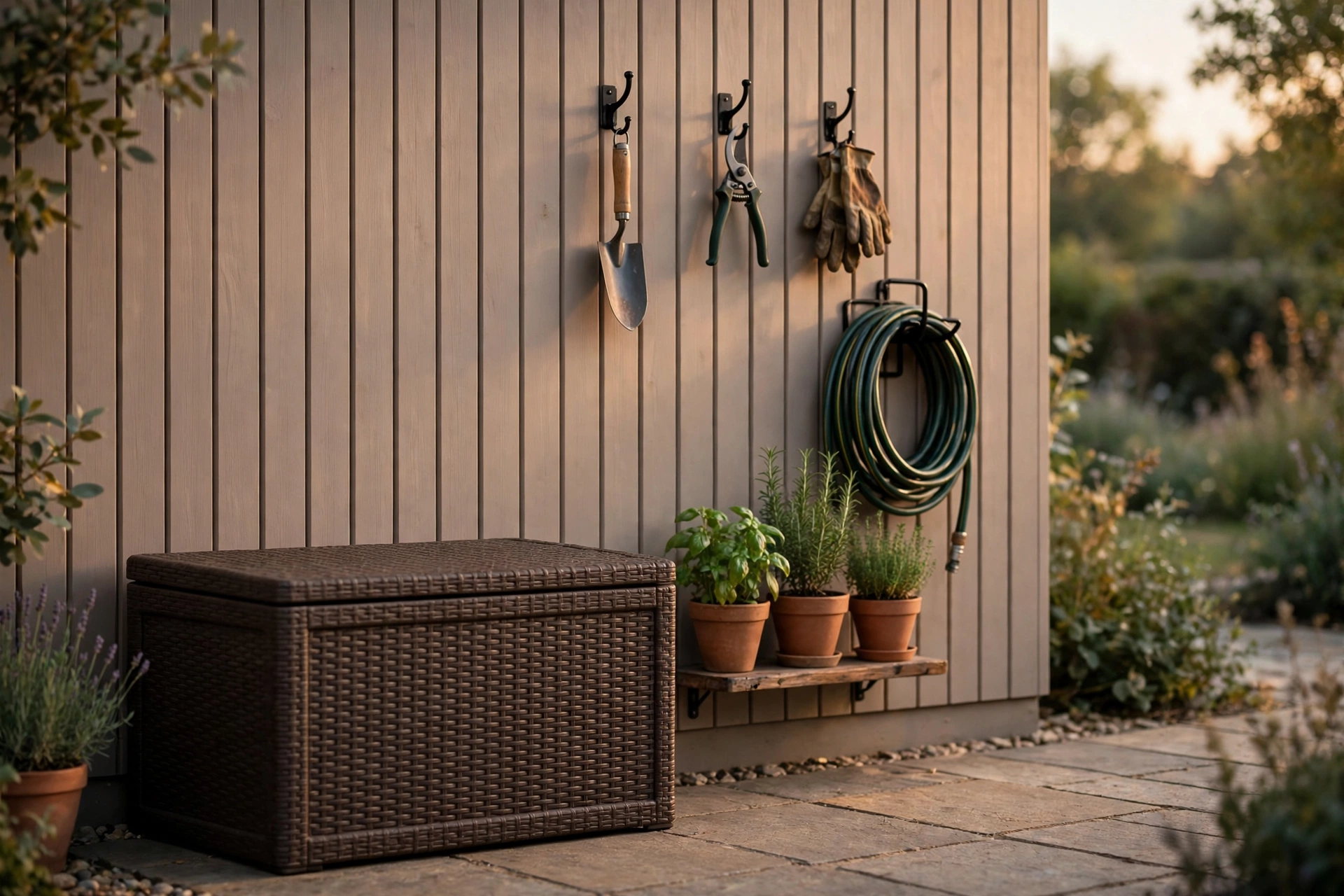
Cushions are the first thing to get ruined outdoors, because rain and sun wear them out fast. Outdoor cushion storage starts with one rule: cushions come inside or go into a dry box when you are done using them. A deck box with a tight lid holds a full set of cushions, and it doubles as a bench when it is closed.
If you have no room for a deck box, a large weatherproof bag or a storage bench by the door works just as well. Keep the cushions you use most at the top, so grabbing them takes seconds. Patio furniture storage works the same way for throw pillows and outdoor rugs: dry, covered, and easy to reach.
Fold outdoor rugs and store them rolled, not folded flat, so they do not crease. Keep a small basket by the door for the things you grab every time you sit outside: sunscreen, a book, and a citronella candle. Patio storage bins like these sound fussy, but they save real money: you stop replacing cushions every summer because you can finally keep them dry. Small backyard patio ideas like this one cost almost nothing, just a box with a lid and an afternoon.

Tame the Garden Tools and Small Stuff
Garden tools are long and awkward, so they end up leaning against the wall in a messy row. Patio tool storage starts with one rule: long tools stand upright in one spot, and small tools live in a container with a lid. A tall planter, a large bucket, or a wall-mounted rack holds shovels and rakes where you can grab them without knocking everything over.
Keep your everyday tools in one small tote or caddy that stays by the door: gloves, hand trowel, pruning shears, and plant ties. When the tools you reach for most are always in the same spot, you stop losing them. Good patio organization ideas keep the tools you use most within reach of the door. Patio gardening storage works the same way for seeds, twine, and plant food: one labeled box per type, kept where you can see it. These patio organization ideas for tools cost very little, often under $25, and they pay off every time you step outside to water a plant.
Covered patio storage helps here too. A small shelf under a covered roof keeps soil and fertilizer dry, while a hook on the wall holds the hose in a neat coil instead of a tangled pile on the floor. Patio organization on a budget starts here, with the small stuff, not the big furniture. Deck organization ideas like a hose hook and a tool tote are cheap, simple, and they keep the patio looking tidy every day.
Choose Storage That Survives the Weather
Outdoor storage has one enemy: weather. Rain warps wood, sun fades plastic, and wind knocks over anything light. Pick storage made for the outdoors: resin deck boxes, metal shelves with a cover, and waterproof bins with lids that snap shut. Cheap indoor bins crack after one summer, so buy once and buy for the weather.
Check the lid before you buy. A box with a lid that gaps lets rain in, and wet cushions grow mold fast. A box with a tight lid and a slight tilt on top sheds rain instead of holding it. Balcony patio organization faces the same problem in a smaller space, so the same rule applies: tight lids, heavy bases, and nothing that blows away in a storm.
Keep heavy things low and light things high. A deck box on the ground holds cushions and throws, while a wall shelf holds small pots and candles. Patio seating organization works best when the chairs stay out and the soft stuff goes away: chairs can take the rain, but cushions cannot.
Simple patio organization ideas like tight lids and heavy bases cost little and last for years. This is a small part of patio storage ideas, but it is the part that saves the most money. For more weather-proof tips, see our guide to patio storage guidance before you buy anything new, and measure your space first so the box you buy actually fits.
Set Up a Small Patio That Still Feels Big
A small patio can feel bigger than it is if you choose furniture that fits. A folding table, stackable chairs, and a bench with storage inside give a tiny space three jobs without crowding it. Small patio organization almost always comes down to furniture that folds, stacks, or holds storage inside.
Keep the floor as clear as you can. Chairs tucked against the wall, a table folded down when you are done eating, and nothing stored on the floor except the deck box all make the space feel open. Under stairs storage ideas use the same rule indoors: one spot, one job, and nothing on the floor that does not belong there.
Use the walls and the railings. A railing planter holds herbs without taking floor space, and a wall hook holds a lantern or a string of lights. Studio apartment organization ideas work the same way for tiny outdoor spaces: use vertical space, keep the floor clear, and choose pieces that do more than one job. When the floor is clear, even a small patio feels like a room. These patio organization ideas work in any small outdoor space, from a balcony to a shared courtyard.
Winterize the Patio in One Afternoon
Winter is when patio clutter gets worst, because everything gets shoved into a corner and forgotten. Winter patio storage works best as one planned afternoon, not a rushed job on the first cold day. Start by washing the furniture and letting it dry in the sun. Clean furniture stores better and lasts longer.
Stack the chairs, cover the table, and move the cushions into their dry box or inside the house. Drain the hose and coil it on its hook, and bring in any pots that crack in the cold. Small closet organization helps here too: the same labeled bins you use indoors work for outdoor cushions and holiday lights in the garage.
Do a quick check of the storage box before winter. If the lid gaps or the seal is worn, replace it now, while the weather is still mild. Budget organization ideas like this one pay off in spring, because you open the box to dry cushions instead of a moldy mess. These patio organization ideas make the first warm day of spring easy: open the box, set out the chairs, and sit down.
Your Weekend Plan
You can set up a workable patio in one weekend if you work in order. These patio organization ideas work best when you finish the declutter first, before any shopping:
- Empty the patio completely and sweep the floor.
- Sort everything into keep, fix, and let go — and let the extras go.
- Set up the four zones: seating, eating, gardening, and storing.
- Put cushions in a dry box and tools in one tote by the door.
- Hang the hose on a hook and stand long tools upright in one spot.
- Add a railing planter or wall hook to free up floor space.
- Do a 10-minute reset after every evening outside, then sit down and enjoy it.
A patio declutter comes first, before any shopping. Pull everything out, keep what you use, and pass on what you do not. Most people find they own duplicate tools and furniture they forgot about. These patio organization ideas work in rented homes too, as long as you stick to freestanding shelves and removable hooks. Budget organization ideas like this one pay off daily, because you stop buying what you already own.
Where Each Thing Goes
| Zone | What lives there | Rough cost |
|---|---|---|
| Seating zone | Chairs, small table, cushions in a dry box | $40–$100 for a deck box |
| Eating zone | Grill or dining table, close to the kitchen door | $0–$30 for a grill cover |
| Gardening zone | Pots, tools, watering can, near the hose | $15–$30 for a tool tote and rack |
| Storage corner | Deck box or bench, holding cushions and throws | $40–$100 for a resin box |
| Wall and railing | Hose hook, lantern, railing planters | $10–$25 for hooks and planters |
| Door basket | Sunscreen, book, candle, everyday small items | $5–$15 for a small basket |
Patio organization ideas like these cost less than one new piece of furniture when you buy only what your measurements say you need. Start with the zone that wastes the most of your time each evening, usually cushions or tools, and add the rest later. Small closet organization and under stairs storage ideas use the same rule: one spot, one job, and labels on everything.
Frequently Asked Questions
What are the best patio organization ideas for small spaces?
Start with zones and furniture that folds, stacks, or holds storage inside. A folding table, stackable chairs, and a deck box that doubles as a bench make a small patio hold a lot. These patio organization ideas also work on a balcony, where every inch counts. Keep the floor clear and use the walls and railings for planters and hooks.
How do I keep patio cushions dry?
Store cushions in a deck box with a tight lid, or bring them inside after use. Keep the cushions you use most at the top of the box so grabbing them takes seconds. Outdoor cushion storage like this saves money, because dry cushions last years instead of one summer.
How should I store garden tools on a patio?
Stand long tools upright in one spot, such as a tall bucket or wall rack, and keep small tools in a tote by the door. Hang the hose on a hook so it does not tangle on the floor. Patio tool storage like this keeps tools easy to grab and stops the messy row of leaning tools.
Can I organize a patio in a rental?
Yes, as long as you avoid drilling into the walls. Use a freestanding deck box, a rolling cart, railing planters, and removable hooks. For more renter-safe tips, see our guide to patio storage guidance before you start, and check your lease if you plan to add anything fixed.
A Patio You Actually Use
A tidy patio is not about looking perfect. It is about stepping outside and sitting down in seconds, with the cushions dry and the tools easy to find. Measure your space, set up four zones, and give every item a spot. These patio organization ideas prove a small outdoor space can feel like an extra room, as long as every item has a home. Pick one zone this weekend, and enjoy an evening outside to celebrate.