

Paint storage ideas matter the moment you finish a room and look at the half-full can left behind, because a can stored badly comes back skinned over, lumpy, or smelling wrong — and a can stored well comes back ready for touch-ups years later. Most homes own more than one leftover can: the bedroom white, the kitchen eggshell, the trim semi-gloss, maybe a bold accent color from one brave weekend. Most homes store them all wrong, stacked on a damp garage floor with the lids half-seated and no label at all, and then wonder why the touch-up paint never matches.
The fix is simple: clean the rim, seal the lid tight, label the can with the room and color, and give it one cool, dry spot where it never freezes. Do that once, and these paint storage ideas will keep every leftover can fresh, labeled, and ready to use the day a wall gets scuffed.
Why Leftover Paint Needs a Real Storage Plan
A can of paint is mostly air-sensitive, and air is what ruins stored paint. Once air gets past a loose lid, the paint skins over on top, thickens underneath, and dries into lumps that no amount of stirring fixes. Heat makes it worse, and a single freeze can ruin latex paint for good, because the freeze breaks the emulsion and the paint never comes back together. That is why the first rule of storing paint is an airtight seal in a cool, dry spot, and it is the rule every other idea in this guide builds on.
C. Falls Painting’s guide to storing leftover paint says the same thing: the seal is the single most important factor, so wipe the rim clean, tap the lid down evenly with a rubber mallet or a block of wood, transfer small amounts into clean glass jars to cut down air space, label each can with the color, brand, room, and date, and store it between 50 and 80 degrees where it can never freeze. That clean-seal-label-and-cool rule is the backbone of these paint storage ideas: a can that goes in sealed, labeled, and cool comes back ready, and a can that goes in loose, mystery, and frozen comes back ruined.
The other thing leftover paint needs is one home. Cans scattered across the garage, the basement, and the back of a closet get forgotten one by one, and a touch-up color you cannot find when a wall gets scuffed is a color you end up buying twice. The rest of this guide turns the seal-label-and-cool rule into a simple system, and these paint storage ideas work whether you store one spare can or a whole shelf of colors from every room.
7 Paint Storage Ideas That Actually Work
These seven paint storage ideas cover the whole set, from the half-full gallon that needs a tight seal to the small jar that holds just enough for touch-ups. You do not need all seven on day one. Start with the seal, the label, and the one-shelf rule, then add the jars and the small-space kit, and the rest falls into place.
1. Clean the Rim and Seal the Lid Tight
Learning how to store leftover paint starts with a clean rim, because a seal only works when metal meets metal. Before you close a can, wipe the rim and the groove where the lid sits with a clean rag, and scrape off any dried paint with a putty knife or an old screwdriver. Even a thin ring of dried paint stops the lid from seating, and a lid that does not seat lets air in for months.
Lay a piece of plastic wrap right on the paint surface before you close the lid — it adds one more barrier against air and stops a skin from forming. Then center the lid, lay a block of wood or a folded cloth over it, and tap gently around the edge with a hammer until it seats evenly all the way around. Never hit the lid directly with a hammer: it dents the channel and ruins the seal. A tight seal is the first of these paint storage ideas, and the one the rest depend on. Do it right, and you have already learned how to keep paint from drying out in the can.
2. Label Every Can Before It Goes on the Shelf
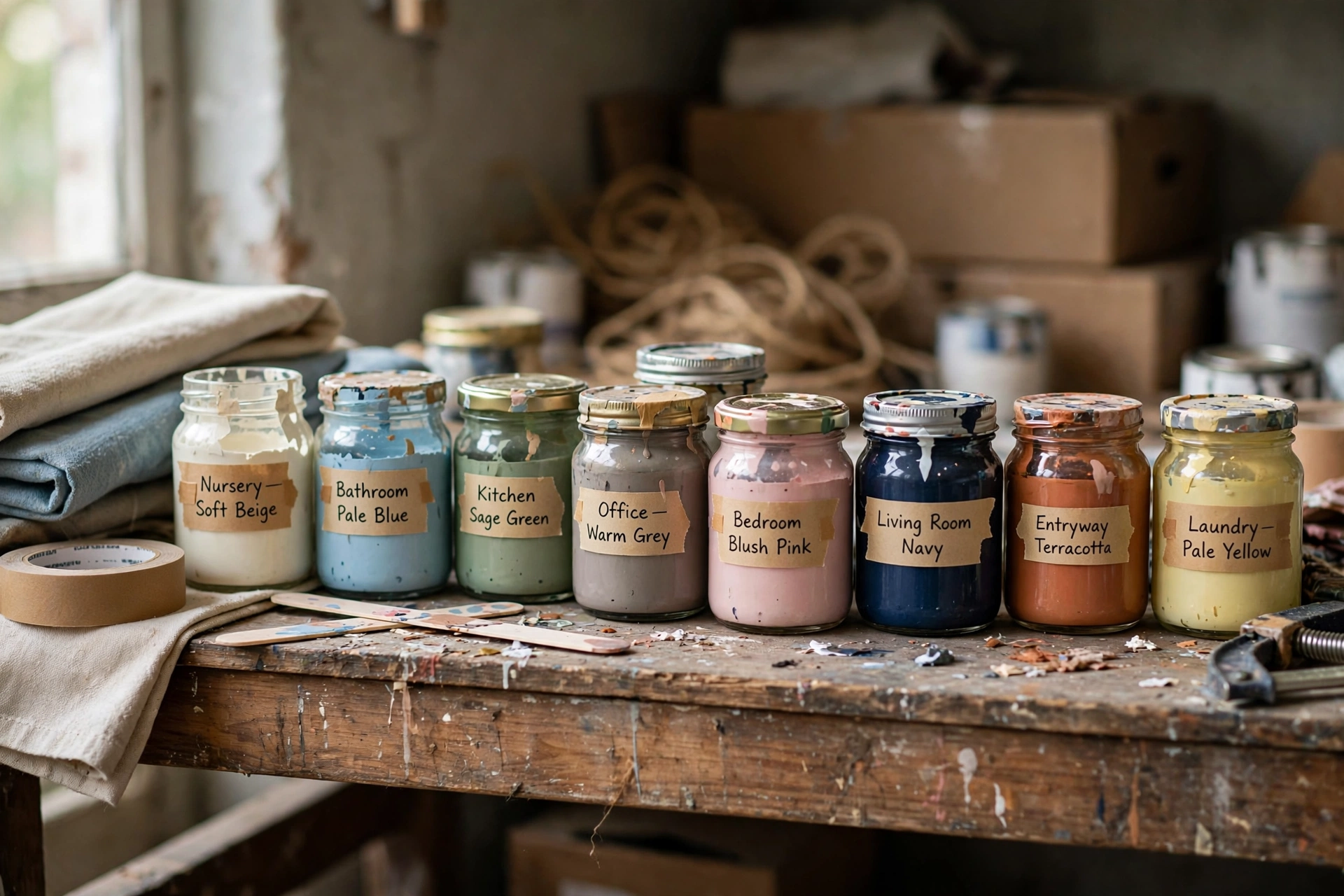
Labeling paint cans is the step that turns a shelf of mystery cans into a shelf you can actually use. Six months after a paint job, nobody remembers which of the three whites goes with which room, and an unlabeled can is almost as useless as no paint at all. Write on a strip of painter’s tape with a permanent marker: the room, the color name and number, the brand, the finish, and the date you painted.
Stick one label on the lid and one on the front of the can, and add a dab of the paint itself on the lid so you can see the color without opening anything. Keep the cans for one room together on the shelf, and the label is what stops the bedroom white from going on the kitchen wall. A labeled can is one of the paint storage ideas that pays off every time a wall gets scuffed, because the right can is the one you can find in ten seconds.
3. Store Cans Upright on a Shelf, Never on the Floor
Storing paint cans upright on a shelf is the simplest rule in this guide, and the one most people break. A can stored upright keeps the seal working the way it was designed, with the lid on top and the paint below it, and nothing leaking out around the rim. A can stored on its side or upside down puts paint against the seal around the clock, and a seal that was never meant to hold liquid will weep, stick, or fail.
Keep paint cans upright and keep them off the concrete floor, too. A garage floor pulls cold into the can in winter and damp into the metal, and damp rusts the can and eats the label you need to read later. A shelf a foot off the floor is enough: the can stays dry, the temperature stays steadier, and the label stays readable. Upright on a shelf is one of the paint storage ideas that costs nothing and saves the most paint, because a can that never leaks and never rusts is a can that stays usable.
4. Decant Small Leftovers Into Jars
Decanting leftover paint is the fix for the quarter-full can, because a big can with a little paint in it is mostly air, and air is what dries paint out. When less than a quarter of a can is left, pour what remains into a clean glass jar with a tight lid — mason jars work well — and fill the jar as close to the top as you can. The less air sitting on the paint, the longer it stays fresh.
Label the jar the same way you label a can: room, color, brand, finish, and date, plus a dab of paint on the lid. Small jars also take up far less shelf space than half-empty gallons, and you can see the color at a glance. Learning how to store paint in jars is the part of this system that saves the most room, and it is one of the tricks that turns a shelf of half-empty cans into a neat row of labeled jars.
5. Keep Paint Cool, Dry, and Out of the Freeze
Paint storage in garage spaces works when the garage stays cool and dry, but a garage that freezes in winter or bakes in summer will ruin paint no matter how well the can is sealed. Latex paint should stay between 50 and 80 degrees, and a single freeze can destroy it for good — the paint separates and never mixes back together, no matter how hard you stir. Heat is kinder than frost, but it still thickens paint and shortens its life.
If your garage swings with the seasons, move the paint inside: a basement utility shelf, a laundry-room cabinet, or a closet shelf in a heated room all work, as long as the spot stays dry and the temperature stays steady. Keep cans away from the furnace, the water heater, and any window where the sun hits them all afternoon. A cool, dry shelf inside the house is the safest choice for anyone whose garage freezes, because the paint never has to survive a winter it was not built for.
6. Group Cans by Room on One Labeled Shelf
Paint can storage ideas work best when the cans are grouped by room, because a touch-up job starts with finding the right can, not with reading every label on the shelf. Give each room its own stretch of shelf — bedroom cans together, kitchen cans together, trim paint together — and label the shelf edge with the room name so the group is obvious at a glance.
Keep the cans you touch up most often at eye level and the rare colors up high or down low. Put a small brush and a stir stick on the same shelf, so a touch-up takes one trip instead of three. The garage organization ideas guide uses the same one-shelf rule for a garage that works: one zone per job, labeled by what the zone is for, not by what happens to be sitting there. A grouped shelf is one of the quiet paint storage ideas that works in almost any home, because it needs no special gear, just a shelf and a label per room.
7. A Small-Space Kit for Leftover Paint
Paint storage ideas for small spaces work when every can has a home the size of the can, not the size of the room. Use one shelf in a hall closet for the jars, one labeled bin on a laundry-room shelf for the small cans, and one hook for the stir sticks and brushes. The whole set fits in one closet, and the label on each jar is what keeps the rooms from mixing.
How to store paint in a small home comes down to using the dead spaces: the top shelf of a closet, the cabinet above the washer, the shelf in the utility room. A row of labeled jars takes less room than one half-empty gallon, and a jar fits on a shelf a gallon never would. Keep the set in one place, check it once a season for rust or smell, and the small space stays as organized as a big garage.
Where to Store Paint Cans
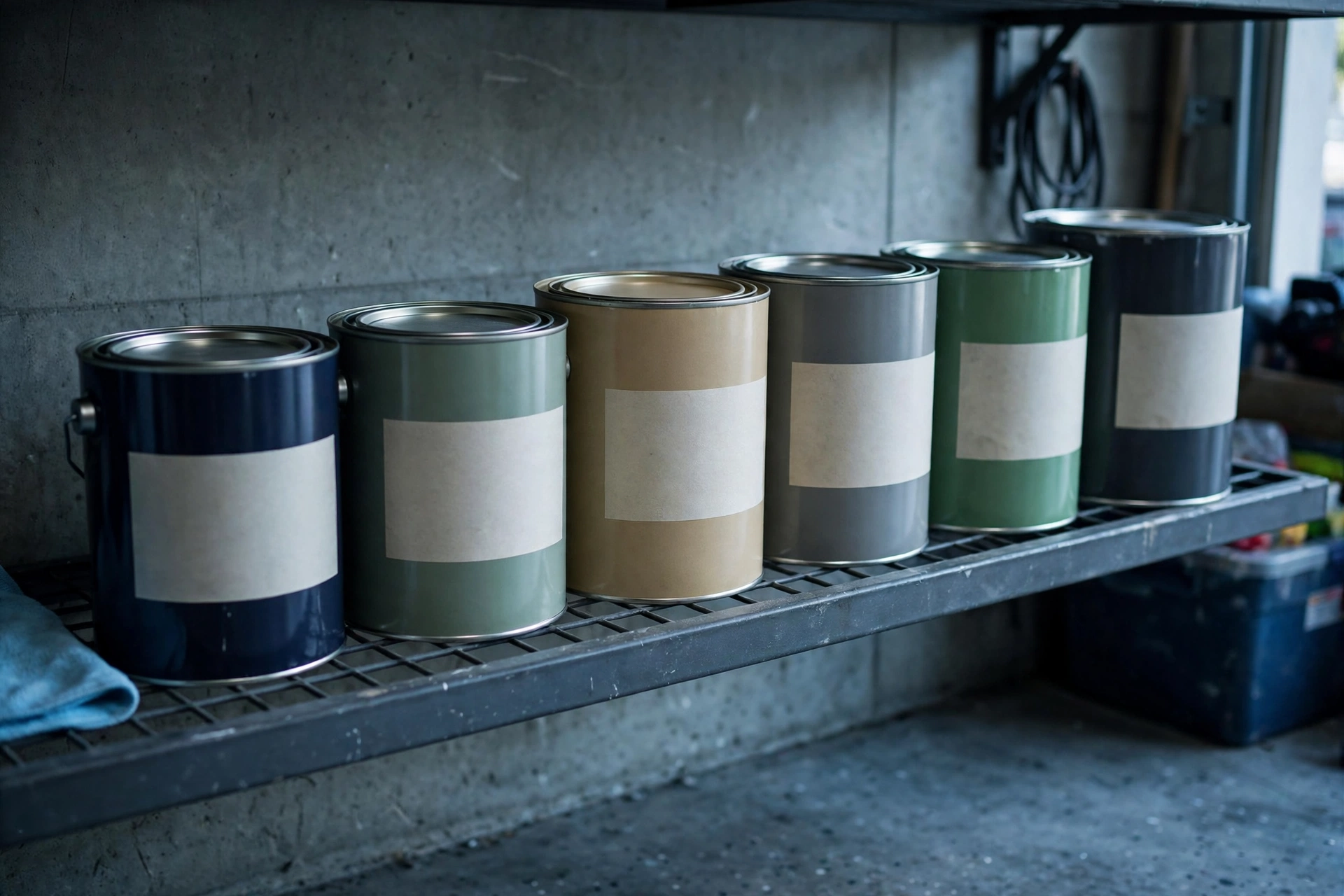
Figuring out where to store paint cans is really about finding a spot that is cool, dry, and easy to reach on touch-up day. A garage shelf is the best all-round spot, but a small home may not have one — and every one of these paint storage ideas fits a different home, so here is how the usual spots compare:
| Spot | Best for | Watch out for |
|---|---|---|
| Garage shelf, upright cans | Most homes, full color sets | Must stay above freezing; keep off concrete |
| Basement utility shelf | Cool, steady temperatures | Keep away from damp corners and flooding |
| Laundry-room cabinet | Small sets, jars | Keep cans off the floor and away from heat |
| Hall closet shelf, jars only | Small homes, touch-up jars | Keep jars upright and labeled; no heavy cans up high |
For paint storage ideas for small spaces, the hall closet wins, because one row of labeled jars and one small bin take almost no room. The fall cleaning schedule ideas guide uses the same rule for a seasonal job that works: one labeled spot per item, kept in a dry place, and nothing stored loose where it gets knocked over. The budget organization ideas guide keeps small supplies grouped the same way, so a jar of touch-up paint can sit beside the rest of the home supplies without taking a shelf of its own. A cool garage shelf with upright cans is the best all-round pick for these paint storage ideas, because it is dry, visible, and two steps from the front door.
5 Mistakes That Ruin Stored Paint
Even a good storage setup fails when one of these habits slips in. Every one of these mistakes is easy to avoid once you know it, and this system of paint storage ideas is built around avoiding them. The weekly cleaning schedule guide runs the same kind of check for the whole house: a quick look on a regular day catches the small problems before they grow, and the paint shelf deserves the same five minutes.
- Storing paint where it freezes. One cold night in an unheated garage can ruin latex paint for good. If the spot drops below freezing, move the cans inside.
- Leaving the lid loose or dented. A lid that is not seated lets air in for months, and a dented lid never seals again. Wipe the rim, tap the lid evenly, and check the seal before the can goes on the shelf.
- Storing cans on their side or upside down. Paint pressed against the seal around the clock will weep, stick, or glue the lid shut. Store cans upright, always.
- Keeping a mystery can with no label. An unlabeled can is a color you cannot use, because nobody remembers which white goes where. Label every can with the room, color, and date.
- Storing paint in a damp spot. Damp rusts metal cans, eats labels, and grows mold on the outside of the can. Keep paint on a dry shelf, off the concrete, and out of damp corners.
Frequently Asked Questions
How long does leftover paint last?
How long does leftover paint last? Sealed well and stored cool and dry, opened latex paint usually lasts 2 to 5 years, and unopened cans can last 5 to 10 years. Oil-based paint lasts longer, up to 10 years or more when sealed. The seal and the temperature decide the real number: a can that froze once is done no matter how new it is. These paint storage ideas start with the seal, and every step after that protects the shelf life.
Can I store paint in the garage?
Yes, if the garage spot stays cool, dry, and above freezing all year — a shelf off the concrete floor works well. Keep cans away from the garage door, where cold air blows in, and away from windows, where sun heats them. If your garage freezes in winter, move the paint inside to a basement shelf or a closet, and check the cans once a season for rust or smell.
Where should I keep leftover paint?
Wondering where to store paint cans? A cool garage shelf with upright cans is the best spot: dry, visible, and close to the rooms you painted. A basement utility shelf works when the garage freezes, and a hall closet shelf holds labeled jars in a small home. That cool, dry spot is where these paint storage ideas put cans — sealed, labeled, upright, and easy to grab.
Should I store paint cans upside down?
No — that old tip causes more problems than it solves. Paint sitting against the seal around the clock can leak, glue the lid shut, and make a mess when you open it. Store cans upright with a clean rim and a tight seal, and the paint stays fresh without the flip. If the lid is sealed well, the paint does not need to be upside down to stay fresh.
A Shelf Ready When the Wall Gets Scuffed
A shelf of labeled cans holding clean, sealed paint is a home with one less worry, and it is the seal, the label, and the cool shelf that keep them ready, not the size of the garage. This system works because it is simple enough to repeat every time a room gets painted. Clean the rim, seal the lid, label the can, and put it upright on a cool, dry shelf.
Give each room one labeled stretch of shelf and one set of jars, check the shelf once a season for rust or smell, and the paint stays ready until the day a wall gets scuffed again. That is what good paint storage ideas do: they turn a ten-minute routine into paint you can trust, sealed and labeled and ready to use, and a home where no touch-up ever starts with a trip to the store for a color you already own.