

October pantry organization ideas make fall cooking feel easy instead of rushed. When the air turns cool and soup season starts, a pantry that is stocked, labeled, and easy to see saves you time every single night. You stop digging behind cans, you stop buying a third jar of cinnamon, and dinner comes together without a last-minute store run.
Most pantries do not get messy all at once. They get messy one small bag at a time: a half-used bag of rice pushed to the back, a spice jar with no label, a box of crackers crushed behind the cereal. By October, that slow mess meets a busy season. School nights, cooler weather, and holiday cooking all ask more of your kitchen, and a pantry that worked in summer starts to feel tight.
The fix is not a full remodel or a cart full of new containers. It is one focused weekend, a few clear zones, and a simple habit of putting things back where they belong. That is what good october pantry organization ideas do: they turn a crowded shelf into a kitchen that works for you all fall, and that is the promise of october pantry organization ideas.
Start With a Quick October Pantry Cleanout
A pantry cleanout sounds big, but it takes about an hour if you work shelf by shelf. Pull everything off one shelf, wipe it down, and sort items into three groups: keep, toss, and donate. Toss anything stale, open and past its prime, or smelling off. Donate sealed items your family will not eat. The keep pile goes back only after you decide where each group lives.
As you sort, take a quick pantry inventory on paper or on your phone. Write down what you already own, especially staples like rice, pasta, canned tomatoes, and broth. This list stops duplicate buying, which is one of the quiet ways a pantry budget leaks. It also makes bulk buying smarter: you buy more of what you use and skip what just sits there.
Finish the cleanout by adding pantry labels to anything you decant into jars or bins. A label does not need to be fancy. Masking tape and a marker work fine. When every jar says what it holds, anyone in the house can find things and put them back. That one habit is the base of all october pantry organization ideas that actually last, and a labeled shelf is the simplest of them all.
Stock Fall Pantry Staples for Soup Season
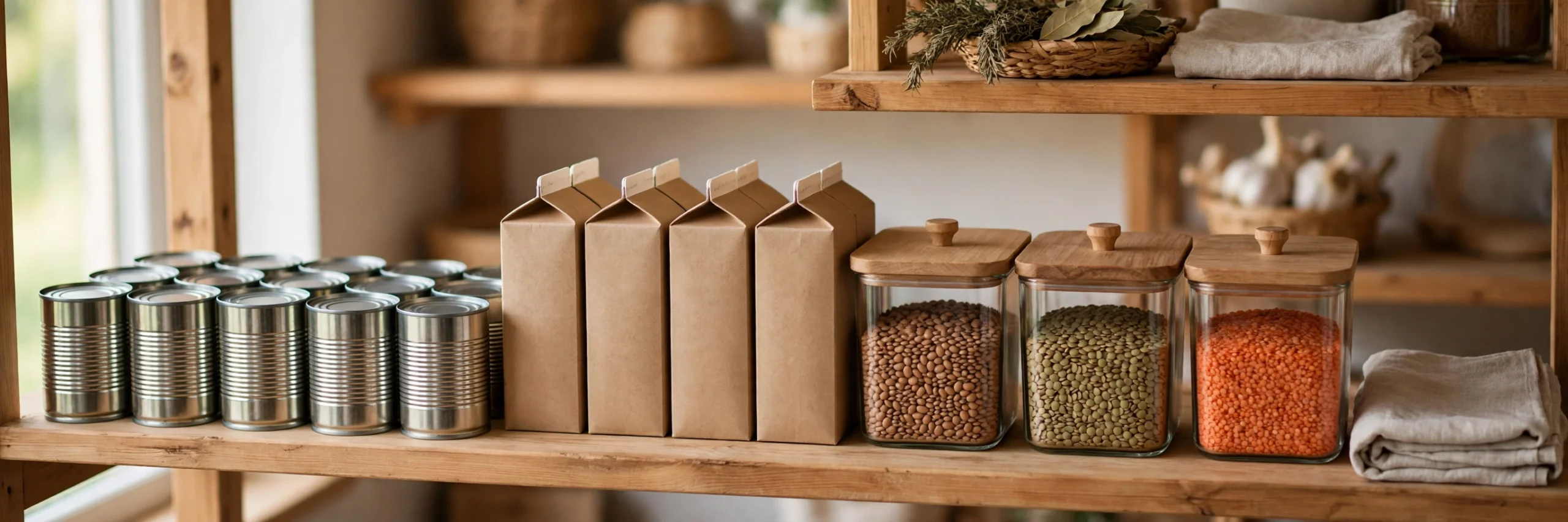
Soup season is the best reason to give your pantry a fall reset. A well-stocked soup shelf means dinner can start from the pantry on a cold night, not from a takeout menu. Keep the bases together: broth, canned tomatoes, dried lentils, beans, rice, and pasta. Add onions, garlic, and dried herbs nearby, so the whole soup kit lives in one zone.
Canned goods organization matters here, because cans are heavy and easy to lose track of. Store cans in a single row, labels facing out, with the newest cans at the back. That simple habit is food rotation in action, and the plain version of it is first in first out: use the oldest can first, and put new cans behind it. Check dates once a month, and move anything close to its date to the front so it gets used first.
Round out the shelf with fall pantry staples your family reaches for again and again:
- Broth, stock, and canned tomatoes for soups and stews
- Dried beans, lentils, and split peas for cheap, filling meals
- Rice, oats, and pasta for weeknight bases
- Canned pumpkin, evaporated milk, and coconut milk for fall cooking
- Dried herbs, stock cubes, and spice blends for quick flavor
Keep a small basket for half-used packets, like open spice pouches or half a bag of lentils, so they do not drift to the back of the shelf. When soup ingredients live together and labels face out, october pantry organization ideas stop being a project and start being dinner, ready in thirty minutes. That is the payoff of october pantry organization ideas: dinner from the shelf, not the store.
Set Up a Baking Station for Pumpkin Season
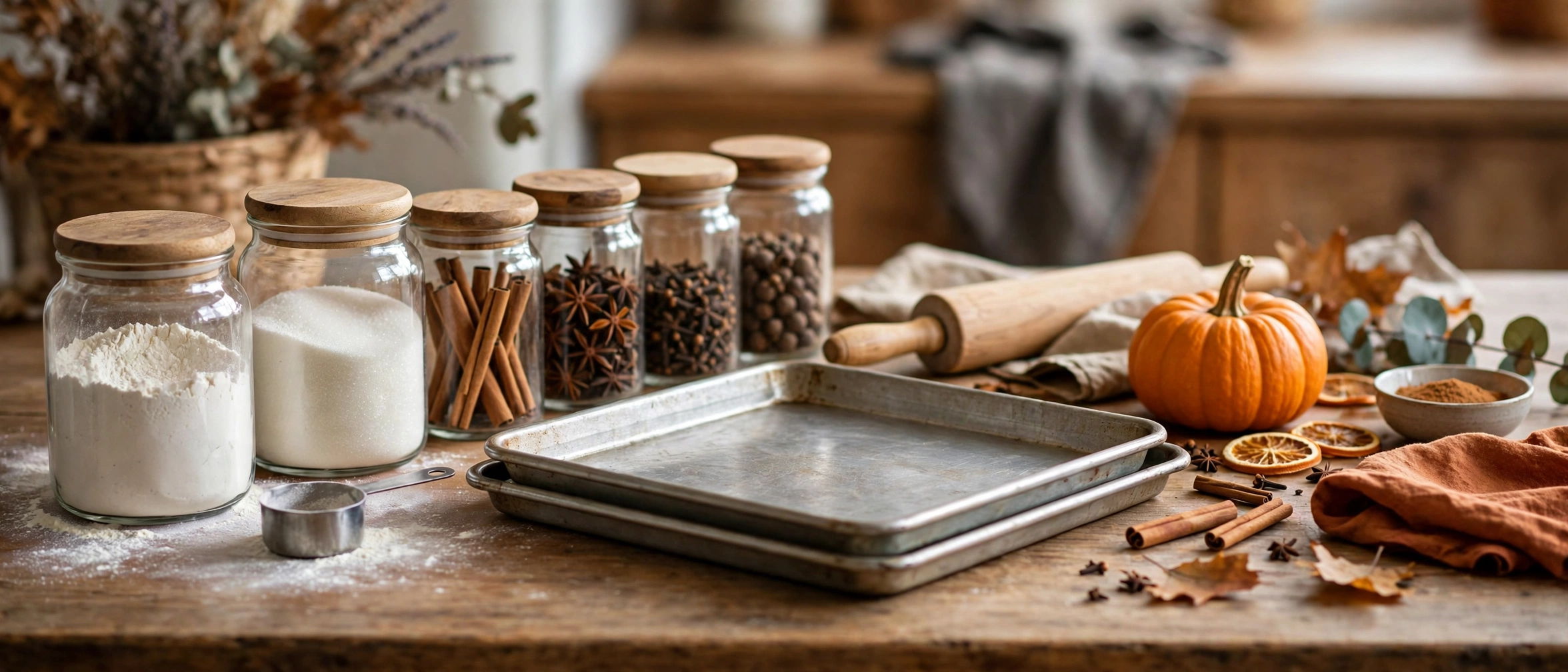
October is baking month in most homes, and a baking station keeps it fun instead of frantic. Pick one shelf or one basket for baking only: flour, sugar, baking powder, cocoa, vanilla, and your fall spices. When everything lives together, you can start a batch of muffins without hunting through three shelves first.
Pumpkin spice baking deserves its own small jar or tin. Mix cinnamon, ginger, nutmeg, and cloves once, label it, and use it all month for muffins, pancakes, oatmeal, and coffee cake. A pre-mixed spice jar saves time and stops you from buying a new spice you already own. Keep measuring cups and spoons in the same basket, so the station is truly grab-and-go.
Use pantry bins to split the station into two parts: everyday baking on one side, holiday baking on the other. Everyday baking holds flour, sugar, and oats. Holiday baking holds sprinkles, food coloring, and cookie cutters, which you will want later in the season but not every week. Shelf risers help here too, giving small spice jars a second level so nothing hides behind a tall flour canister.
A baking station like this is one of the most loved parts of october pantry organization ideas, because it turns a busy October weekend into fresh muffins with no stress. If your pantry still feels crowded after the reset, our september pantry organization ideas post shows the same zone system for a small kitchen, so you can compare layouts before you buy anything new.
Store Apples, Squash, and Harvest Produce Right
Fall brings home more fresh food than summer does: bags of apples, a squash or two, onions by the sack. Harvest storage works best when fresh food has its own spot, away from the dry staples. Keep onions and potatoes in separate baskets, in a cool dark corner, because storing them together makes both spoil faster. Apples keep best in a cool spot too, and away from other fruit, since they ripen their neighbors fast.
Apple storage is simple once you know the rule: cool, dark, and apart. A basket in a cool pantry corner works for a week or two. For longer keeping, a fridge drawer is better. Check the basket once a week and pull out any apple that has gone soft, so one bad apple does not spoil the rest.
Squash storage is even easier: whole squash likes a cool, dry shelf and keeps for weeks without any fuss. Cut squash, on the other hand, belongs in the fridge and should be used within a few days.
Put a small basket near the pantry door for food that must be eaten soon. Call it the eat-first basket. Anything soft, ripe, or close to its date goes there, and it gets used before anything else. That basket, plus the first in first out rule on your shelves, cuts food waste more than any gadget will.
Simple rules like this are why october pantry organization ideas work in real kitchens.
Build a Cozy Drink Station
A cozy drink station is a small joy that makes October mornings feel special. Pick one shelf for cocoa, tea, coffee, and cider spices. Add mugs, a small jar of marshmallows, and a tin of cinnamon sticks. When the station is set, a warm drink takes two minutes, and the kitchen feels like a café on a cold morning.
Keep the drink shelf near the kettle or coffee maker, not across the kitchen. Short trips matter on busy mornings. Use a small tray to hold the whole station together, so it reads as one spot instead of scattered jars. If kids make their own cocoa, put their mugs and the cocoa jar on a low shelf they can reach, and keep the hot-water step as a grown-up job.
Restock the station once a week, at the same time you check the eat-first basket. A drink station that runs out of cocoa on a cold Sunday is worse than no station at all, so add cocoa and tea to your weekly shopping list. A weekly restock is a small part of october pantry organization ideas, but it keeps the station working. This little corner is a sweet part of october pantry organization ideas, because it costs almost nothing and makes the whole pantry feel cared for. And if fall spending is on your mind too, our september budget organization ideas post pairs a pantry reset with a simple grocery plan, so cozy season does not turn into overspending.
Tame Halloween Treats Before They Take Over
Halloween treats arrive fast and spread everywhere if they have no home. Give them one bin, with a lid, on a shelf that is easy to reach but not in the daily cooking zone. One bin keeps candy corralled, stops half-open bags from spilling into the baking shelf, and makes it easy to see what is left after trick-or-treat night.
Split the bin into two parts if you can: treats for giving out, and treats for the house. A small divider or a second bag inside the bin does the job. After Halloween, move leftover candy into a smaller container and set a use-by plan, like baking with it or packing it into lunches for a week. The goal is not to ban treats. The goal is to keep them from taking over the pantry for a month.
Keep the treat bin labeled, just like everything else in the pantry. When a bin has a name, kids know where treats live and where they go back. That one label saves you from finding candy in the soup shelf in November. Halloween treats are part of the fun of October, and with one bin and one rule, they stay fun instead of messy.
That is october pantry organization ideas at their simplest: one home for everything. Our august pantry organization ideas post uses the same one-bin trick for summer snacks, so the system works all year, not just in October.
Freeze Ahead for Busy October Nights
Freezer meals are the quiet hero of October. School nights, sports practice, and shorter days leave less time to cook, and a freezer shelf full of ready meals saves the week. Cook double on a calm Sunday: one pot for tonight, one for the freezer. Soups, stews, chili, and pasta sauce all freeze well and reheat fast.
Label every freezer container with the dish name and the date, and use the oldest meal first. A freezer list on the fridge or on the freezer door helps too: write each meal as it goes in, cross it off as it comes out. Without a list, freezer meals get forgotten, and a forgotten meal is wasted food and wasted effort.
Pack meals flat in bags when you can, because flat bags stack neatly and thaw faster than deep tubs. Leave a little room at the top of each bag for the food to expand as it freezes. One shelf or one bin for freezer meals keeps them separate from frozen vegetables and ice cream, so dinner is easy to find on a tired night.
Flat, labeled bags are a quiet win for october pantry organization ideas in a busy month. Meal planning gets much easier when the freezer holds three or four ready meals, and that backup is one of the most useful parts of october pantry organization ideas for busy families. If your pantry zones need a refresh before you start freezing, our small pantry organization ideas post shows how to carve out space in a tiny kitchen without buying new furniture.
Your October Week-by-Week Pantry Plan
A plan works better when it has dates. Use this simple October plan, and shift the weeks to fit your shopping days:
| Week | Focus | One action to finish |
|---|---|---|
| Week 1 | Pantry cleanout | Clear one shelf at a time, toss stale items, write your pantry inventory |
| Week 2 | Soup shelf + staples | Stock broth, beans, and tomatoes; set up food rotation on cans |
| Week 3 | Baking + drink stations | Mix pumpkin spice, gather baking supplies, set up the cocoa shelf |
| Week 4 | Treats + freezer meals | Bin the Halloween treats, freeze two double-batch meals for busy nights |
If you miss a week, just start where you are. A plan that bends is better than a plan you quit. Pair this pantry plan with a tidy home routine, and the whole month feels lighter: check the eat-first basket each week, wipe one shelf when you shop, and keep labels fresh. Small weekly habits keep october pantry organization ideas working long after the first cleanout weekend.
Frequently Asked Questions
What should I stock in my pantry for October?
Start with soup bases like broth and canned tomatoes, dried beans and lentils, rice and pasta, canned pumpkin, and fall spices. Add apples, squash, and onions for fresh cooking, and keep cocoa and tea for the drink station. That is the heart of october pantry organization ideas: dinner starts from the shelf, not the store.
How do I keep my pantry organized all month?
Use zones: one zone for soups, one for baking, one for drinks, and one for treats. Label every jar and bin, put new items behind old ones, and check the eat-first basket once a week. Ten minutes a week keeps the system going.
How long do apples and squash keep in a pantry?
Whole squash keeps for weeks in a cool, dry spot. Apples keep for a week or two in a cool pantry corner, and longer in a fridge drawer. Check both once a week, pull out anything soft, and use cut squash within a few days.
What is the easiest way to start a pantry cleanout?
Work one shelf at a time. Pull everything off, wipe the shelf, toss what is stale, and put back only what your family eats. Write a quick inventory as you go, so you stop buying duplicates. One shelf done well beats a whole pantry half done.
A Calmer Kitchen for the Whole Fall
You do not need a perfect pantry to cook well this October. You need clear zones, honest labels, and a weekly ten-minute check. Start with the cleanout, stock the soup shelf, set up the baking station, and give treats their own bin. Those four steps alone can change how your kitchen feels.
Then keep going, one week at a time, and let october pantry organization ideas guide each small choice, from soup night to Halloween to the first cold Sunday. Small, steady habits beat big, short-lived cleanouts every time. Your pantry is not about looking perfect for a photo. It is about making dinner easy, saving money on duplicates, and wasting less food, all fall long.