

May home office organization ideas work best when spring workdays feel scattered and your desk still holds winter papers next to new notebooks. You sit down to work, move a stack to find your charger, and lose ten minutes before you type a single word. That is not a focus problem. It is a desk problem, and it is easy to fix.
You do not need new furniture or a full weekend of sorting to change it. You need a clear desk surface, one tidy drawer, and a simple place for papers, cables, and daily supplies. These may home office organization ideas give you a workspace that helps you start work faster, not one that slows you down each morning.
Start With a Spring Desk Refresh
A spring desk refresh is just a calm hour with a trash bag, a recycling box, and a damp cloth. Take everything off the desk, not just the top layer, so you can see what you actually use. Wipe the surface, then put back only daily items first. Everything else earns a drawer, a shelf, or a bin, or it leaves the room.
A desk clear-out feels good on its own, but the real win is what you learn: which pens you reach for daily, which papers are already done, and which gadgets you keep out of habit. Toss dried-out pens, shred old notes you no longer need, and file anything you must keep. That one habit is the quiet heart of may home office organization ideas, because a desk with fewer items is a desk that stays tidy with less effort.
Keep a small note nearby for supplies you run out of often, so shopping stays simple and you stop buying a third stapler. A clean desk also makes it easier to see what is missing, and it stops small piles from turning into a second desk on top of your desk. Good home office storage starts here, with less on the surface and a clear home for the rest.
Set Up Simple Desk Zones
Desk zones are the heart of may home office organization ideas, because they end the daily hunt for one missing pen or cable. Group things by how you use them, not by where they happened to land. Daily work items live together. Reference papers live together. Tech and charging items live together, away from papers that can slide under a laptop.
Try these zones to start: daily work, writing tools, tech and charging, papers to file, and backups. If a zone feels too big, split it in two. If a zone holds only two items, fold it into a neighbor. The system should fit your work, not the other way around. Add home office labels to bins and drawer fronts, so anyone who shares the space can put things back in the right spot.
A small home office works best when zones are small and clear. A tiny desk does not need more bins; it needs fewer items and one home for each group. When zones are set, the desk stays tidy even on busy weeks, because putting things away takes seconds and no one has to guess where they belong. That is how may home office organization ideas stay easy to keep up.
Fix Cable Management
Cable management is where most desks fall apart, because chargers, monitor cords, and headphone cables tangle in the dark under the desk. A few clips and one cable tray fix that fast. Route each cable along the same path, label the charger ends if you share outlets, and keep daily chargers where you can reach them without crawling under the desk.
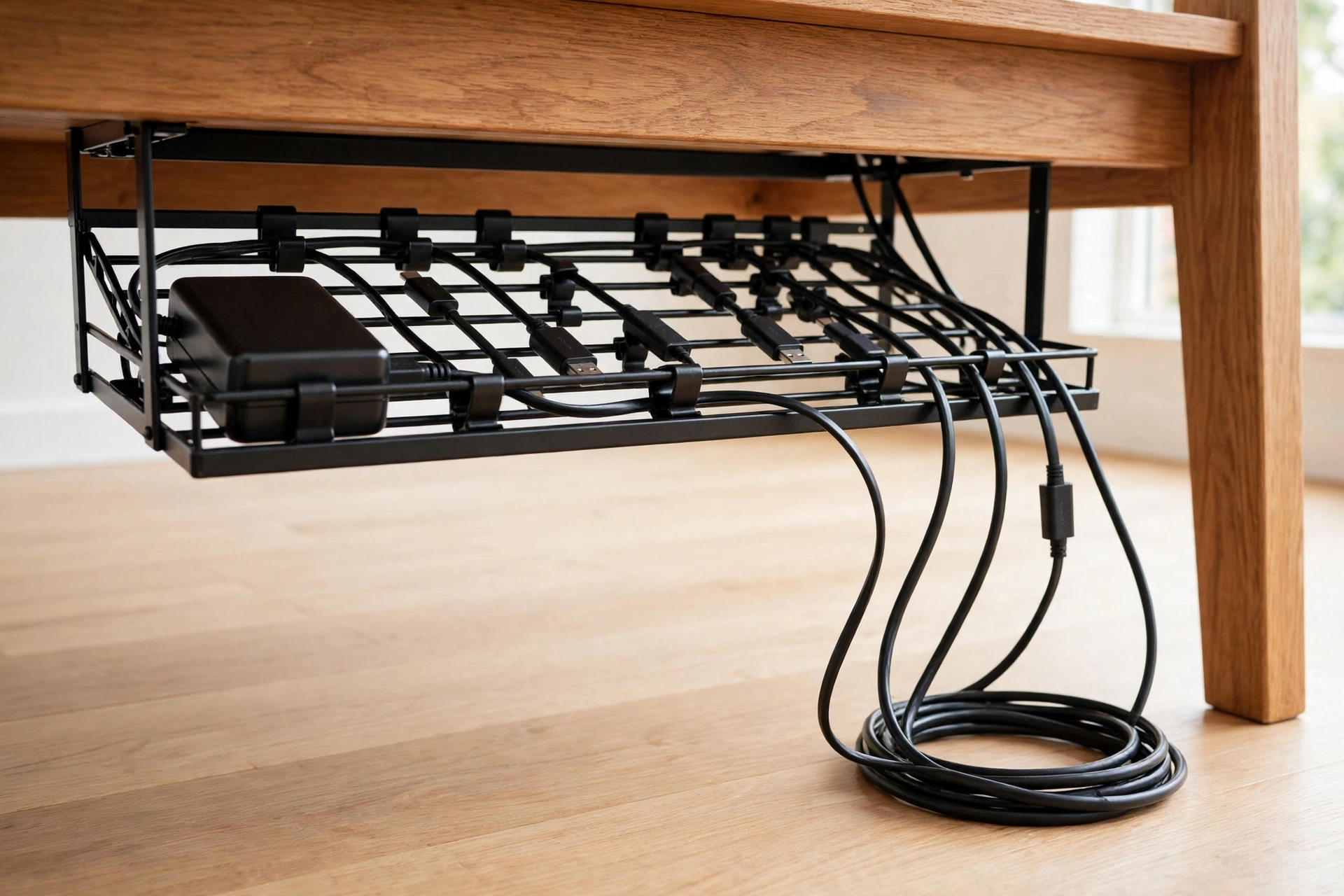
Measure the space under the desk before you buy anything, and leave slack so a laptop can move without pulling the monitor plug out. A cable tray keeps cords off the floor, which makes vacuuming easier and stops feet from catching a cord mid-call. Velcro ties work well for loose cables, because you can open them again when you swap a device. If a cable is hard to reach, it will not stay tidy, so keep daily chargers low and close, and backups in a labeled bin.
Good cable management also protects your gear. Cords that hang loose get bent, stepped on, and pulled out at the worst time. Among all may home office organization ideas, a tidy cable run saves the most daily hassle, because you stop untangling a knot just to charge your laptop. A work-from-home setup feels calmer the moment the floor under your desk is clear.
Build a Paper Filing System
A paper filing system takes twenty minutes to set up and saves hours across the month. Start with five folders or trays: to do, to file, to pay, to read, and done. Put each new paper in one tray the day it arrives, not in a pile on the desk. At the end of the week, file the to-file tray and shred or recycle the done tray.
Keep active papers near the desk and old records in one box on a shelf, clearly labeled by year. That split keeps daily work light and still keeps tax papers, contracts, and manuals easy to find. If a paper has a digital copy you trust, file the digital copy and recycle the paper, unless you need the original for legal or money reasons.
Digital file organization works the same way: one folder for active work, one for reference, and one for archives, with clear names and dates. When paper and digital files use the same simple names, you find things in seconds, not after a search through three drawers and a downloads folder. A simple paper filing system is the backbone of may home office organization ideas, because paper piles are what make a tidy desk look messy again in a week.
Sort Desk Drawers and Supply Bins
Desk drawer organization starts with one rule: only daily tools live in the top drawer. Pens, a notebook, sticky notes, and one pair of scissors earn a spot. Everything else goes in a deeper drawer, a shelf bin, or a backup box. When the top drawer holds only what you use each day, finding a pen takes seconds, not a dig through rubber bands and old receipts.
Office supply bins work best when each bin has one job. Put pens together, clips and tape together, and backup supplies together, and label each bin plainly. A small tray inside the drawer keeps pens from rolling around, and a second tray holds small items like binder clips and USB drives. Keep one backup bin on a shelf, so the drawer never fills up with twelve pens you bought on sale.
If you share the desk, give each person a small tray or a labeled bin. Shared desks stay calm when everyone has a clear spot, and no one has to move someone else’s tools to find their own. Good may home office organization ideas for drawers are boring on purpose: fewer items in reach, faster starts, and a drawer you can actually close.
Fix Your Monitor Setup and Lighting
A monitor setup that fits your body makes long workdays feel much easier. Put the monitor at eye level, about an arm’s length away, with the top of the screen near eye height. Keep the keyboard and mouse close, with your wrists straight and your feet flat on the floor. If your chair is too low, add a cushion or a footrest, so your back stays supported through the day.
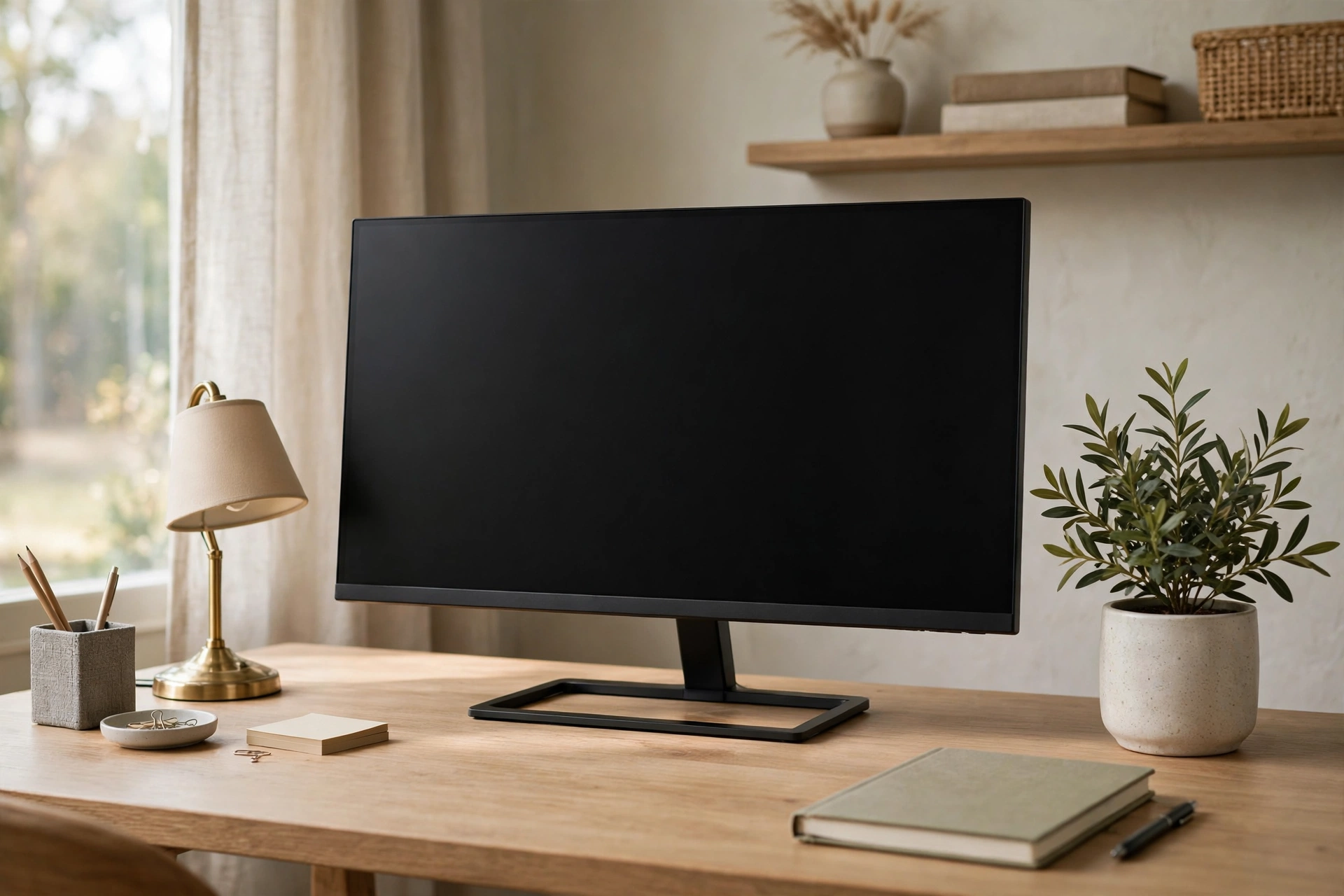
Task lighting matters just as much as screen height. A small desk lamp aimed at your work, not at the screen, cuts glare and eye strain. If you work near a window, sit so daylight falls beside you, not straight into your eyes or onto the screen. A bright room with one good lamp beats a dark room with a glowing screen, especially on long spring afternoons.
For ergonomic desk setup advice, see OSHA’s ergonomics guidance. Good advice should be simple and safe, with no product push. An ergonomic desk setup is part of may home office organization ideas, because a tidy desk still hurts if the chair, screen, and light are in the wrong places.
Keep It Going With a Weekly Routine
An office cleaning routine takes ten minutes a week, and it keeps the whole system from sliding back. Once a week, clear the desk, wipe the surface, coil loose cables, file the to-file tray, and toss one item that is empty or done. Small steps beat big cleanouts, because they never turn into a dreaded chore.
Pair the desk routine with the rest of the house, so the whole home feels tidy in the same week. Our may bathroom organization ideas post pairs well with a desk reset, so you tidy the bathroom and the office in the same month. For an earlier spring version, the april home office organization ideas post shows how this same system worked last month, and the march home office organization ideas post is worth a look too. And if you are starting from scratch, our small home office organization ideas post is a good first read.
That is why may home office organization ideas end with a routine, not a shopping list: the system only works if it stays easy. Start with one drawer, set up one zone, and let the rest follow. A tidy desk will not make workdays perfect, but it will make them feel a lot calmer.
Your May Home Office Table
| Desk area | May job | Time needed |
|---|---|---|
| Desk refresh | Clear the desk, wipe it, keep daily items only | 60 minutes |
| Desk zones | Group items by daily work, tools, tech, papers | 20 minutes |
| Cables | Add a tray and clips, route cords together | 20 minutes |
| Papers | Set up five trays, file weekly | 20 minutes |
| Drawers | Sort top drawer, label supply bins | 20 minutes |
| Monitor and light | Set screen height, add task lighting | 15 minutes |
Your May Week-by-Week Plan
- Week 1: Do your spring desk refresh and set up desk zones.
- Week 2: Fix cable management and build your paper filing system.
- Week 3: Sort desk drawers and supply bins, then fix your monitor setup and lighting.
- Week 4: Keep it going with a weekly office cleaning routine.
Follow this plan and these may home office organization ideas will be in place by the end of the month, without a single all-day sorting session. Start with one drawer, set up one zone, and let the rest follow.
Frequently Asked Questions
How do I organize a small home office desk? Use zones, bins, and labels, and keep only daily items on the desk. Small desks feel bigger when every item has a home, and when backups live in a drawer or on a shelf instead of on the surface.
What is the best way to hide desk cables? Route cables along one path with a tray and clips, and keep daily chargers within reach. A cable tray under the desk keeps cords off the floor, stops tangles, and makes cleaning much easier.
How often should I clean my home office desk? A ten-minute tidy once a week works well for most people, with a deeper refresh each season. Clear the surface, file papers, coil cables, and toss anything empty, so the job never grows into a full-day project.
How should I set up my monitor and chair? Put the monitor at eye level about an arm’s length away, keep your wrists straight, and sit with your feet flat and your back supported. Add task lighting aimed at your work, not at the screen, to cut glare.