

March budget organization ideas work best when spring gives you a natural fresh start. If winter left you with holiday bills still hanging around, a drawer full of tax papers, and no clear picture of where your money went, you are not bad with money. You just need a simple system that fits the season. This guide gives you march budget organization ideas that are easy to set up in March and easy to keep into spring: a tax-season paperwork sort, spring sinking funds, a subscription spring clean, and a short weekly check-in.
March is a good month for a money refresh for three plain reasons. Tax season forces you to gather papers anyway, so you may as well sort them into a system that lasts. Spring brings its own costs — spring break, Easter gifts, garden and home jobs — that are easier to plan for now than to pay for in a panic later. And after a long winter, a lighter, simpler routine just feels right. These march budget organization ideas are built for real life, with rent, groceries, and a little fun all in the same plan — and that is exactly what these march budget organization ideas are for.
1. Start with a fifteen-minute spring money tidy
Before you build anything new, look at where you stand. Open your bank app or your last statement and write down three numbers: what came in last month, what went out, and what surprised you most. That is your whole spring budget reset, and it takes less time than scrolling your feed.
This quick pass is not a scolding. It shows you where a simple system will help most. Maybe streaming costs crept up over winter, takeout filled the gaps on busy weeks, or a yearly bill landed without warning. Those three notes become your focus for March, and everything else can wait.
Ask yourself four plain questions as you look: Which three costs took the most money last month? Which bills land in the same week, and do they crowd your paycheck? What did you buy on impulse that you barely remember now? What would make money feel calmer this spring?
A spring money tidy like this stops you from building a complex budget before you know what needs one. Most March money stress is not a willpower problem. It is a “no clear plan” problem, and that is easy to fix once you see the numbers on one page. That one page of numbers is where good march budget organization ideas start.
2. Sort tax-season paperwork into one folder
Tax season is the best excuse March gives you to get organized. Instead of hunting for papers the night before a deadline, gather them once, into one folder, and keep that folder as your money home for the rest of the year.
Start with five plain sections, on paper or in one digital folder: Income papers (pay slips, freelance payment records, and any year-end forms as they arrive); Deduction papers (receipts and records you may need, kept in one envelope, not scattered across drawers); Bills and statements (the monthly statements you want to keep, filed by month); Savings and goals (notes on what you are saving for this spring and summer); To-do (one short list of what is still missing, so nothing gets forgotten).
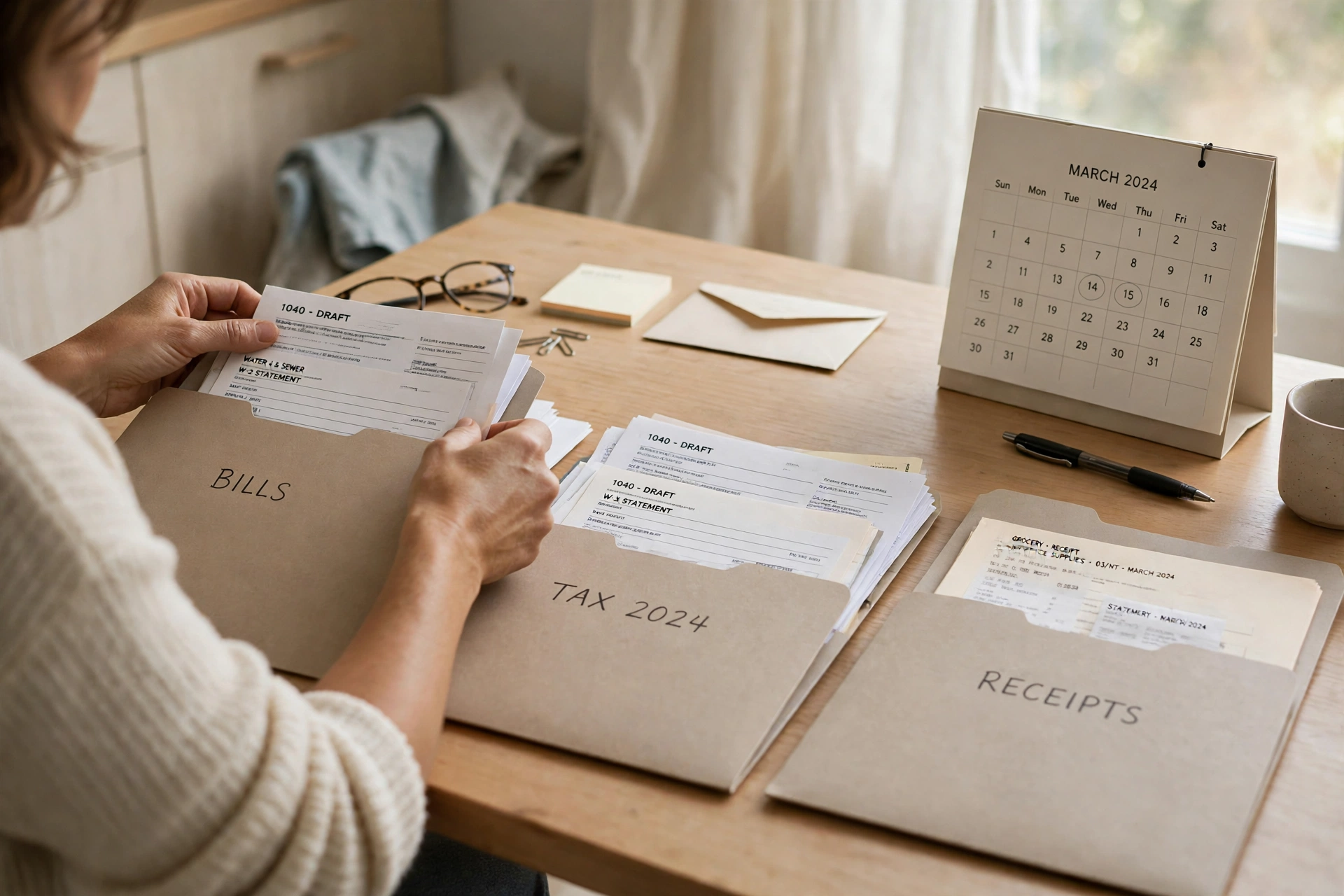
Work through the pile in one sitting if you can, or in three short sessions across a week. Shred what you no longer need, file what you do, and write the missing items on your to-do list. When the folder is done, tax season stops feeling like a scramble, and your everyday money papers finally have one home. That single-folder habit is one of the most useful march budget organization ideas in this guide, because it keeps working long after tax season ends.
Our february budget organization ideas used a binder for the same job after the holidays. March builds on that with a tax-season sort, so the binder or folder you already started now holds the papers that matter most.
3. Set up spring sinking funds
A sinking fund is just a small pot of money for a cost you know is coming. Spring has plenty of them: spring break trips, Easter gifts, garden supplies, car service before summer road trips, and birthday season. When you save a little each payday, those costs stop feeling like surprises.
Pick three spring funds to start, no more: Spring break or a short trip, even a small one; Gifts and gatherings, for Easter, birthdays, and spring holidays; Home and car, for the jobs spring always brings, like a car service or a garden fix.
Give each fund a name, a target amount, and a small payday transfer, even if it is modest. A jar, a separate savings pocket, or a notebook page all work — the tool matters less than the habit. When a spring cost arrives and the money is already there, you will feel the difference right away. That calm feeling is the whole point of spring sinking funds, and it is why they belong in any set of march budget organization ideas worth keeping.
If money is tight, start with one fund only. A single spring fund you actually fill beats three empty ones, and you can add a second fund once the first feels easy. Start small, and let these march budget organization ideas grow with your spring plans.
4. Do a subscription spring clean
Winter is when subscriptions pile up quietly. Streaming services, apps, gym memberships, and delivery plans all renew on their own, and March is the right month to look at them with fresh eyes.
Open your bank statement and list every recurring charge from the last two months. Then ask one question about each: did I use this in the last month, and would I miss it if it stopped tomorrow? Keep what you use, pause what you do not, and cancel what you forgot you had.
A few simple moves make this audit stick: Cancel one unused subscription this week, not five at once; Pause seasonal services you only need in summer or winter; Set a phone reminder for every free trial, the day before it ends; Write the new monthly total down, so you can see what the clean-up saved.
Most people find at least one charge they forgot about, and that small win makes the rest of the spring budget feel easier. A subscription spring clean takes under an hour, and it is one of the fastest march budget organization ideas to finish in March.
5. Build a March grocery plan around spring food
Grocery spending is the easiest budget line to improve in March, because spring produce starts to change what is fresh and cheap. A short plan beats a strict number every time: plan a few meals, shop from a list, and check the pantry before you leave the house.
Try this simple weekly rhythm: Pick three or four meals for the week, with one or two low-cost meals like soup, pasta, or eggs; Write the list from the meals, not from memory, and add only what the list needs; Shop once a week if you can, and skip extra trips that turn into impulse buys; Freeze leftovers the same night, so they do not go to waste.

Spring also helps here in a small way. Lighter meals, salads, and fresh vegetables cost less than heavy winter comfort food, and a spring pantry clear-out shows you what you already own. Our march pantry organization ideas use the same one-list rule for shelves and snacks, and our march cleaning schedule ideas pair a weekly kitchen tidy with this same grocery habit. Good march budget organization ideas always connect to the rest of the house, because money, food, and clutter all feed into each other. Small habits like these are why march budget organization ideas work in real kitchens, not just on paper.
6. Keep a weekly payday check-in under fifteen minutes
A weekly money check-in is the habit that holds the whole system together. Pick a time you already sit down, like Sunday night or payday morning, and keep it under fifteen minutes. Open your folder, check your bill tracker, and ask three questions: What did I spend this week, and in which categories? What bills are due before the next check-in? What is one small change for next week?
That is it. You do not need a daily money review, and you do not need to track every coffee forever. One short check each week catches problems early, when they are still easy to fix. For budgeting basics, look for guidance from an authoritative consumer finance source on setting up a simple budget and tracking spending, and use it to shape your own categories rather than copying a template that does not fit your life.
If a week goes badly, do not scrap the plan. Note what happened, adjust one category, and carry on. Keep a small emergency fund transfer in the plan too, even a modest one, so a surprise bill does not undo the week. A missed week is not a failed budget. It is just a week, and the next check-in brings you back. Families who tried january budget organization ideas will recognize this same short check-in pattern, now with a spring twist: tax papers sorted, sinking funds started, and a subscription clean-up done.
7. A March week-by-week plan you can copy
Use this table as your spring money map, and change the order to fit your life. One focus per week keeps the work short and the progress steady.
| Week 1 | Spring money tidy — Three numbers, four questions, folder started | 30 minutes total |
| Week 2 | Tax-season paperwork — Sort papers, file what matters, list what is missing | 1 hour total |
| Week 3 | Sinking funds + subscriptions — Three spring funds, one subscription audit | 1 hour total |
| Week 4 | Grocery plan + check-in — Weekly grocery list, payday check-in routine | 45 minutes total |
A spring budget checklist, built from these march budget organization ideas, can sit on the fridge next to this table. Tick off one row per week, and by the end of March you will know where your money goes, your tax papers will be in one place, and spring costs will have money waiting for them. If you fall behind, just pick up where you left off. A half-finished plan still beats a drawer full of good intentions.
Frequently asked questions
Q: How do I start organizing my budget in March?
A: Start with a fifteen-minute money tidy and a tax-season paperwork sort, since both free up mental space fast. Write down last month’s three big numbers, gather your papers into one folder, and then pick one spring sinking fund. These three steps make most march budget organization ideas work, because you can see your money clearly before you change anything.
Q: What is a sinking fund, and how many should I have?
A: A sinking fund is a small pot of money saved a little at a time for a cost you know is coming, like spring break, gifts, or a car service. Start with three at most, or just one if money is tight. Small, steady transfers each payday beat big promises you cannot keep.
Q: How can I cut grocery spending in spring?
A: Plan three or four meals a week, shop from a list, check the pantry first, and shop once a week when you can. Spring produce and lighter meals help too, and freezing leftovers the same night stops waste. A short list stops most impulse buys, and that alone can trim a weekly shop.
Q: How often should I check my budget?
A: Check it once a week for fifteen minutes, and do a longer look once a month. Daily tracking burns most people out, while a weekly payday check-in catches problems early and keeps the system easy to keep. If you miss a week, just start again at the next check-in.
A calmer spring, one week at a time
Spring money does not need a perfect spreadsheet or a strict plan you drop by week two. It needs papers in one folder, a few spring funds with money in them, subscriptions you actually use, and a short check-in you keep. That is what good march budget organization ideas do: turn a winter pile of bills and papers into a simple routine you can trust.
Start with the fifteen-minute tidy this week, sort the tax papers next, and work through the table at your own pace. By the end of March, tax season will feel calmer, spring costs will have money waiting, and your budget will feel like something you run — not something that runs you. That is the promise of march budget organization ideas done the spring way: less scramble, more calm.