

Important documents organization ideas matter most on the day you actually need a paper, because the worst time to hunt for a passport is the night before a trip. You know the feeling: a drawer full of mixed papers, a folder that holds three years of everything, and a birth certificate somewhere in the house — probably. A small, simple system fixes that, and it takes one afternoon to build.
Paper clutter grows quietly. A tax form lands on the kitchen counter, an insurance letter goes into a drawer, a medical bill slides behind a cookbook, and a warranty card ends up in the glove box — none of it feels urgent, so none of it gets a home. Then one day you need a single paper — a car title, a vaccination record, a lease — and you spend an hour digging through piles that all look the same.
The fix is not a bigger filing cabinet. It is five clear groups, one drawer or box, and a binder you can grab in a hurry. Below you will sort every paper into those five groups, build a simple home filing system that fits in one drawer, pack a grab-and-go binder, and back it all up — so these important documents organization ideas leave you able to find any paper in under a minute.
Start With Five Groups, Not Fifty Folders
These important documents organization ideas start with five groups, because five is few enough to remember and big enough to hold everything a household owns. Every paper you have fits into one of them, and once you know the groups, filing takes seconds instead of decisions — that is the whole point of important documents organization ideas.
- Identity: passports, birth certificates, marriage certificates, Social Security cards, driver’s licenses, and wills. These are the papers that prove who you are, and they are the hardest to replace.
- Money: tax documents, bank statements, pay stubs, loan papers, and retirement account letters. Keep tax returns for at least three years, and seven if you claimed a loss — your own records decide the rest.
- Home: the lease or deed, mortgage papers, insurance policies, appliance manuals, warranties, and repair receipts. If it came with the house or lives in it, it goes here.
- Health: medical records, vaccination cards, dental records, prescriptions, and health insurance cards. One folder per person keeps this group simple.
- Family and legal: school records, pet papers, custody or guardianship papers, and anything with a signature that matters. This small group holds the papers you rarely touch but must never lose.
Write the five group names on sticky notes and stick them on the table before you sort. The labels do the thinking for you. If a paper seems to fit two groups, pick the one you would look in first — the system only works if you trust your first instinct.
The One-Afternoon Sort
Set aside one afternoon, clear the kitchen table, and gather every paper in the house: the junk drawer, the glove box, the shoebox on the closet shelf, the stack on top of the fridge. A filing system cannot work if half the papers are still hiding in other rooms.
Then sort each paper into one of three piles:
- File it. Anything in the five groups above, anything you will need again, and anything with a signature, a date, or money attached to it.
- Shred it. Old bank statements you no longer need, expired offers, voided checks, and any paper with your name, address, or account numbers on it that you are done with. A cross-cut shredder is the right tool here — the recycling bin is not, for anything with personal details.
- Toss it. Junk mail, old magazines, expired coupons, and anything without personal information. This pile goes straight into recycling.
Work fast and do not read every paper twice. Most households find a third is trash, a third is shred, and a third is worth filing. The important papers you keep should fit in one box or one drawer when you are done. If they do not, you kept too much. That is why important documents organization ideas start with a sort, not a shopping trip.
Build a Simple Home Filing System
The best important documents organization ideas keep the system small enough that filing a new paper takes less than a minute. A desktop document organizer, a file box, or one drawer with hanging folders all work — pick the one that fits where you actually sit down with the mail, not the one that looks best in a photo.
Start with five hanging folders, one for each group, and label them in plain words: Identity, Money, Home, Health, Family. Inside each one, add plain file folders for the papers you reach for most — “Taxes 2026,” “Car Insurance,” “Medical — Mom.” Label every folder the way you would search for it, because a label that says “Auto” is useless if you would look for “Car.”
Color helps more than most people expect. Give each group a color — blue for Identity, green for Money, red for Health, and so on — and use the same colors on folder tabs, binder dividers, and your digital folders. Your eyes find a color before your brain reads a word.
If your home office filing lives in a drawer, keep the everyday papers at the front: bills to pay, the insurance card, the school form due Friday. The papers you touch once a year — the deed, the will, the birth certificates — go at the back. Our small home office organization ideas guide shows the same rule for desks: the things you use daily live within reach, and the rest lives behind them.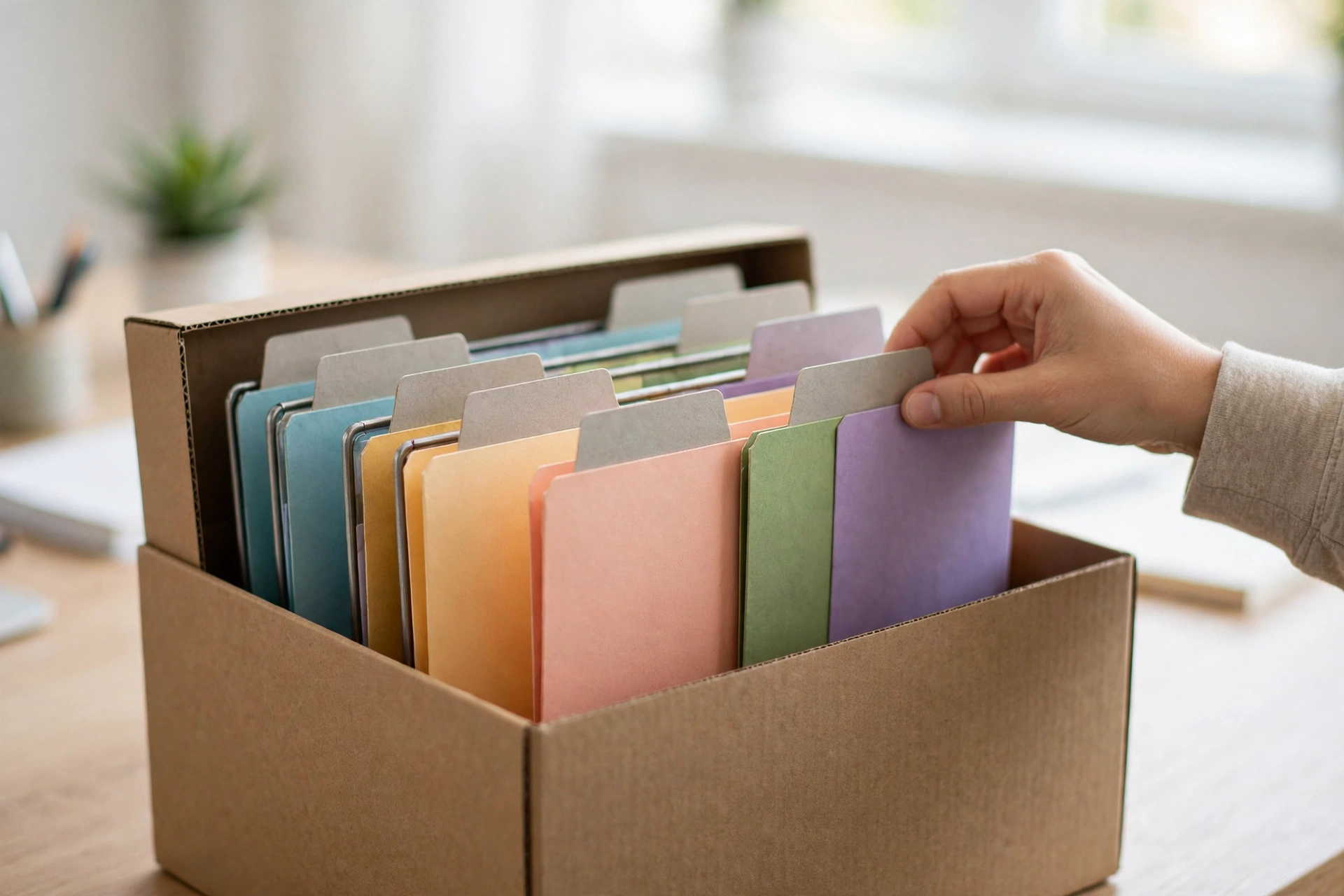
What Goes in the Safe, the Binder, and the Drawer
Not every paper belongs in the same place. That split is the heart of these important documents organization ideas, because the originals need protection and the copies need to be easy to grab.
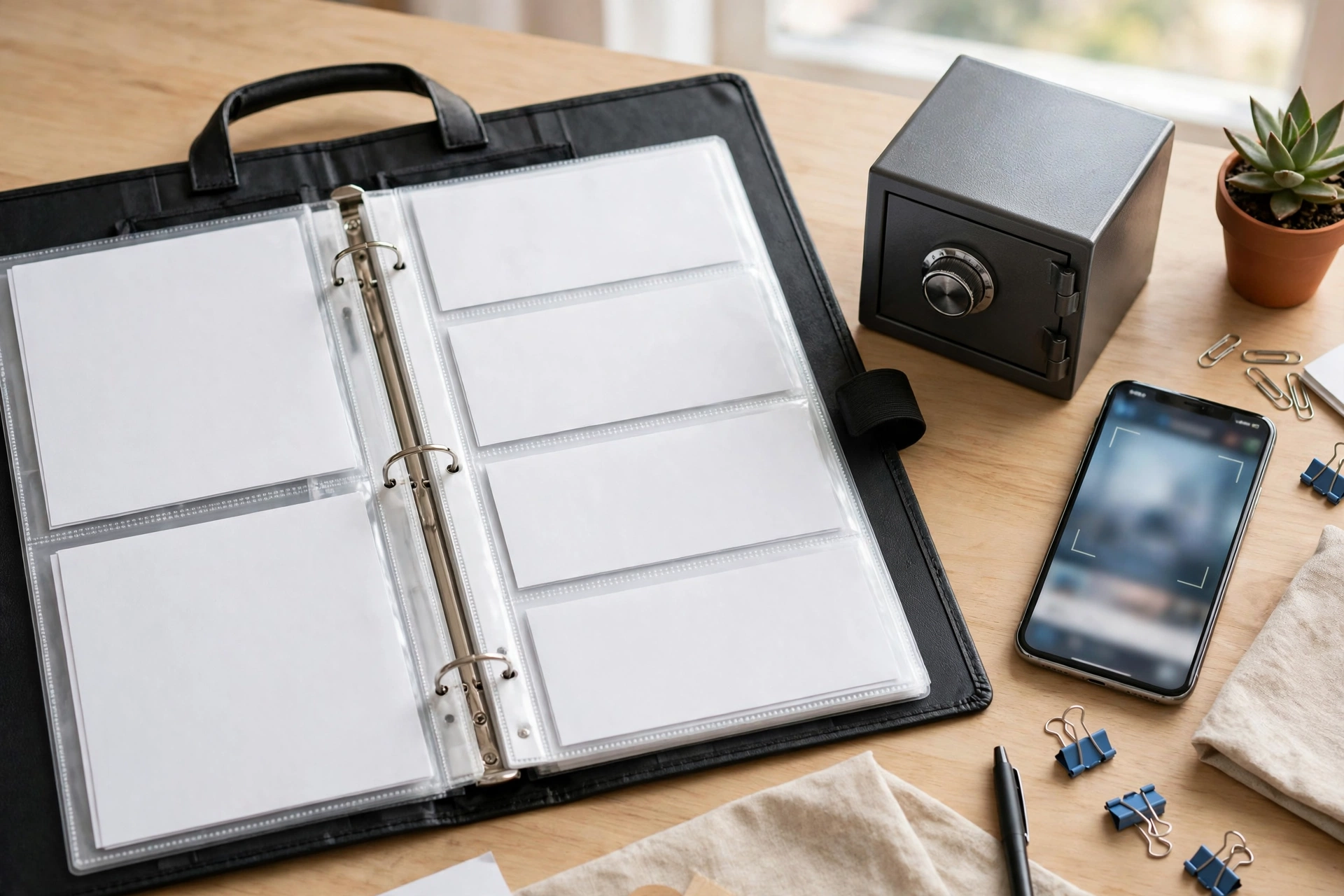
Originals of the hardest-to-replace papers go in a fireproof document bag or a small fireproof safe: birth certificates, passports, Social Security cards, the will, the deed, and car titles. A fireproof document bag costs little, fits in a drawer or a closet shelf, and protects the papers that would take weeks to replace. Check it once a year for wear, and keep it somewhere you can reach in a hurry.
Copies of those same papers go in the emergency binder: a sturdy three-ring binder with clear sleeves and tabbed dividers for the five groups. This is the binder you grab if you have to leave the house in a hurry, and the one you hand to a family member who needs to find something while you are away. Keep it on a shelf near the door, not buried in a closet. Our household binder organization ideas guide walks through the same binder setup for everyday household papers, and the two binders work side by side.
Everything else — bills, receipts, warranties — lives in the drawer or file box from the last section. These are the papers you file weekly and pull out monthly, so they belong where you work. A paper that lives in the safe and gets used every week will end up on the kitchen counter again.
Go Digital Without Losing the Paper
A digital backup is the second half of these important documents organization ideas, because paper burns, floods, and gets lost — and a phone photo of a passport has saved more trips than any filing cabinet. Start with the Identity group, because those are the papers important documents organization ideas protect first, then scan the Money and Home groups, and save the files in folders that match your five paper groups.
Name every file the same way: year, group, and paper, like 2026-Identity-Passport.pdf or 2025-Money-Taxes.pdf. A file named scan001.pdf is as lost as a paper in the junk drawer. Keep two copies: one in a secure cloud folder and one on an external drive or a second device — a backup that lives only on the laptop is not a backup.
Scan as papers arrive instead of saving it for a big session. The mail tray empties into the scanner, the file goes into the right digital folder, and the paper goes into the right hanging folder — one minute, done. A home filing system that stays current is a system you trust, and that one-minute habit is what makes important documents organization ideas stick. For how long to keep each kind of record, this guide to a simple home filing system lays out a retention schedule drawn from IRS and FTC guidance, so you know what to shred and what to keep.
Keep It Working With a 15-Minute Monthly Check
The monthly check is what keeps important documents organization ideas working past the first week, and it takes fifteen minutes. Pick one day a month — the first Sunday works for most households — and run through four small jobs.
- Empty the mail tray. File what belongs in the five groups, shred what is done, and toss the rest.
- Check the “bills to pay” folder. Anything paid moves to its group folder; anything past due gets handled now.
- Look at the binder. Are the copies still current? Did an insurance card change, a prescription update, a new school form arrive? Swap the old page for the new one.
- Shred one handful. Old statements, expired offers, last year’s receipts you no longer need — a little shredding every month beats a giant purge every year.
Once a year, do the bigger review: pull the tax folder, start a fresh folder for the new year, and check the fireproof bag for wear. Our budget organization ideas guide uses the same once-a-year rhythm for money papers. A system that gets fifteen minutes a month stays a system; a system that gets nothing for a year becomes a pile again.
What Goes Where
Use this table to set up your papers in one sitting. The core of important documents organization ideas is giving every paper one home, and this table is the map.
| Place | Best for | Keep in mind |
|---|---|---|
| Fireproof bag or safe | Birth certificates, passports, will, deed, car titles | Originals only; check yearly for wear |
| Emergency binder | Copies of identity papers, insurance cards, medical records | Near the door, grab in a hurry |
| File drawer or box | Tax documents, bills, warranties, everyday papers | Five groups, color-coded, front = everyday |
| Digital backup | Scans of identity, money, and home papers | Cloud + external drive, clear file names |
| Shredder | Old statements, expired offers, voided checks | Shred anything with personal details |
Frequently Asked Questions
How do I start organizing important documents at home?
Gather every paper in the house onto one table, then sort into three piles: file, shred, and toss. File what fits the five groups — Identity, Money, Home, Health, and Family — and set up one drawer or box with a folder for each. Important documents organization ideas work best when you start with the sort, not with shopping for supplies.
What documents should I keep in a fireproof safe?
Keep the originals of the papers that are hardest to replace: birth certificates, passports, Social Security cards, your will, the house deed, and car titles. Keep copies of the same papers in your emergency binder, and scan them for your digital backup, so the information survives even if the paper does not.
How long should I keep tax documents?
Keep tax returns and supporting papers for at least three years, and seven years if you claimed a loss from worthless securities or a bad debt — that is the IRS period of limitations. After that, shred them; do not toss tax papers in the recycling, since they carry your Social Security number and income details.
Should I scan my important documents?
Yes — scan the Identity group first, then Money and Home, and save the files in folders that match your five paper groups with clear names like 2026-Identity-Passport.pdf. Keep one copy in a secure cloud folder and one on an external drive. The paper originals still go in the safe or binder; the scans are your backup, not a replacement.
Start With the Junk Drawer Tonight
Start with the junk drawer tonight — pull out every paper, sort it into file, shred, and toss, and put the keepers into five labeled folders — and these important documents organization ideas will make the next paper you need the one you can find in a minute, not the one you hunt for all evening. A home does not need a giant filing cabinet. It needs five groups, one drawer, a binder by the door, and a backup in the cloud. Pick the groups, label the folders, and start with the drawer you already have.