

Golf club storage organization ideas matter most on the morning you are late for a tee time, the bag is buried behind the lawn mower, one headcover is missing, and the putter you need is leaning in a corner where it fell over last week. A set of clubs is not cheap, and it takes up more room than most people expect — so when it lives in a heap, you waste time before every round and the gear takes damage between rounds. A small system fixes both problems, and it does not need a big budget or a bigger garage.
The trick is to store clubs upright, off the floor, in a dry spot you can reach without moving three other things first. Bags stay standing, balls and shoes get their own bins, and the small pieces — tees, gloves, towels — live in one place instead of scattered through every pocket. When every piece has a home, grabbing your clubs takes thirty seconds and the clubs stay in the shape you paid for. That is what good golf club storage organization ideas are for — a setup that protects the gear and gives you back the floor.
Why Golf Clubs End Up in a Pile
Golf gear is awkward to store. Clubs are long and top-heavy, the bag is tall and round, and the extras — balls, shoes, towels, rain gear — never seem to fit inside the bag the way they did at the store. So most bags end up leaning in a corner, slowly sliding down until the clubs spill across the floor. A bag that falls over once a week will chip a shaft, dent a headcover, and bend a grip sooner than you think.
The second problem is the garage itself. Garages get hot in summer, cold in winter, and damp whenever it rains. Grips go sticky in heat, steel heads rust in damp air, and glue holding a clubhead to its shaft weakens when the temperature swings too far. None of that happens in a day, but over a season of bad storage it adds up to real repair bills. A little planning now is cheaper than a new set of grips later — and this is where golf club storage organization ideas earn their keep, by matching each piece to a spot that suits it.
Step 1: Clean and Check Every Club Before It Goes Away
Before you buy a single rack, clean the set. Wipe each clubhead with a damp cloth, brush the grooves clean, and dry the shafts fully. Check the grips for cracks and the ferrules — the small rings where the head meets the shaft — for gaps. A grip that is cracked now will be worse in three months, so note it and replace it before the next season starts.
Empty the bag completely. Pull out the old scorecards, the broken tees, the snack wrappers, and the glove that has been in the side pocket since July. Shake the bag out, wipe the inside of the pockets, and let it air dry for a day if it smells damp. A clean bag stores better and smells better, and the sort usually turns up balls and tees you forgot you owned. Do this cleanout once a season and the storage system stays honest, because you cannot organize a bag you have not emptied.
Step 2: Pick the Right Spot in the Garage
Not every corner of a garage suits golf clubs. The best spot is dry, out of direct sun, and away from the garage door, where rain blows in and the temperature swings the most. An inside wall beats a spot by the door every time, and a corner away from the water heater, lawn chemicals, and car fluids keeps grips and finishes safe from fumes and splashes.
Keep the clubs off the concrete floor. Floors collect moisture, and a bag sitting on concrete in a damp garage will wick that damp up into the bottom of the bag. A rack, a pallet, or even a low shelf lifts the bag four to six inches and stops that problem cold. If your garage runs humid in summer, toss a few silica gel packets into the bag pockets and crack the lid of a bin of balls now and then to let air move. The SpareFoot golf club storage guide makes the same point about temperature and humidity, and it is worth a read before you pick a permanent spot — aim for roughly 50 to 85 degrees and humidity under 60 percent, and your clubs will thank you.
Step 3: Store Clubs Upright in a Bag Organizer
Upright storage is the heart of golf club storage organization ideas, because clubs stored upright keep their shape. Leaning a bag in a corner puts pressure on the shafts at one point, and graphite shafts in particular can weaken where they bend against a wall. A golf bag organizer — a freestanding rack with slots or a frame that holds the bag vertical — stops the lean entirely.
Pick the organizer by how many bags you own:
- One bag: a single wall hook or a small floor stand holds it upright in a corner and costs less than a dozen balls.
- Two bags: a freestanding golf club rack with two slots keeps both bags upright side by side, with room for shoes underneath.
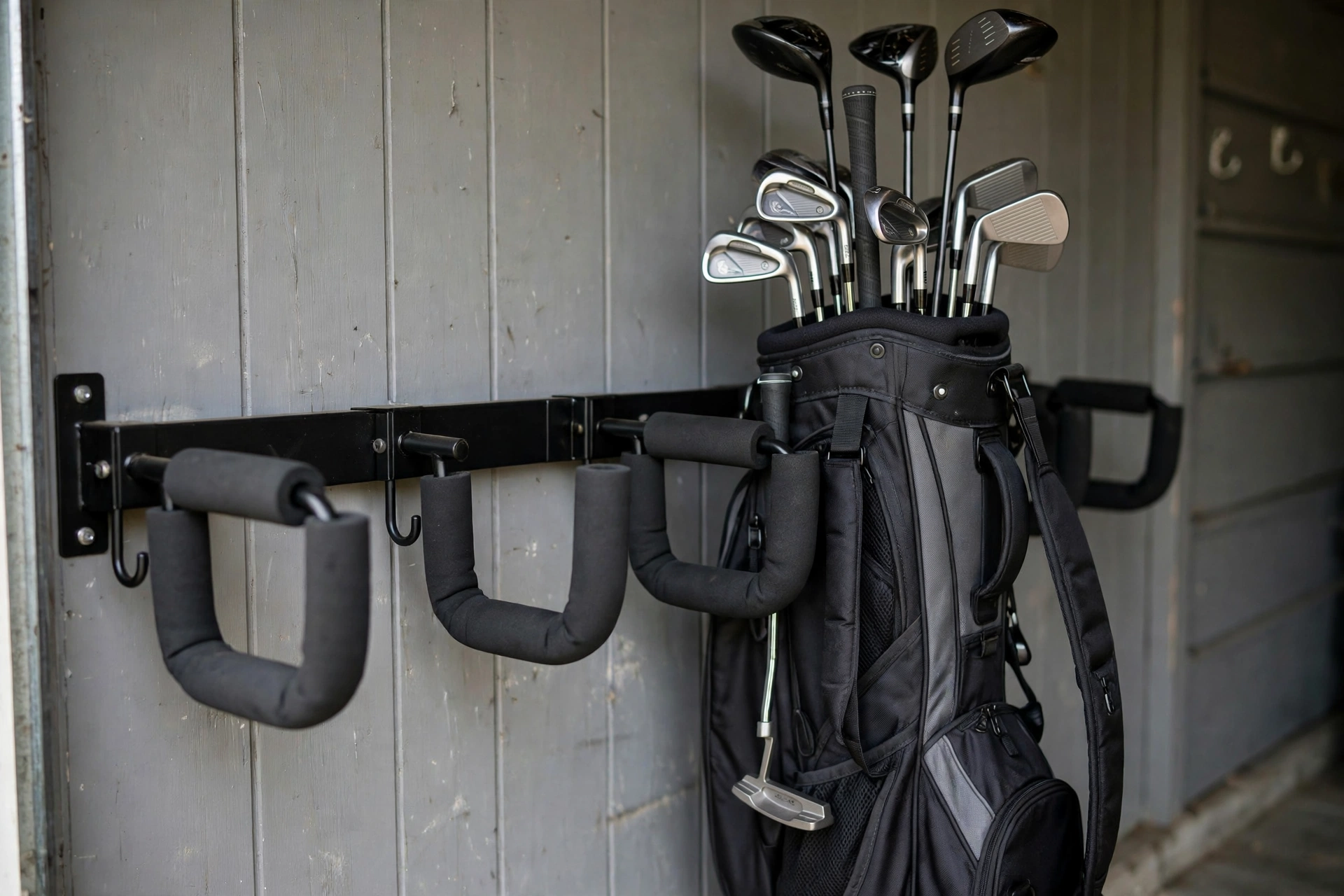
- A family of golfers: a wide rack or a wall rail with padded hooks holds three or four bags in a row, each with its own slot, so nobody’s set leans on anyone else’s.
- No floor space at all: a wall-mounted golf rack lifts the bag off the floor completely and frees the whole footprint for the car or the mower.
Keep the bag zipped and the headcovers on when the set is stored. Headcovers stop the clubheads from knocking together, and a zipped bag keeps dust out of the pockets. Put the putter in its own slot or tube if your bag has one — it is the club you reach for most, and it is the one that gets chipped first in a crowded bag.
Step 4: Hang a Wall-Mounted Golf Rack
A wall-mounted golf rack is the best move for a small garage, because the wall is space nobody else is using. Mount the rack into the wall studs, not just the drywall, since a full golf cart bag with fourteen clubs weighs thirty to fifty pounds. Padded hooks protect the shafts, and a rail with several hooks lets you hang the bag, the towel, and the rain hood in one row.
If you rent or cannot drill, a freestanding rack does the same job and moves with you. Freestanding organizers cost about the same as a wall rack, and you can slide them to a new spot when the garage layout changes. Either way, the rule is the same: the bag hangs or stands upright, off the floor, where you can grab it without moving anything else. That one habit — the bag in its spot, every time — is the core of garage golf storage that actually lasts.
Step 5: Give Balls, Shoes, and Small Gear Their Own Homes
The bag is only half the system. The small stuff is what turns a tidy garage into a mess, so give each group a home:
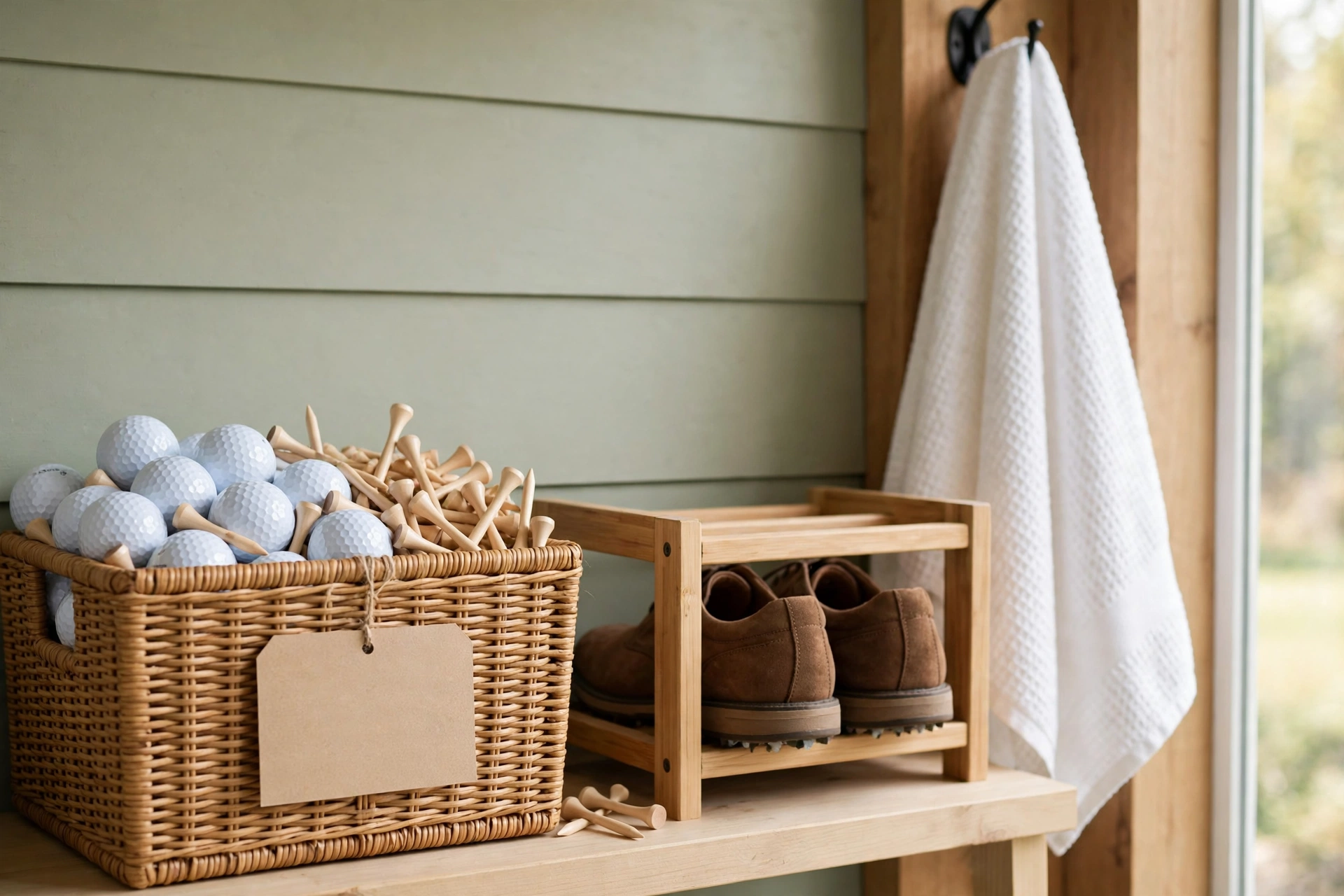
- Golf ball storage: a clear bin or a tall bucket by the bag holds practice balls, and a small mesh bag holds the good balls you play with. Sort by type if you play more than one ball — a labeled bin stops the pre-round hunt.
- Golf shoes storage: shoes need air, not a sealed bag. A small shoe rack or a shelf by the bag holds one or two pairs, spikes up, so they dry between rounds. Never store shoes in the bag’s side pocket while they are still damp.
- Golf accessories storage: one small bin or a toolbox drawer holds tees, ball markers, divot tools, gloves, and sunscreen. Label the bin, and refill it from the house stock instead of buying a third pack of tees.
- Towels and rain gear: hang the towel on the rack hook and fold the rain suit on the shelf above the bag, so both are in reach on a wet morning.
Our sports equipment organization ideas use the same one-bin-per-sport rule for the rest of the family’s gear, and golf gear storage fits it perfectly: one bin for the small pieces, one shelf for the shoes, and the bag on its own hook. When the small stuff has a home, the bag stays light and the garage stays walkable.
Step 6: Set Up the Off-Season Routine
Golf changes with the weather, so the storage changes too. In late fall, when the season ends, give the set a full clean, dry everything, and move the bag to its winter spot — the driest inside wall, away from the door. Our winter sports gear storage ideas use the same end-of-season routine for skis and boots: clean it, dry it, check it, and put it away while you still remember where everything is.
Check the set once a month through the winter. Look at the grips for cracks, the heads for rust spots, and the bag for damp. A grip that cracks in January is easy to replace in February, but a grip you first notice in April costs you a round. This monthly look takes five minutes, and it is the cheapest insurance a set of clubs has. When spring comes, the bag comes off the rack clean, dry, and ready — no surprises on the first tee.
What Storage Fits Each Piece?
Use this table as a quick reference when you pick storage for each piece of golf gear. It is the cheat sheet for golf club storage organization ideas by piece, covering the most common gear and where it does best.
| Gear | Best storage | Why it works |
|---|---|---|
| Full golf bag | Freestanding golf club rack or wall-mounted golf rack | Bag stays upright, shafts stay straight, floor stays clear |
| Individual clubs | Bag slots or padded wall hooks | Clubs never lean or knock together |
| Golf balls | Clear labeled bin or mesh bag | Balls stay sorted and easy to count |
| Golf shoes | Open shoe rack or shelf by the bag | Shoes dry between rounds instead of going sour |
| Gloves, tees, markers | One labeled accessories bin | Small pieces stop vanishing into pockets |
| Rain gear and towels | Rack hook and shelf above the bag | In reach on a wet morning, dry by the next round |
| Off-season set | Driest inside wall, bag zipped, headcovers on | Damp and heat stay away from grips and heads |
If you are not sure what a piece needs, start with the rack: a golf bag organizer that holds the bag upright solves most of the problem, and you can add bins and hooks later. This table is the starting point for matching each piece to the right home, and it works in a garage, a gear closet, or a mudroom corner.
A 10-Minute Weekly Reset
A system only works if it gets a little care each week, so run this quick reset every Sunday. Add it to your weekly cleaning schedule and it takes ten minutes, keeping the golf club storage organization ideas in this guide working long after the first tidy-up.
- Stand the bag back on its rack and zip it closed.
- Wipe the clubheads and check the grips for cracks.
- Return balls, tees, and gloves to their bin.
- Hang the towel on its hook and fold the rain gear on the shelf.
- Put the shoes on the rack, spikes up, so they dry.
- Move one piece nobody used this month to the front, so it gets a chance or gets donated.
Frequently Asked Questions
What is the best way to store golf clubs in a garage?
Store the bag upright on a golf club rack or a wall-mounted golf rack, off the concrete floor, on a dry inside wall away from the garage door. Keep the headcovers on and the bag zipped. These golf club storage organization ideas work because upright, dry, off-the-floor storage stops shaft stress, rust, and grip damage all at once.
Can I leave my golf clubs in the car?
It is better not to. A car in summer gets far hotter than a garage, and heat dries out grips and weakens the glue that holds clubheads to shafts. A car in winter gets cold enough to make grips stiff and brittle. Bring the bag inside to its rack after every round — thirty seconds of carrying saves a season of repairs.
How do I store golf clubs for the winter?
Clean and dry every club, empty and air out the bag, put the headcovers on, and store the bag upright on its rack on the driest inside wall. Check the set once a month for rust and cracked grips. These golf club storage organization ideas keep a set ready for spring, because gear that is dry and checked in winter never surprises you in April.
Do I need a special rack, or can I just lean the bag in a corner?
A rack is worth it. A bag leaning in a corner slides, falls, and puts pressure on the shafts at one point, and graphite shafts can weaken where they bend. A simple wall hook or freestanding rack costs less than a box of balls and keeps the bag upright for years.
Clubs That Are Ready When You Are
The best golf club storage organization ideas do not need a big shed or a big budget. They need a clean set, a dry spot on an inside wall, a rack that holds the bag upright, a bin for the small pieces, and ten minutes a week to keep it all working. Start with the bag — stand it on its rack, zip it up, and clear the floor — and the rest of the system builds itself.
Try it this weekend. Pick one wall, set the hooks, label the accessories bin, and run the first weekly reset on Sunday. You will know in a week whether the new spots work, because getting out the door for a round will feel faster and the clubs you love will finally get treated like they matter.