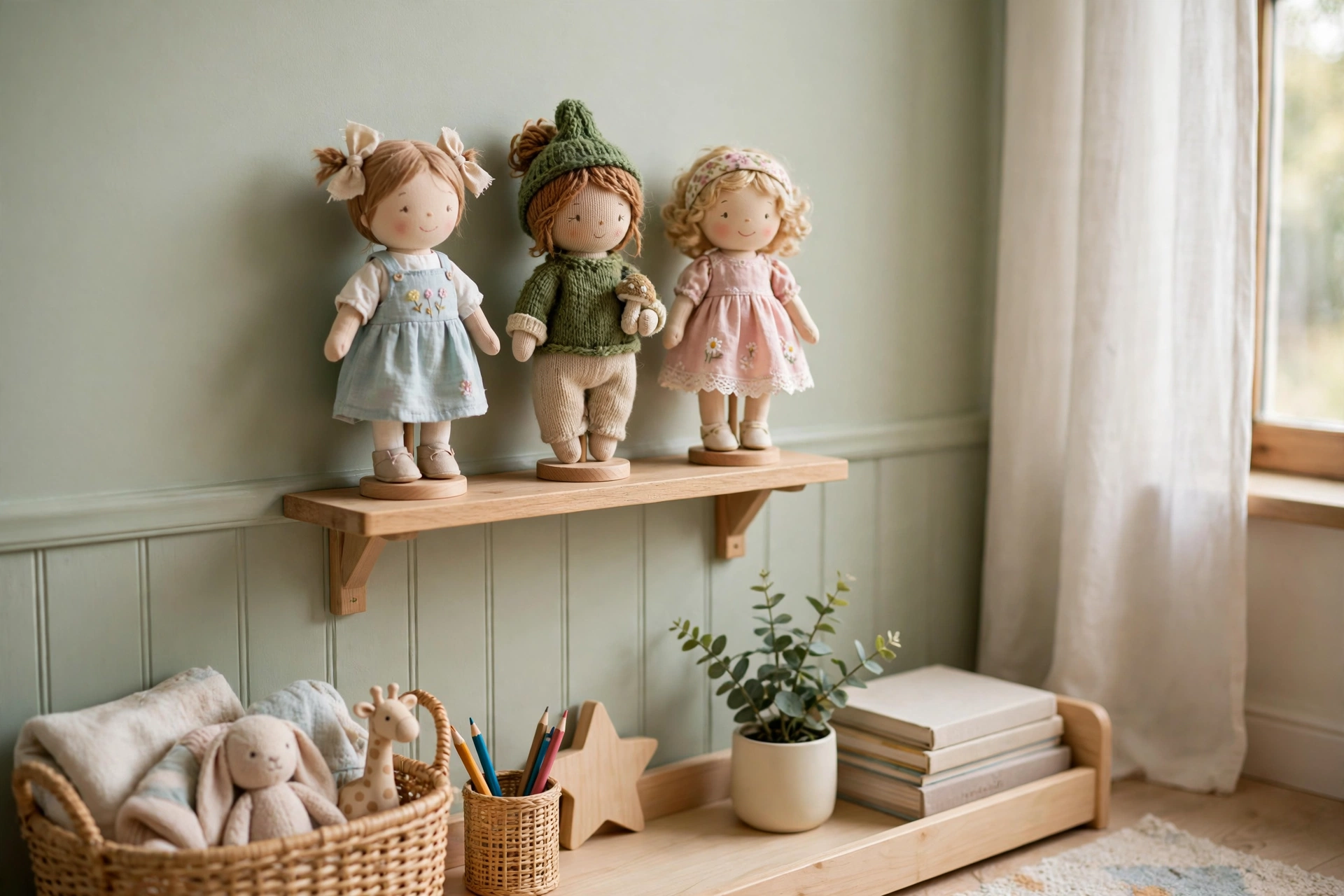
Doll storage ideas matter the moment a doll collection outgrows its first basket. One doll becomes five, five become fifteen, and soon the dolls are on the bed, the clothes are under the dresser, and the tiny shoes have vanished completely. You do not need a bigger room to fix it. You need a simple system where every doll, outfit, and accessory has one home, and these doll storage ideas show you how to build that system in a single afternoon, with bins and shelves you probably already own.
Most doll mess comes from the same three problems: too many small pieces, no clear spot for each thing, and a child who cannot put things back without help. A doll is never just a doll — it comes with clothes, shoes, a brush, a stand, and a bag of bits that fit nowhere. When everything shares one big toy box, the pieces tangle, the hair knots, and the favorite doll ends up at the bottom under everything else. The fix is simple: sort by doll, give each group its own labeled home, and keep the everyday dolls where little hands can reach them. That is what good doll storage ideas do — they make cleanup a five-minute job a child can actually do alone.
Why Dolls Are the Hardest Toys to Store
A doll collection grows in every direction at once. The dolls themselves are different sizes, from tiny figures to dolls as tall as a toddler, and each one brings its own clothes and gear. Blocks stack neatly and books line up on a shelf, but dolls flop, tangle, and shed small pieces. A doll with long hair left loose in a toy box comes out with knots that take an hour to brush through. A doll left face-down under a pile of toys can pick up marks on its face or a bent arm that never quite sits right again.
Then there are the clothes. Doll clothes are small, slippery, and easy to lose, and a single outfit can have five pieces that belong together. Shoes are worse — one doll shoe is about the size of a coin, and a pair separated in a toy box may never meet again. Doll accessories like brushes, bags, and stands are the same story: useful, tiny, and gone the moment they leave their spot.
That is why doll storage ideas start with sorting, not shopping. Until you know what you own and which dolls get played with every day, no bin or shelf will solve the mess.
Sort the Collection Before You Buy a Single Bin
Do not buy storage until you know what needs storing. Pull every doll, outfit, shoe, and accessory out of every room — the bedroom, the playroom, the car, the living room floor — and pile it all in one place. You will find doubles, outfits for dolls that moved on, and pieces nobody can name. Sorting first means you only store the dolls your child actually plays with, and the bins you buy fit what you have.
Sort everything into four piles, and be honest about the last one:
- Play every day — the two or three favorite dolls, their everyday outfits, and the shoes and brush that go with them. These live where your child can reach them.
- Play sometimes — dolls that come out on weekends or for special play, with their outfits in a labeled bin nearby.
- Keepsake — special dolls, gifts from grandparents, and collector dolls that are for looking at, not daily play. These need gentler storage.
- Let go — broken dolls, outfits with missing pieces, and dolls your child has outgrown. Donate what is still good and recycle the rest.
Count what is left before you shop. A collection of five dolls fits in one shelf cubby and a single clothes bin. A collection of twenty needs a real system: one bin per doll or one bin per type, with labels your child can read or see. Knowing the number keeps you from buying a toy chest that swallows everything into one tangled pile. Build the system around the dolls that stay, and doll storage ideas stop being a chore and start being a habit.
Sort first, then store — that order is the part of doll storage ideas most people skip, and it is the part that saves the most time later. The small kids room organization ideas guide uses the same rule — one bin per type, one spot per thing — and it works just as well for dolls, because a system a child can follow is a system that actually gets used.
Pick the Right Home for the Dolls
Every storage option trades space for protection, and the best doll storage ideas match the option to the doll. Open bins are best for everyday play dolls, because a child can grab one and put it back without opening a lid. Shelves work well for dolls that are played with often but deserve a tidy home. Display cases protect special dolls from dust and little hands, while closet boxes keep keepsakes safe for years.
| Storage option | Best for | Watch out for |
|---|---|---|
| Open labeled bins on a low shelf | Everyday play dolls, quick cleanup | Dolls can tangle if the bin is too deep |
| Cubby shelf with one doll per cubby | Dolls your child plays with often | Needs a shelf low enough for a child to reach |
| Display shelf or closed cabinet | Favorite dolls on show, keepsake dolls | Keep out of direct sunlight, or colors fade |
| Labeled boxes in a closet | Keepsakes, out-of-season dolls, doll clothes | Label the outside, or you will never find anything |
If your child plays with dolls every day, keep the favorites on a low cubby shelf — one doll per cubby, standing upright, with its brush and shoes in a small pouch beside it. A shelf made for dolls is shallow, so nothing slides back out of reach, and a child can see every doll at a glance. If space is tight, labeled bins are the single best space saver in doll storage ideas: one bin per doll, with the doll’s name or photo on the label, so cleanup means matching the doll to its picture. Just choose bins that are wide and shallow rather than deep, because a deep bin is where dolls go to tangle. Start with the dolls your child plays with most, and let doll storage ideas grow from there — one shelf, one bin, one label at a time.
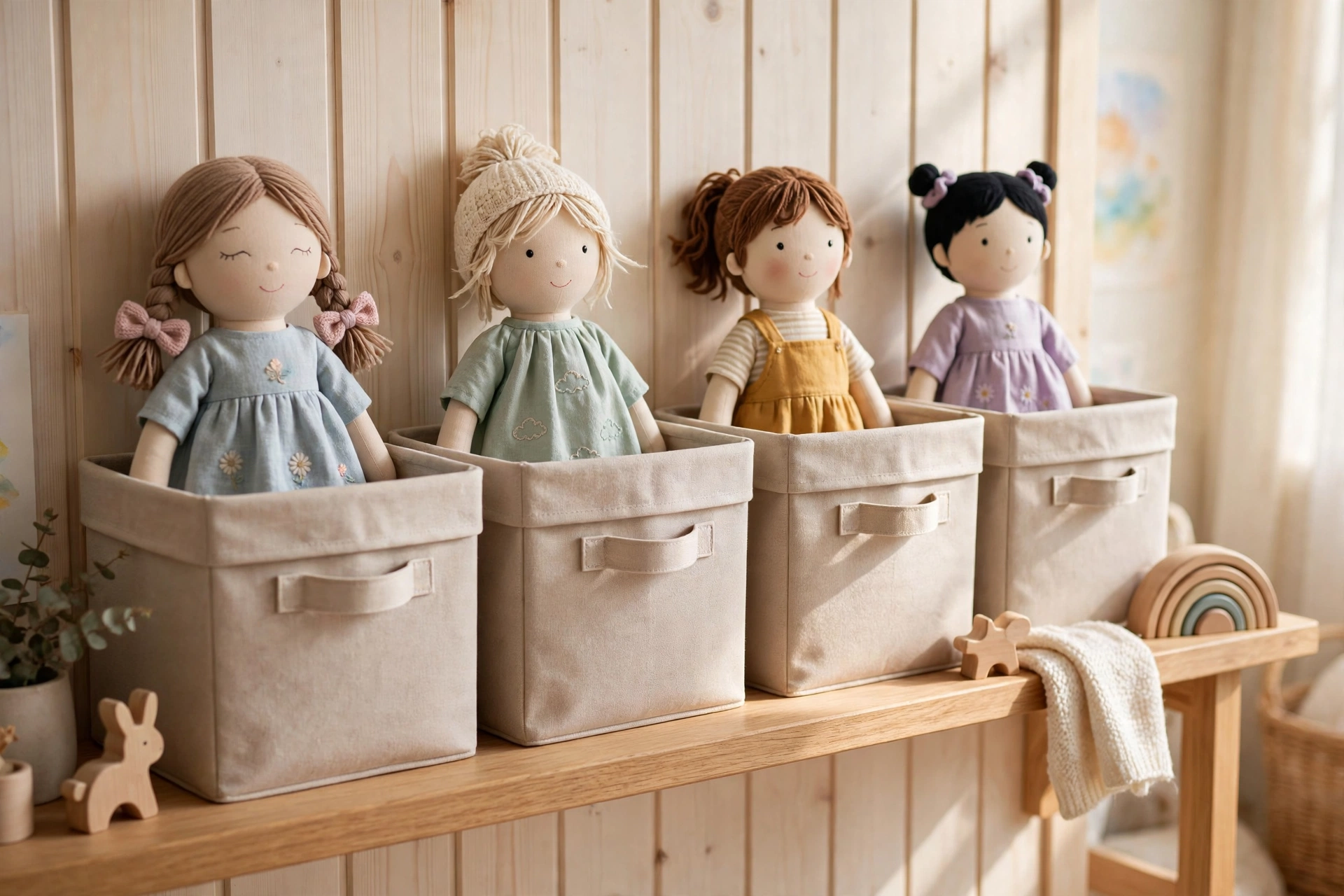
Doll Clothes Storage That Actually Works
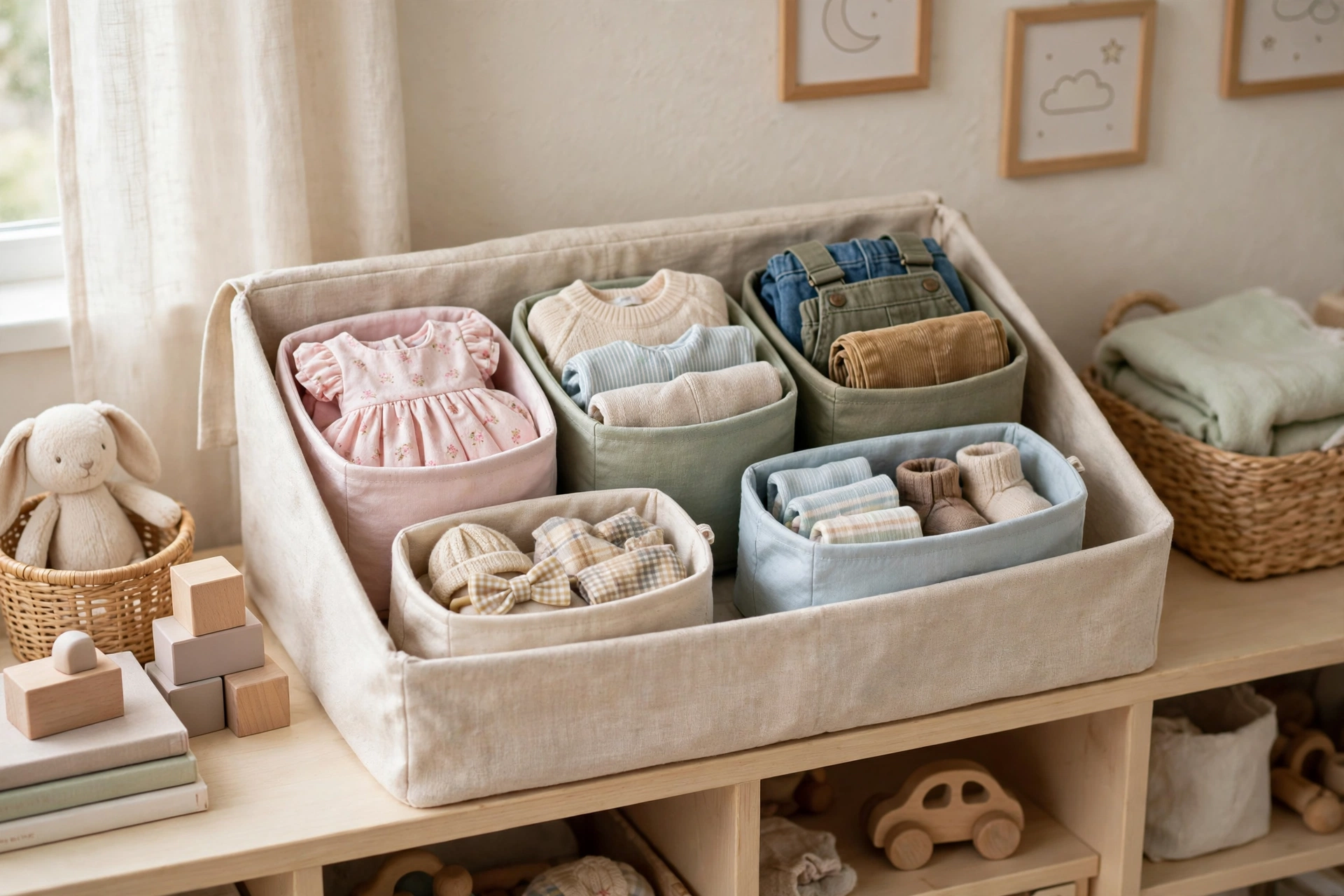
Doll clothes need their own system, because a pile of tiny outfits is the fastest way to lose a favorite dress. The simplest method is one small bin or fabric pouch per doll, with that doll’s clothes inside — so the red dress never ends up in the wrong doll’s drawer. Fold each outfit loosely and lay it flat, or roll soft outfits instead of folding them, which stops creases and keeps tiny pieces together. A small zip pouch inside the bin holds the shoes and hair bits for that outfit, so the whole look stays in one place.
For a bigger collection, sort clothes by type instead of by doll: all dresses in one labeled bin, all pants and tops in another, all pajamas and swim outfits in a third. Picture labels work best for younger kids who cannot read yet — a photo of a dress on the dress bin, a photo of shoes on the shoe bin. The same thinking that makes doll storage ideas work for the dolls themselves works for the clothes too: one home per group, a label a child can match, and nothing buried at the bottom of a deep box. The kids clothes storage ideas guide uses the same habit for real children’s clothes — one bin per type, folded so everything is visible — and it works just as well for doll clothes, because a system that shows you what you have is a system you actually use.
Tiny Accessories: Shoes, Brushes, and Stands
Doll accessories are small, and small things need small homes. Doll shoes belong in a divided box or a small zip bag, one pair per section, labeled by doll or by color. A craft box with tiny compartments — the kind sold for beads — works perfectly for shoes, earrings, and hair clips, and it costs very little. Keep the box on the same shelf as the dolls, so a shoe never has to travel across the room to find its doll.
Doll stands deserve their own spot too. A stand left loose in a toy box bends, and a bent stand will not hold a doll upright. Group the stands together in one clearly labeled container, near the dolls they belong to, with the doll’s name on the stand if you can. Brushes and combs go in a small cup or pouch on the shelf, not loose in a bin where the bristles bend. These small boxes are the part of doll storage ideas that saves the most sanity, because the tiny pieces are the ones that vanish first — and a doll without its shoes is a doll your child will ask you to find at bedtime.
Display Dolls vs Play Dolls: Keep Them Apart
Not every doll is for playing with, and mixing the two groups is how special dolls get broken. A display shelf is the answer: one shelf, up high enough that small hands reach it only with help, for the dolls that are for looking at. Keep the everyday play dolls on the low shelf where your child can grab them freely. When the groups stay apart, the special dolls stay safe and the play dolls stay in reach, and nobody has to say no to playtime.
Toy rotation keeps the collection fresh without buying anything new. Put half the play dolls in a labeled bin in the closet, and swap them with the shelf dolls every few weeks. A doll that comes back after a break feels new again, and the shelf never holds more dolls than your child can actually play with. A dollhouse can join the rotation too — keep it set up for a week, then pack its tiny furniture into a labeled box and bring out a different play set. That is the heart of doll storage ideas that actually work: fewer dolls out at once, each with a clear home, and a swap that keeps playtime interesting.
Protecting Keepsake and Collector Dolls
Keepsake dolls need a gentler version of the same doll storage ideas. Collector dolls, porcelain dolls, and dolls with painted faces should never live loose in a toy box. Wrap each doll loosely in acid-free tissue paper, which protects the surface without trapping damp the way plastic wrap does, and place it in a box that fits without forcing the doll into place. Add light padding around the doll so it cannot shift, and label the box with the doll’s name and what is inside.
Keep the boxes in a clean, dry room — an interior closet shelf is far better than an attic, basement, or garage, where heat and damp swing with the seasons. Keep the boxes upright and off the floor, and never stack heavy boxes on top of a doll box. The Public Storage guide to packing dolls for long-term storage makes the same point: wrap each doll loosely in acid-free tissue paper or unbleached cotton muslin, place it in a labeled box that fits without forcing it, and keep the box on a shelf in a clean, dry room — and it is worth a read before you pack a doll away for years. Check stored dolls once a year for damp, dust, or pests, and write the doll’s story — who gave it, when, and why it matters — on acid-free paper inside the box, so the memory stays with the doll.
Small-Space Doll Storage Ideas That Actually Work
A small room does not mean giving up the dolls — it means storing them smarter. A low cubby shelf holds the everyday dolls without taking floor space. A hanging organizer and one low shelf are often all the doll storage ideas a small room needs. A hanging shoe organizer on the back of the closet door holds doll clothes, shoes, and small accessories in its pockets, and every pocket is visible at a glance. A narrow shelf mounted on the wall above the bed turns dead wall space into a display shelf for favorite dolls, and a small lidded bin under the bed holds the out-of-rotation dolls.
If the dolls have to share a shelf with books and toys, give them one cubby each and keep the rest in a labeled bin in the closet — you keep the dolls and free up a whole shelf. Just label the outside of each bin with the doll or group it holds, or you will open every bin to find one doll. That label habit is what makes doll storage ideas actually work in a small room, because a system you cannot search is just a prettier pile, and a small room has no space for a pile.
The Five-Minute Doll Check That Keeps It Working
A stored collection is not a forgotten collection. Once a week, take five minutes with your child and check the doll shelf: are the dolls standing upright, are the shoes in their box, are the clothes in the right bin? A doll with tangled hair gets a quick brush before the knots set in. A bin that has drifted into a mixed pile gets sorted back into its groups. The whole check takes five minutes, and it stops a small mess from becoming a full afternoon of sorting.
- Check the hair first — a quick brush now beats an hour of untangling later.
- Put stray shoes back in their divided box, and match any lone shoe to its doll before it gets lost.
- Return any doll clothes that wandered into the wrong bin, and fold the outfits that got scrunched.
- The weekly cleaning schedule already includes a five-minute toy check — that is the natural moment to look at the doll shelf and make sure every doll is standing, dressed, and home.
Frequently Asked Questions
How should I store dolls so they last?
Keep each doll standing upright or lying flat in its own spot, away from direct sunlight and damp. Wrap keepsake dolls loosely in acid-free tissue paper and store them in labeled boxes in a clean, dry room. Everyday play dolls do best on a low shelf or in wide, shallow labeled bins a child can reach.
What is the best way to store doll clothes?
Give each doll its own small bin or fabric pouch for its clothes, and keep shoes and hair bits in a small zip pouch inside it. For a big collection, sort by type instead — dresses together, pants together — with picture labels so a child who cannot read yet can still match the outfit to the bin.
How do I keep doll shoes from getting lost?
Use a divided box with one pair per section, or a small zip bag per doll, and keep the box on the same shelf as the dolls. The rule that saves the most shoes is simple: shoes go back in the box the moment they come off the doll, before playtime moves on.
How many dolls should stay out at once?
Only as many as your child actually plays with — usually three to five. Keep the rest in a labeled bin in the closet and rotate them every few weeks. These doll storage ideas work the same way whether your child owns five dolls or fifty: fewer dolls out, each with a clear home, and a swap that keeps playtime fresh.
A Collection Worth Keeping
The best doll storage ideas are the ones you finish in a single afternoon: sort the dolls into play, display, and keepsake groups, give each doll its own labeled home, put the clothes and tiny accessories in small boxes your child can match, and protect the special dolls with tissue and a box on a dry shelf. That is it — no special room, no costly cabinet, just one spot per doll and a label a child can read. Your child’s dolls carried a hundred good afternoons in. A little care now means they will still be ready to play when she reaches for them again.