Comic book storage ideas matter the moment you pull a favorite issue off the shelf and find a bent corner, a yellowed cover, or a spine that has started to roll. You bought the comic to read it and enjoy it, and now the stack on the floor is leaning, the covers are rubbing together, and the one issue you wanted most is buried under twenty others you forgot you owned. That is the slow damage a bad system does — not one big accident, but a little bend and a little scuff added every time a comic goes back in the wrong spot.
You do not need a bigger room. You need one fixed home for every issue, a bag and a board that never move, and a habit that takes ten seconds: the comic goes back in its bag the moment you finish reading it, and the bag goes back in its box before you sit down again. This guide walks through bags and boards, boxes, shelving, display, and the small habits that keep the whole collection flat, dry, and easy to find — for a shelf of twenty issues and for a room full of long boxes. Every one of these comic book storage ideas was picked because it works in a real home, not just in a photo.
Follow it once, and these comic book storage ideas will keep your collection safe and your reading easy, whether you own a handful of favorite issues or a whole wall of boxes.
Why Comics Get Damaged So Easily
A comic gets damaged when three things line up: paper that is thin, a cover that bends, and time. A comic left loose on a shelf leans against its neighbors, and a leaning comic bends at the spine a little more every week. A cover rubbed against another cover scuffs, and a scuffed cover never looks new again. A stack of comics piled flat presses the bottom issues under the weight of the ones above, and the bottom issues come out with rolled spines and dented corners. The damage is quiet and steady — a little bend here, a little scuff there — until the issue you loved most looks tired and worn. That slow slide is exactly what good comic book storage ideas prevent, because the damage builds between reading days, not during reading.
Heat, damp air, and sunlight do most of the damage. Warm air speeds up the yellowing of cheap paper, damp air invites mold and warping, and sunlight fades covers fast — a comic left in a sunny window can fade in a single summer. A box stored in a hot attic cooks the paper inside, and a box stored on a damp basement floor soaks up water from below. None of it happens in a single afternoon — it builds up, a little at a time, until the comics you meant to keep look old before their time. Good comic book storage ideas protect the paper and the covers too, because the damage starts in the room long before you notice it on the shelf.
The other problem is the hunt. When comics have no home, they pile up on the desk, in a bag by the door, in a stack on the floor — and half of them never get read twice, because finding one means digging through the pile. Comics you cannot find are comics you stop reading, and a box you do not trust is a box you stop opening. One home per issue ends the hunt, and that is why the simplest comic book storage ideas work so well: they give every issue a home before the mess ever starts. That is the heart of comic book storage ideas that last: a home for every issue, used every single day.
Bag and Board Every Comic You Want to Keep
Every comic you want to keep needs a bag and a board, and the pair costs less than a cup of coffee. A clear comic bag keeps dust, fingerprints, and scuffs off the cover, and an acid-free backing board keeps the issue flat and straight. Slide the board in behind the comic, slide both into the bag, and fold the flap over the top — the comic is now protected from the two things that hurt it most, bending and rubbing. That simple pair is the whole point of comic book bags and boards: a home you can see through is a home you actually use, and that is what makes bagging the most forgiving of all comic book storage ideas for beginners.
Pick the bag to match the comic. Standard bags fit most modern comics, while silver-age and golden-age bags fit older, larger issues — a bag that is too tight bends the corners when you slide the comic in, and a bag that is too loose lets the comic slide around inside. Mylar bags for comics cost more than plain poly bags, but they stay clear for years and never yellow, so they are the pick for issues you plan to keep for decades. Plain poly bags are fine for reading copies you handle often, and they cost so little that replacing them every few years is no trouble at all.
Pick the board to match the bag. Acid-free backing boards are the rule — ordinary cardboard has acid in it, and acid moves into the paper over time and turns it yellow and brittle. A board should be the same size as the bag or a touch smaller, so it slides in flat without forcing the bag open. Put the board behind the comic with the smooth side facing the cover, and the comic will stay flat and straight for years. Change the bag and board every three to five years for comics you store long-term, and every year for comics stored in a warm room — fresh bags and boards are the cheapest insurance a collection can have, and swapping them on schedule is one of the simplest comic book storage ideas there is.
Pick the Right Box for Your Collection
Every issue needs one home, and the right home depends on how many comics you own. A shelf of twenty issues wants a short box that fits on a shelf. A collection of hundreds wants long comic boxes that hold a full run in one place. A reader who pulls comics out every night wants boxes on a low shelf, where they are easy to reach. When every issue has one home, putting it away takes ten seconds, and the habit sticks. That is the first rule of comic book storage ideas that actually last: one issue, one bag, one box, every time.
Think about where you read. If you read at your desk every night, the box belongs on the shelf beside the desk, so the comic goes straight back after reading. If you read once a week on the couch, the box belongs near the couch, where it stays in reach and out of the way. Short comic boxes fit on most shelves and hold about 150 bagged comics, while long comic boxes hold about 300 and belong on the floor or on a low, sturdy shelf. A box that fits its shelf lasts longer in use than one left loose on the floor you trip over. Measure the shelf before you buy the box — the best comic book storage ideas start with a tape measure, not a shopping cart.
| Box | Best for | Watch out for |
|---|---|---|
| Short comic boxes | Shelves, small collections | Do not overfill past the top edge |
| Long comic boxes | Big collections, full runs | Heavy when full — lift with two hands |
| Comic book storage boxes (plastic) | Damp rooms, moving house | Check the lid seals before stacking |
| Magazine boxes | Oversized issues, annuals | Measure first — some are too short |
| Drawer boxes | Desk-side reading, daily use | Keep one row empty for easy browsing |
Match the box to your collection, and the comic book storage ideas in this guide stay simple no matter how many issues you own.
Shelving That Shows Off Your Comics
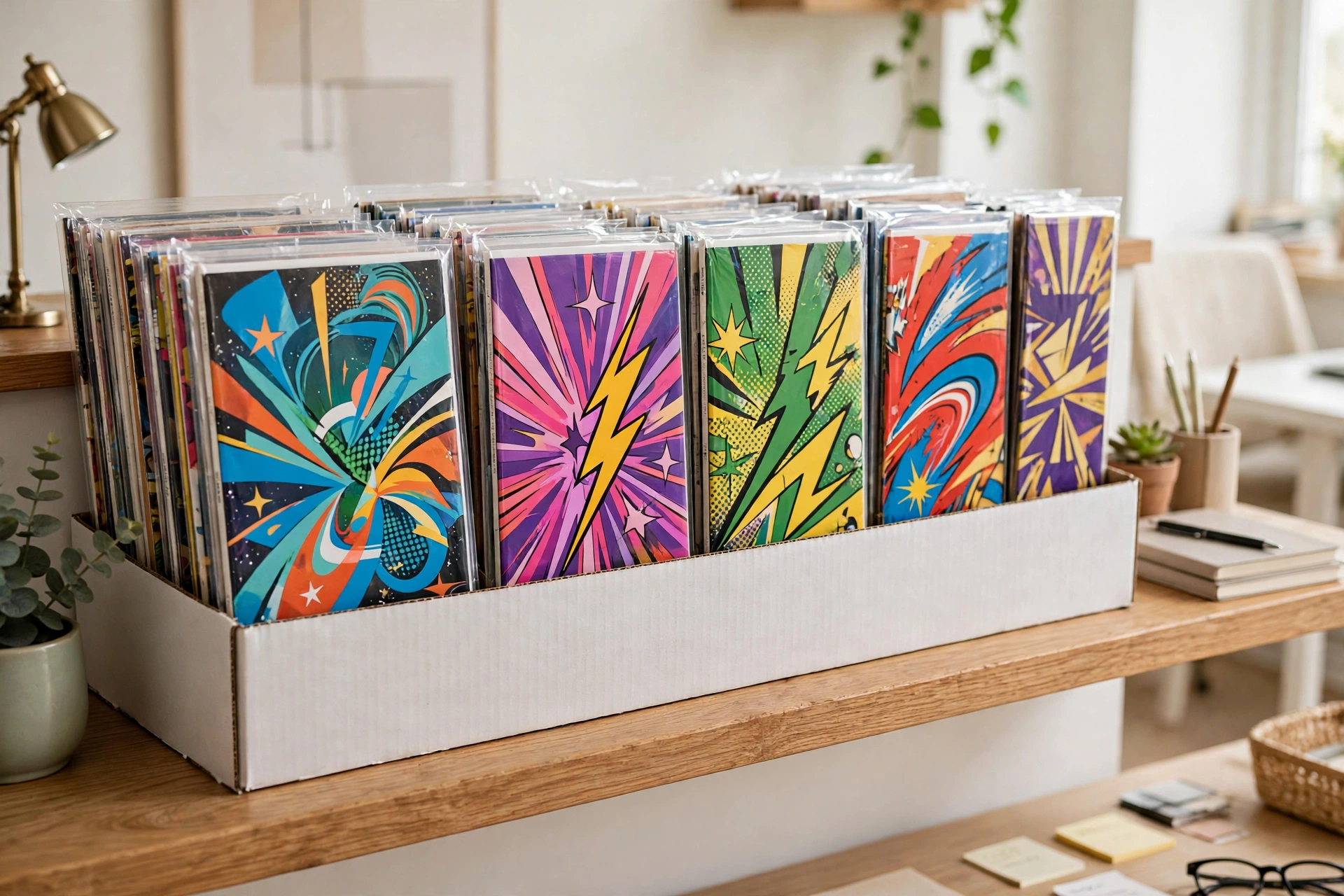
A shelf is more than a place to put boxes — it is the part of the collection you see every day. Comic book shelving works best when it is strong, level, and close to where you read. A shelf that sags under a row of long boxes will bend the boxes with it, and a shelf that is too high means the top row never gets read. Keep the boxes you reach for most at eye level, the boxes you rarely open up high, and the heavy long boxes low, where a fall cannot hurt them or you. The small home office organization ideas guide uses the same rule for every shelf: store it where you use it, and the habit forms on its own.
Leave room to browse. A box packed tight is a box you cannot flip through, and flipping through is half the fun of a collection. Leave one finger-width of space at the end of each row, so you can tilt a comic forward and read its cover without pulling the whole row out. Label the end of every box with the series and issue range inside, so you can find a run without opening a single lid. A shelf that lets you browse is a shelf you will keep tidy, and that is the quiet payoff of comic book storage ideas done right: the tidy shelf is the one you enjoy using.
Face a few favorites outward. Comic book display is the reward for the work of bagging and boxing — pick five or six covers you love, stand them on a small ledge shelf or in a plate stand, and let them be the art on the wall. Change the display every month or two, so no single cover sits in the light for a whole season. A comic on display fades faster than a comic in a box, so keep displayed issues out of direct sunlight and away from windows, and rotate them back into their bags before the colors start to wash out.
Graded Comics Need Their Own Rules
A graded comic lives in a hard plastic slab, and the slab changes the storage rules. Graded comic storage starts with one rule: never stack slabs flat in a tall pile. A tall pile presses the bottom slab under the weight of the ones above, and the weight can crack a case or scuff the plastic. Stand slabs upright like books on a shelf, or lay them flat in stacks of no more than five, with a soft cloth between the top and bottom of each stack. Slab boxes made for graded comics hold them upright in neat rows, and they are worth the cost for any slab you care about.
Keep slabs out of the heat and out of the light, just like raw comics — the plastic case slows damage, it does not stop it. A slab left in a sunny window still fades, and a slab left in a hot car still warps. Store slabs in the same cool, dry room as the rest of the collection, and handle them by the edges so the clear plastic stays free of fingerprints. Good comic book storage ideas treat slabs like books on a shelf, never like plates in a stack. If a slab gets scratched, leave the scratch alone — trying to polish it usually makes it worse, and a scratched case still protects the comic inside.
Organize the Collection So You Can Find Anything
A collection you cannot search is a pile, not a collection, and comic book collection organization is what turns one into the other. Start with the sort that matches how you read: by series, then by issue number, is the sort most collectors use, and it works because it matches how comics are made. Put the series you read most at the front of the shelf, the finished runs behind them, and the single issues you are still chasing in one box of their own, so you always know what is missing. The CD storage ideas guide sorts music the same way — by artist, then by album — and the habit works for any collection you browse by hand.
Label everything, and keep the labels short. A strip of masking tape on the end of a box with the series name and the issue range inside beats a fancy printed label, because you can change it in ten seconds when the run grows. Inside the box, use divider cards between series, with the series name written on the tab in big letters. A divider card costs almost nothing, and it is the difference between flipping to the right series in seconds and digging through a whole box to find one issue. Divider cards are one of the cheapest comic book storage ideas in this guide, and they save the most time.
Keep a simple list of what you own. A notebook works, a spreadsheet works better, and a phone app works best of all — the tool matters less than the habit of writing down each new issue the day it comes home. A list stops you buying the same issue twice, and it tells you at a glance which runs are complete and which still have gaps. When you buy a new issue, bag it, board it, write it on the list, and put it in its box before you sit down to read — four small steps that keep the whole system honest.
The Right Room Keeps Comics Alive for Decades
Good comic book storage ideas treat the room as part of the system, not as an afterthought. A comic stored in the wrong room ages twice as fast as one stored in the right room, and the room is the one thing you can fix without buying anything. The Northeast Document Conservation Center’s preservation guide gives the same rule for paper and books — keep them near 68 degrees with steady humidity between 30 and 60 percent, and keep light damage in mind, because it builds up over time and never fades back — and the comic book preservation habits in this section are built on it. A cool, dry, dark room is the best box a comic can have.
Keep comics off the floor and away from outside walls. A box on the floor is the first thing a leak reaches, and a box against an outside wall feels every cold snap and heat wave the weather brings. A shelf a few inches off the floor and a few inches out from the wall keeps the comics dry and the temperature steady. Skip the attic, the garage, and the basement unless the space is finished and climate-controlled — those rooms swing hot and cold, and paper hates swings more than it hates warmth. If the only spare room is a basement, use sealed plastic comic book storage boxes on a raised shelf, and check them after every heavy rain.
Keep the light low and the air moving. A room with a window needs a curtain or a blind on it, and the boxes belong on the shaded side of the room, not the sunny side. A small fan or an open door keeps the air from going stale, and stale air is where mold starts. A cheap thermometer and humidity gauge on the shelf tells you the truth about the room — if the gauge reads above 60 percent humidity, the room is too damp for comics, and a small dehumidifier is cheaper than replacing a moldy run.
The Five-Minute Weekly Comic Check
A comic home that never gets checked slowly fills with leaning rows, loose bags, and boxes that have crept past full, and a messy box is a box nobody wants to open. Once a week, take five minutes: straighten the leaning rows, check the bags, and put every stray issue back in its home. Five minutes is all it takes, and these comic book storage ideas stay working because the check never lets the system slide.
- Straighten any leaning rows and push the divider cards back upright, so no comic leans long enough to bend.
- Check the bags at the front of each box — a torn bag gets replaced on the spot, before dust reaches the cover.
- Flip through the newest issues and make sure each one is bagged, boarded, and on the list.
- The weekly cleaning schedule already includes a quick desk wipe — that is the natural moment to check the comic shelf and make sure every issue is home, bagged, and flat.

Frequently Asked Questions
Should I bag and board every comic I own?
Bag and board every comic you want to keep in good shape, and skip the ones you are happy to wear out. Reading copies you lend to friends or leave in a backpack do not need a board — but anything you would be sad to see bent deserves a bag and an acid-free backing board. The comic book storage ideas in this guide start with the same question for every issue: is this one a keeper, or is it a reader? Keepers get bagged the day they come home, and readers get a shelf of their own, so the two never mix.
How long do comic bags and boards last?
Plain poly bags last about three to five years before they start to yellow, while Mylar bags for comics can last decades without changing. Acid-free backing boards last about as long as the bags they sit in — replace both together, so the comic never sits in a fresh bag on an old board. Comics stored in a warm room need fresh bags sooner, and comics in a cool, dark room can go longer. When a bag starts to feel stiff or looks cloudy, it is time — a fresh bag costs pennies, and a yellowed bag can stain the cover it was meant to protect.
Is it better to store comics upright or flat?
Upright, in a box that fits them snugly, is better for most collections. Comics stored upright like books on a shelf keep their spines straight and are easy to flip through, as long as the row is not packed so tight that pulling one out bends its neighbors. Flat stacks work only for small piles — more than ten comics in a flat stack presses the bottom issues and rolls their spines. The comic book storage ideas in this guide use upright boxes for the collection and flat stacks only for the comics you are reading this week.
Can I display my comics on the wall?
Yes, and the trick is to rotate them. A comic on display in a frame with UV-blocking glass is safe for a month or two, but a comic left on the wall for a year will fade, even behind glass, because light damage builds up and never reverses. Pick a few favorites, frame them, enjoy them, and swap them back into their bags every couple of months. A comic book display that changes with the seasons keeps the wall fresh and the comics safe — the best of both, as long as no single issue stays in the light for a whole year.
A Home for Every Comic
The best comic book storage ideas are the ones you finish in a single afternoon: pick one home for every issue, bag and board the keepers, label the boxes, and check the shelf for five minutes each week. That is it — no costly system, just one bag, one board, one box, and a habit that takes ten seconds a day.
Your comics hold the stories you love most. A little care now means they will still look sharp and read well years from now, instead of ending up a leaning stack on the floor. Pick the bags, board the keepers, and let the habit do the rest — these comic book storage ideas work because they are simple enough to keep.