

April budget organization ideas work best when spring gives you a fresh reason to look at your money with clear eyes. Winter spending can blur together fast. Holiday bills, higher heating costs, and a few quiet subscriptions can leave you unsure where it all went.
You do not need a perfect spreadsheet or a strict plan that falls apart in week two. You need a few simple tools, one place for your bills, and a short weekly check-in you can actually keep. These april budget organization ideas give you exactly that, one small step at a time.
Start With a Spring Budget Reset
A spring budget reset is just a calm hour with your bank app, your bills, and a cup of coffee. Look at the last three months and circle anything that surprised you. Most people find two or three costs they forgot about, like a streaming service, a delivery habit, or a store card they barely use.
Write down your regular income first, then your fixed bills: rent or mortgage, utilities, insurance, phone, and any loan payments. What is left is the money you get to plan on purpose. That single picture is the base for everything else in this guide.
Do not try to fix every category in one sitting. Pick the one that stresses you most, whether that is groceries, takeout, or random online orders, and start there. Small wins build trust in your own plan, and trust keeps the plan alive past April. That is why april budget organization ideas start with a simple reset, not a strict plan.
Build a Simple Household Budget Binder
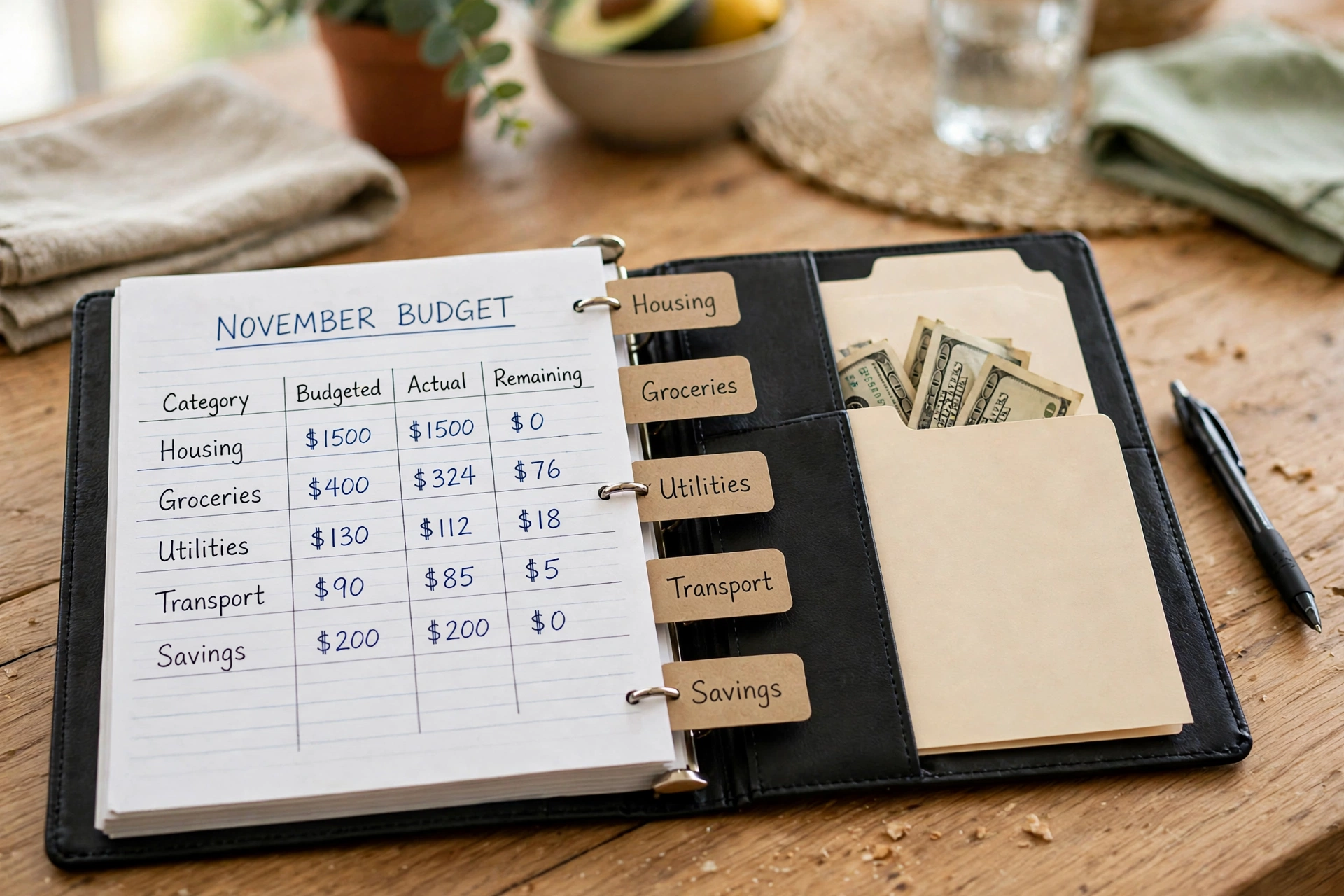
A household budget binder sounds old-fashioned, and that is why it works. Paper slows you down just enough to notice what you are writing. You do not need fancy dividers or a color-coded system to start.
Use five sections: income, fixed bills, variable spending, savings goals, and notes. Print or copy one simple sheet per month, and keep the binder where you pay bills, not hidden in a drawer. When a bill arrives, it goes straight into its section. This is one of the simplest april budget organization ideas to start with, because it takes one evening and no new apps.
If paper is not your thing, a single notebook works the same way. The point is one home for your money notes, so nothing lives only in your head or in a pile of unopened mail. A binder also helps at tax time, because your records are already in one place.
Set Up a Bill Payment Calendar You Actually Check
A bill payment calendar is the cheapest way to stop late fees. Write every due date on one calendar, paper or phone, and add a reminder two days before each one. Two days gives you time to move money around without panic. Among all april budget organization ideas, a bill calendar gives the fastest payoff, because one avoided late fee pays for the effort.
Group your bills by week if you can. Some companies let you change a due date with one phone call, and lining bills up with your paydays makes the month feel much steadier. Keep a short list of autopay bills too, and check them once a month so a price rise does not slip past you.
Here is a simple way to set it up this week: list every bill, note its due date and amount, mark the ones on autopay, and set one weekly reminder to glance at the calendar. That glance takes five minutes, and it can save you a late fee and a lot of stress.

Try Sinking Funds for Spring Costs
Sinking funds are just small savings pots for costs you know are coming. Spring brings plenty of them: car service, garden supplies, a birthday gift, school events, and summer plans. Instead of paying for them all at once, you save a little each week.
Pick three funds to start. Name each one clearly, like "car care," "gifts," and "home fixes," and move a set amount into each one on payday. A separate savings account, a cash envelope, or even labeled jars can all work. The method matters less than the habit. Sinking funds are a quiet part of april budget organization ideas that many people skip, then wish they had started sooner.
When a cost arrives, you pay from its fund and feel calm instead of caught off guard. That calm feeling is the whole point. Over time, you can add funds for holidays, insurance deductibles, and other big yearly costs.
Plan Your Grocery Budget Around Your Pantry
Grocery budget planning gets much easier when you shop your pantry first. Before you write a list, look at what you already have. A half-used bag of rice, canned beans, and frozen vegetables can turn into three meals you do not need to buy again. Good april budget organization ideas for groceries always start at home, not at the store.
Set a weekly grocery number that fits your real life, not an ideal week. Then plan four or five dinners, leave room for breakfasts and snacks, and keep one "use what we have" night each week. That one night alone can cut waste and save real money.
A pantry stock-up budget helps here too. When staples you use often go on sale, buy a little extra, but only for items you know you will use before they expire. Stocking up on food your family ignores is not saving money, no matter how good the price looks.
Audit Subscriptions and Cut Quiet Spending
A subscription audit takes about twenty minutes and often pays for itself right away. Open your bank or card statement and highlight every repeat charge. Then ask one honest question about each one: did I use this in the last month? A regular subscription audit belongs in every set of april budget organization ideas, because repeat charges are easy to forget.
Cancel the ones you forgot about, and pause the ones you use only now and then. Many services let you pause for a month or two, which is a kind way to test whether you miss them. If you do not, cancel for good.
Watch for free trials that roll into paid plans, and for yearly charges that land without warning. Add trial end dates to your bill payment calendar, and set a reminder the day before each one. That one habit stops a surprising amount of quiet spending.
Track Savings Without Overthinking It
A savings tracker does not need to be pretty. A simple notebook page with a goal, a starting amount, and a line for each deposit is enough. Seeing the number grow, even by small amounts, keeps you going when motivation dips.
Try paying yourself first on payday, even if the amount is small. Move it to savings before you spend on anything else, and treat that transfer like any other bill. If your income changes from month to month, use a percentage instead of a fixed amount, so the habit holds in lean weeks too. For many families, april budget organization ideas work best when savings move first, before spending starts.
A debt payoff plan fits in this same section. List your debts from smallest balance to largest, or from highest interest rate to lowest, and pick one order to follow. Pay the minimum on all of them, then put any extra money toward the first debt on your list. When it is gone, roll that payment into the next one.
For extra help, look for budgeting guidance from a trusted source like a government consumer finance site, and link to it from this section. Good advice should be simple, free, and free of sales pressure.
Make a Weekly Money Check-In a Habit
The weekly money check-in is where all of these april budget organization ideas come together. Pick a day and a time, like Sunday evening or Friday morning, and keep it to fifteen minutes. Look at what you spent, check your bill calendar, and note anything coming up next week.
A cash envelope system can help if card spending keeps drifting. Take out a set amount for groceries or fun money, and when the envelope is empty, that category waits until next week. It is a clear, physical limit, and many people find it easier than watching numbers on a screen.
A family budget meeting once a month keeps everyone on the same page. Keep it short and kind, not a blame session. Share one win from the month, one cost that surprised you, and one goal for next month. Kids can join too, with a simple job like tracking the grocery total or counting coins for a savings jar.
A no-spend week once in a while is a useful reset, not a punishment. Pick a normal week, skip non-essential buying, and use what you already have for meals and fun. Most families learn more from one no-spend week than from a month of guessing where the money went.
Your April Budget Table
| Budget area | April job | Time needed |
|---|---|---|
| Bills | Set up your bill payment calendar and add two-day reminders | 30 minutes |
| Binder | Start a household budget binder with five simple sections | 20 minutes |
| Groceries | Plan meals from your pantry and set a weekly grocery number | 20 minutes |
| Subscriptions | Run a subscription audit and cancel or pause what you do not use | 20 minutes |
| Savings | Start a savings tracker and one sinking fund | 15 minutes |
| Review | Hold a monthly budget review and a short family budget meeting | 30 minutes |
Your April Week-by-Week Plan
- Week 1: Do your spring budget reset and set up your bill payment calendar.
- Week 2: Start your household budget binder and run your subscription audit.
- Week 3: Plan groceries from your pantry and open your first sinking funds.
- Week 4: Start your savings tracker, try a no-spend week, and hold your monthly budget review.
Follow this plan and these april budget organization ideas will be in place by the end of the month, without a single all-day budgeting session. A spring cleaning budget belongs in week 2 as well. Cleaning supplies, storage bins, and small home fixes add up fast, so give them their own line in your binder instead of letting them hide inside grocery spending. When you can see the cost, you can choose it on purpose.
If you are starting from scratch, our budget organization ideas post is a good first read, and our march budget organization ideas post shows how this same system worked last month. For a winter comparison, the february budget organization ideas post is worth a look too. And if your spring plans include a kids room refresh, our april kids room organization ideas post pairs well with a spring cleaning budget, so you plan the room and the money together.
Frequently Asked Questions
How much should I save each month in April?
Start with what you can keep up, even if it is a small amount. A steady habit beats a big number you drop after two weeks. Raise the amount slowly as you cut quiet spending.
What is the easiest way to start a budget in April?
Start with a spring budget reset: list your income, list your fixed bills, and pick one spending category to watch. Add a bill payment calendar next, then a simple savings tracker.
How do sinking funds work?
You save a little each week for a cost you know is coming, like car service or gifts. When the cost arrives, you pay from that fund instead of from your regular spending money.
How often should I review my budget?
Check in for fifteen minutes each week, and hold a fuller monthly budget review at the end of the month. Weekly checks catch problems early, and the monthly review shows real progress.
A Calmer Way Into Spring
April is a good month to get your money organized because the year still feels fresh and spring gives you natural reasons to reset. You do not need to change everything at once. Pick one tool from this guide, use it for a week, and then add the next one.
A tidy binder, a bill calendar you trust, and a short weekly check-in can change how money feels in your home. Try these ideas this month, keep what works, and let the rest go. These april budget organization ideas are meant to be used, not admired, so start with the one that feels easiest today. Your future self will be glad you started now.