
Dish storage ideas matter more than most people think, because the dish cabinet is the one you open three times a day, and a bad setup chips a plate or sends a stack sliding every single week. You reach in for one bowl, the whole pile shifts, and the plate at the bottom comes out with a new chip on its rim.
The good news is that fixing it does not need a kitchen remodel or a shopping spree. A few cheap organizers, one clear rule for stacking, and an honest count of what you actually use can turn a crowded cabinet into a calm one. These dish storage ideas work in a big kitchen and a tiny rental kitchen alike, and most of them cost less than a single replacement plate.
Count What You Actually Use First
Before you buy a single organizer, count what your household really uses. Pull every plate, bowl, mug, and glass out of the cabinet and set them on the counter. Then ask a simple question about each piece: did we use this in the last two weeks?
Keep enough for a normal day plus a little spare — four to six dinner plates for a small family, the same number of bowls, and one mug per person plus two extras. The rest goes to a higher shelf, a spare cabinet, or a donation box. That honest count is the first of these dish storage ideas that saves money, because every extra plate you keep needs a home, and a cabinet that holds twelve plates when you use four will always feel crowded.
Sort what stays into groups by type and size: dinner plates together, salad plates together, bowls together, mugs together, glasses together. Mixed piles are where chips happen, because a heavy dinner plate pressing on a light bowl cracks it sooner or later. Once you see the groups, the cabinet starts to plan itself.
Put Everyday Dishes Near the Dishwasher
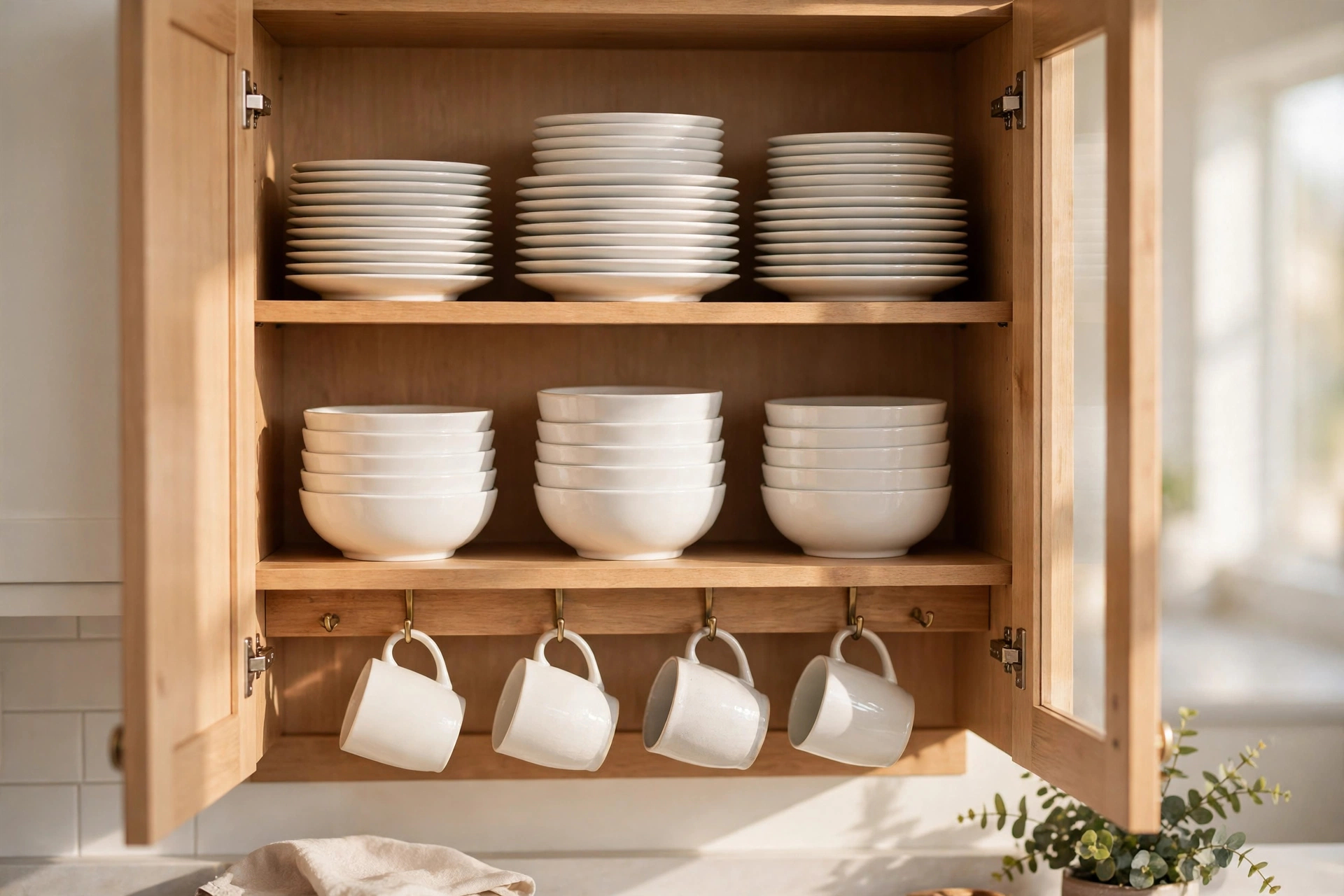
The best home for everyday dishes is the cabinet closest to the dishwasher or the sink. Unloading then becomes a short, steady routine instead of a walk across the kitchen with a stack of wet plates in your arms.
Keeping the everyday set close to the dishwasher is one of the simplest dish storage ideas there is, and it costs nothing. If the dishwasher sits to the left of the sink, the cabinet on that side is the natural home for plates and glasses. If you wash by hand, the cabinet above or beside the drying rack plays the same role.
Put the pieces you reach for most on the shelf between waist and shoulder height. Heavy stacks belong low, where each lift is short and steady. Light, rarely used pieces — the big platter, the holiday serving bowls, the wine glasses for guests — go on the highest shelf or in a separate cabinet. Kids’ plastic cups and plates are the one exception: keep them low, in a bottom drawer or on a low shelf, so a child can set the table and put things away without climbing.
The same near-the-work zone thinking runs through the small pantry organization ideas guide, and it works here for the same reason: the less you carry things across the room, the less you drop them.
Stack Plates the Safe Way
Most dish damage comes from stacking, not from dropping. These dish storage ideas start with the stack itself, because a tall stack of mixed plates puts pressure on the bottom pieces, and one wrong pull sends the whole tower leaning. A few simple rules fix most of it.
Stack plates by size, largest on the bottom and smallest on top, and keep each stack short enough that you can lift the top plate with one hand — usually four to six plates. Put a thin buffer between plates in a stack you care about: a paper towel, a felt divider, or a cloth napkin stops the unglazed foot of one plate from scratching the plate below it. Never put a heavy plate on top of a delicate bowl, and never wedge glasses inside each other, because thin glasses can stick together and crack when you try to pull them apart.
| Piece | How to store it | Stack limit |
|---|---|---|
| Dinner plates | Flat stack, largest at the bottom | 4–6 plates |
| Salad plates | Flat stack on a shelf riser | 4–6 plates |
| Bowls | Nested only if the same shape | 4–5 bowls |
| Mugs | Upright, handles lined up | No stacking |
| Glasses | Upright, toward the front | Never stacked |
| Serving platters | Vertical in a plate rack | One per slot |
Turn mugs so the handles line up in the same direction. It looks tidy, but the real point is practical: lined-up handles are easier to grab, and a mug you grab cleanly is a mug you do not knock over. Glasses always stand upright, never stacked, and toward the front of the shelf, not the back where they can get knocked off while you reach past them.
Bowls, Mugs, and Glasses Need Their Own Rules
Bowls are the awkward ones. They do not stack as neatly as plates, and a mixed pile of bowls in different shapes slides around every time the cabinet door closes. That is why good dish storage ideas give bowls their own rules instead of treating them like flat plates. Nest bowls only when they share the same shape, and keep the stack to four or five. For bowls that will not nest, a small bowl cradle or a short stack with a divider between each bowl keeps them from chipping each other’s rims.
Mugs need a different trick. If you have more mugs than shelf space, hang them by their handles from hooks under the cabinet shelf. That frees the shelf below for plates and turns the mugs into a display instead of a pile. Keep the daily mugs at the front and the funny gift mugs at the back — or better, let the gift mugs go and keep only the ones you actually drink from.
Glassware deserves the easiest shelf to reach, because glasses are used most and break most easily. Store them upright so air can move around them and the rims stay safe. For stemmed glasses, a small rack or a divider keeps the stems from catching on each other. And keep sharp items — knives, cutlery, peelers — in a drawer or a tray, never mixed in with the dishes where a hand reaching for a bowl can find a blade instead.
Shelf Risers and Plate Racks Double Your Space
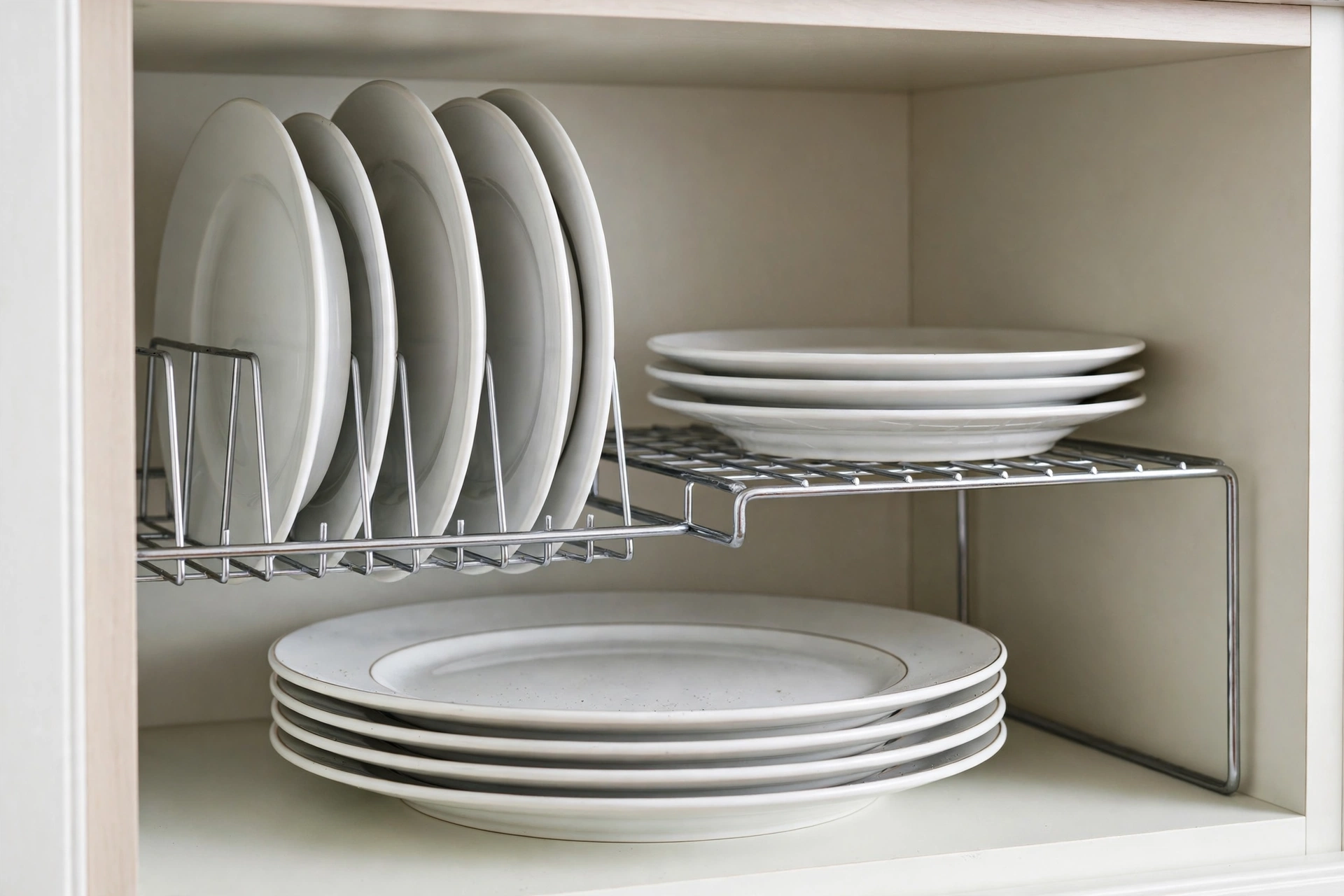
Look inside a normal cabinet and you will see the problem: a stack of plates five inches tall sitting under twelve inches of empty air. A shelf riser fixes that in one move. It is a small freestanding shelf that sits inside your cabinet and creates a second level. Put the dinner plates on the bottom and the salad plates or bowls on the riser, and you have doubled the usable space without touching a single screw.
A plate rack works the same way for a different problem. Instead of stacking plates flat, a vertical plate rack holds each plate upright in its own slot, like files in a drawer. Nothing presses on anything else, so nothing scratches, and you can pull one plate out without disturbing the rest. A plate rack is one of the most useful dish storage ideas for a crowded cabinet, because it turns a stack into a file you can flip through. Wire and bamboo racks both work, and they fit inside a standard cabinet shelf.
A dish divider does the same job in a smaller space — it splits one shelf into two zones so the bowls stop sliding into the plates. The small appliance storage ideas guide uses the same riser trick for blenders and mixers, and the idea carries over here: a second level inside a cabinet is the cheapest extra shelf you will ever buy. Whirlpool’s guide to organizing kitchen cabinets walks through the same stack-by-size rule with photos, so check it if you want a second look before you move your shelves.
Deep Drawers Hold Dishes Better Than High Shelves
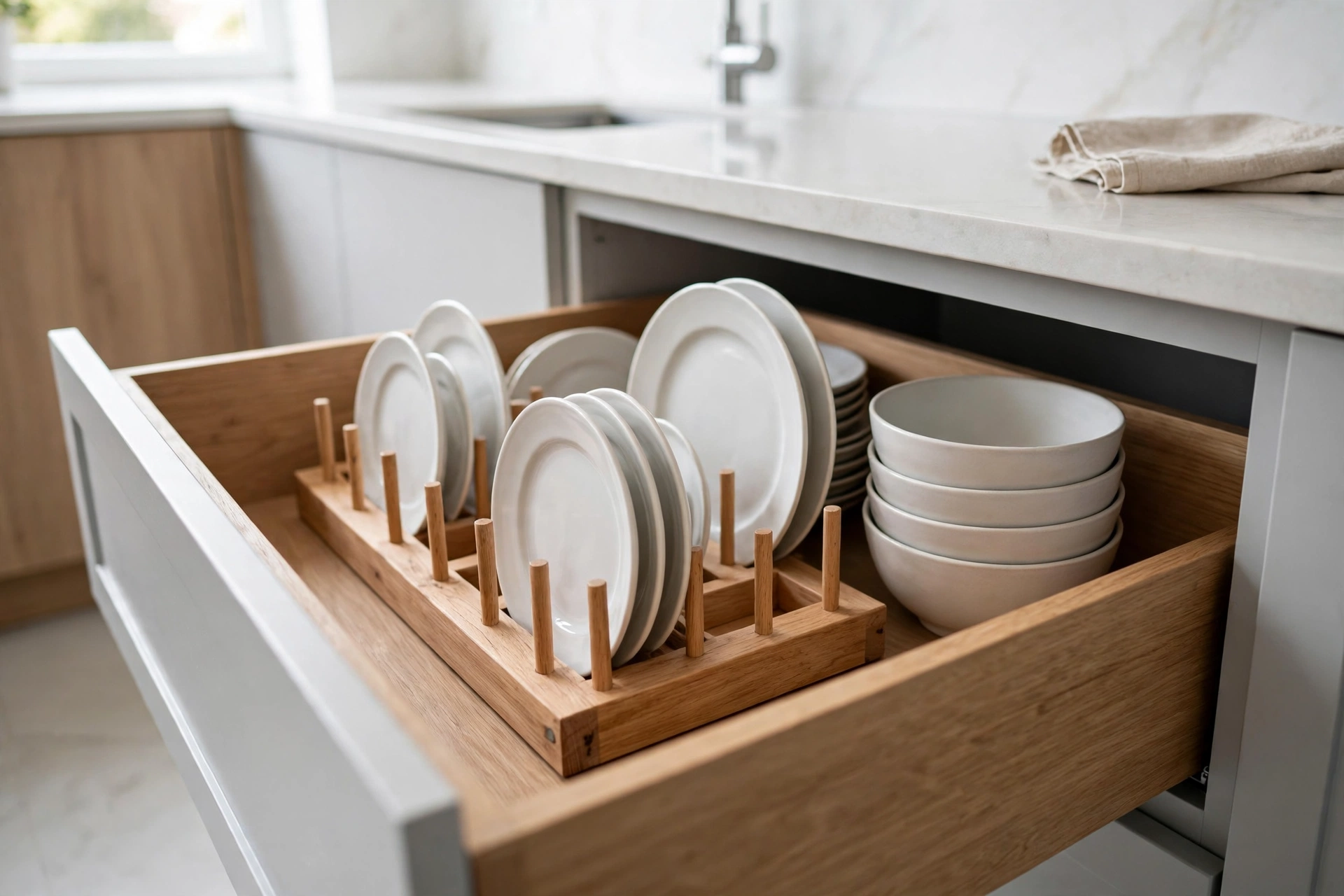
If your kitchen has deep base drawers, consider moving the everyday dishes out of the upper cabinets entirely. Moving dishes into a deep drawer is one of those dish storage ideas that sounds odd until you try it. Dishes in a drawer sit at waist height, so you lift them a few inches instead of reaching overhead with a stack in your hands. It is easier on your back, easier for kids, and much harder to drop a plate from.
The trick is a pegboard organizer. It is a flat board with holes and short pegs you move around to fit your stacks. Set four pegs around a stack of dinner plates, four more around the bowls, and the stacks stay put when the drawer opens and closes. Without pegs, a drawer full of plates slides into a heap the first time someone opens it in a hurry.
A deep drawer also hides the visual clutter. Close the drawer and the kitchen looks calm, even if the drawer holds a full set of dishes. If your drawers are shallow, the same idea works with a low plate rack laid flat, or with a few dividers to keep the stacks from sliding. The rule stays the same: every stack needs walls around it, or it will drift.
Special Pieces, Kids, and Small Kitchens
Not every dish belongs with the everyday set. The good china, the big serving platter, the punch bowl you use twice a year — these need a home that protects them, not a shelf where they get knocked every morning. Giving special pieces their own shelf is one of the simplest dish storage ideas for protecting things you cannot replace. Store special pieces on a high shelf or in a separate cabinet, with a felt divider or a cloth between each piece. If a piece is truly precious, a padded storage box beats a crowded shelf every time.
For kids, the system flips — and the same dish storage ideas scale down well for small hands. Put plastic cups, small plates, and bowls on a low shelf or in a bottom drawer where a child can reach them without climbing or asking. Let kids set their own place at the table — it is a small job, but it is theirs, and it means the dishes actually get put back where they belong.
Small kitchens need the most honest version of these dish storage ideas. If the cabinet is tiny, keep only the everyday set in it and move the rest out: the extra plates go to a labeled bin on top of the fridge or in a hallway closet, the serving pieces go to a high shelf, and the mugs you never use go to a donation bag. A small cabinet that holds only what you use every day feels bigger than a large cabinet stuffed with dishes you forgot you owned.
Keep It Working With a 5-Minute Weekly Check
A tidy dish cabinet drifts back toward chaos in about two weeks. The drift looks like this: a mug lands on the plate stack, a bowl gets wedged behind the glasses, and the shelf riser ends up holding three random jars. The fix is a five-minute check once a week, folded into your weekly cleaning schedule on dishwashing day:
- Pull any piece that belongs somewhere else out of the cabinet.
- Restack the plates by size and straighten the bowls.
- Wipe the cabinet shelf and check for chips while you have the stack in your hands.
- Move one piece you have not used in a month to the spare shelf or the donation box.
- Put the mugs back in a row with the handles lined up.
Do a bigger sort twice a year, when the seasons change. Count the set again, check for chips and cracks, and retire anything that has seen better days. That small habit is the quiet engine behind dish storage ideas that still work a year later: the cabinet always holds the dishes you actually use, instead of the ones you keep out of habit.
Frequently Asked Questions
How many plates should I keep in one cabinet?
Fewer than most people keep. Four to six dinner plates per person group is enough for a normal day, plus a few salad plates and bowls. If you have to press a stack down to close the cabinet door, or you cannot lift the top plate with one hand, the cabinet is overfull. Move the extras to a higher shelf or a labeled bin, and the dishes you use every day get easier to reach. That is the whole point of these dish storage ideas: the cabinet should hold what you use, not everything you own.
Is it better to store plates vertically or stacked flat?
Both work, and the right choice depends on your cabinet. A vertical plate rack is better for plates you use every day, because each plate has its own slot and nothing presses on anything else, so chips and scratches nearly stop. Flat stacking is fine for a short stack of four to six plates with a paper towel or felt divider between them. If your stack is taller than that, or the plates are heavy stoneware, go vertical. Either way, the dish storage ideas in this guide work with both — pick the setup your cabinet fits.
What is the best way to store dishes in a small kitchen?
Start with the everyday set only. Keep four to six plates, the same number of bowls, and one mug per person in the cabinet nearest the dishwasher, and move everything else — serving pieces, extra sets, holiday dishes — to a high shelf, a labeled bin, or another room. Add a shelf riser to create a second level inside the cabinet, and use a plate rack for the dinner plates so a short stack does the work of a tall one. These dish storage ideas shine in small kitchens, because every inch you reclaim shows up in your daily routine.
How do I stop my dishes from chipping in the cabinet?
Chips come from three things: tall mixed stacks, pieces sliding into each other, and reaching past one thing to grab another. Fix all three: stack by size with a buffer between plates, give every stack walls with a rack or divider, and put the daily pieces at the front where you can grab them without moving anything else. Check the stack once a week for a plate that has started to lean, and retire any piece with a chip on the rim before it cracks further.
A Cabinet That Works Every Day
A tidy dish cabinet changes the smallest moments of your day. You open the door, you see the plate you want, and you take it out without moving three other things first. Start with one cabinet this weekend: empty it, count what you actually use, keep only the everyday set, and add a shelf riser or a plate rack to give the stack some breathing room. One cabinet turns into a calmer kitchen — and these dish storage ideas give the dishes you reach for every day a home that finally fits them.