

Grill storage ideas are worth an hour of your time now, while the grill is still warm from its last cookout of the season. Once cold weather sets in, a dirty grill left uncovered turns into a rusty mess by spring, and your first cookout gets delayed by a deep clean you could have skipped. Grease hardens, rain gets into the burners, and mice move into the grease tray like it is a free hotel.
The good news is that storing a grill well is simple: clean it, dry it, cover it, and give the tools and fuel a dry spot of their own. Renters can do all of it without drilling a single hole, and most of it takes one afternoon. These grill storage ideas work for gas, charcoal, and pellet grills alike, and they keep your grill ready to fire up the moment the weather turns warm again.
Clean the Grill Before You Store It
Never store a dirty grill – that is the first rule of good grill storage ideas. Old grease turns rancid, attracts mice, and can even catch fire next season when you light the burners. Start by firing the grill up one last time with no food on it. Run it hot for 15 to 20 minutes to burn off stuck-on food and grease, then turn it off and let it cool just enough to handle.
While the grates are still warm, scrub them with a grill brush or a ball of foil held in tongs. Pull out the grease tray and the drip pan, scrape them clean, and wash them with hot soapy water. For a charcoal grill, dump the ash completely – damp ash is acidic and eats through metal over the winter. Wipe the inside of the lid and the firebox, and check the burner tubes on a gas grill for spider webs or blockages. A clean grill stores well; a dirty one stores trouble.
Dry It Completely — Rust Starts With Damp
Rust needs two things: metal and moisture. You cannot change the metal, so take away the moisture. After cleaning, leave the lid open on a dry, sunny day and let every part air out fully. Wipe the grates and the inside surfaces with a dry cloth, and do not put the cover on until everything feels dry to the touch.
A light coat of cooking oil on cast-iron grates helps stop rust while the grill sits. Just wipe on a thin layer with a paper towel — you are not frying anything, so a little goes a long way. For extra protection, tuck a couple of food-safe moisture packets or a dry charcoal briquette inside the grill body to soak up damp air through the season. This small step is one of the best grill storage ideas for anyone whose grill lives outside, because a cover alone cannot stop the damp air that gets in underneath.
Pick a Cover That Actually Fits
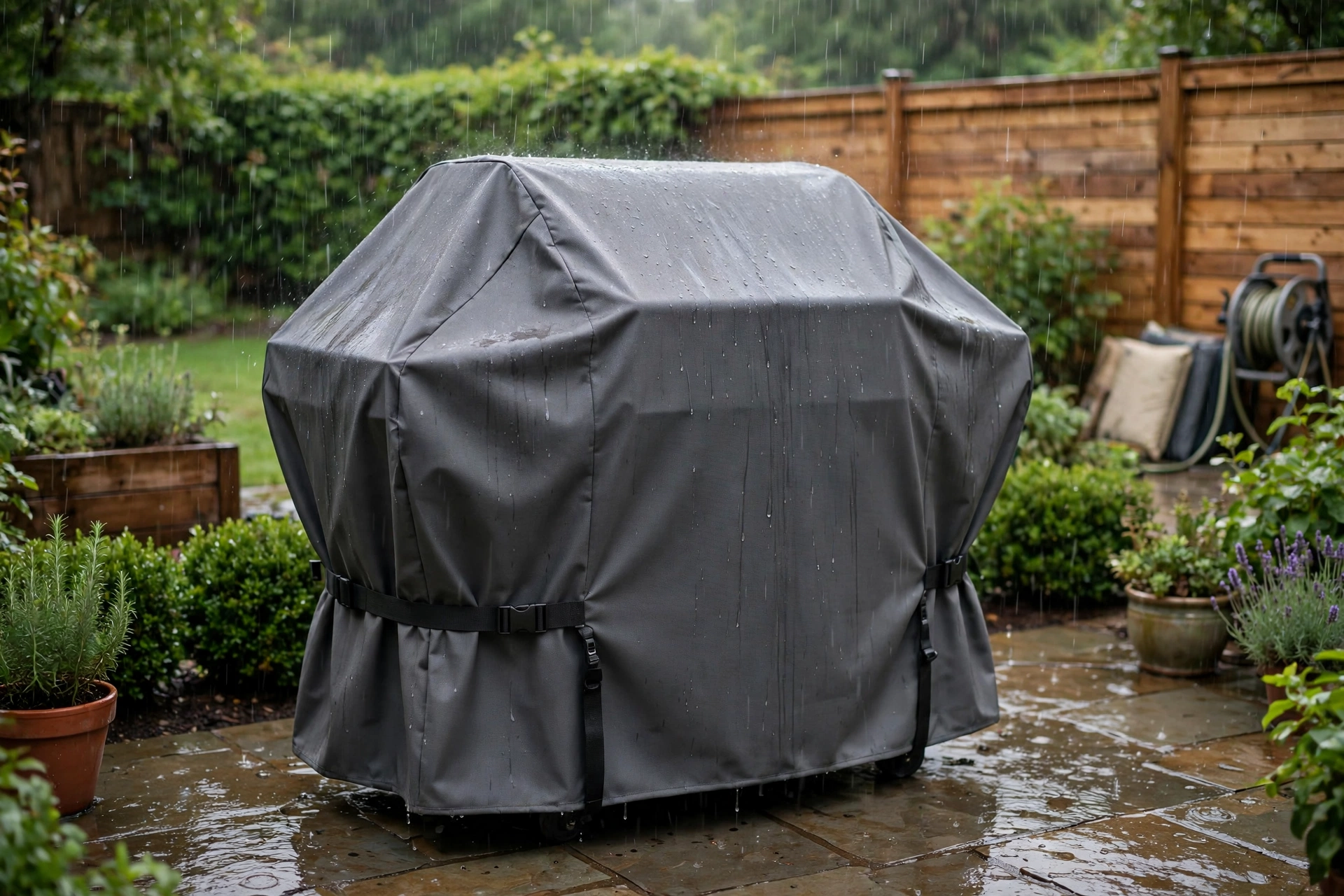
A good grill cover is your grill’s raincoat, but only if it fits. A loose tarp flaps in the wind, tears at the corners, and collects pools of water that seep straight through. A fitted cover made for your grill’s size stays put, sheds rain, and lets a little air move so moisture does not get trapped inside.
Measure your grill before you buy: width, depth, and height with the lid closed. Choosing the right cover is one of the grill storage ideas people skip most often — and the one that saves the most money. Look for a cover that is water-resistant but breathable, with straps or a drawstring at the bottom and vents near the top. Heavy vinyl covers last longest, while lighter polyester covers are easier to handle and fine for a covered patio. Skip the cheap thin plastic covers — they crack in the cold and trap condensation, which is worse than no cover at all.
| Cover type | Best for | Watch out for |
|---|---|---|
| Fitted heavy vinyl | Grills left outside all winter | Heavy to handle; check the size twice |
| Breathable polyester | Covered patios and mild winters | Less tough in heavy snow |
| Grill cabinet or shed | Full protection from weather | Needs floor space and airflow |
| Loose tarp | Emergency cover only | Flaps, pools water, traps damp |
Put the cover on only when the grill is fully cool and dry. If you cover a warm, damp grill, you are sealing the moisture in — exactly what rust wants. And once the cover is on, give it a quick tug to make sure the straps are snug. A cover that blows off in the first storm is no cover at all.
Decide: Outside, Garage, or Shed?
Where the grill spends the winter matters as much as how you cover it. A grill stored in a dry garage or shed lasts longest, because it never faces rain, snow, or road salt — that is why covered, dry spots top every list of grill storage ideas. A grill under a covered porch does well too, as long as it is out of the wind and the cover stays on. A grill out in the open can still make it through winter fine if it is clean, dry, and well covered — many outdoor grills are built for exactly that.
The one rule that never bends is about fuel: a propane tank must stay outdoors, upright, and away from heat — never in a garage, shed, or basement. Whether you winterize a gas grill or a charcoal one, the steps stay the same: clean, dry, cover. If the grill goes inside, the tank stays outside. Charcoal and wood pellets go inside, in sealed bins, where they stay dry. For renters, the best grill storage ideas are the ones that need no drilling and no permanent changes. For a full step-by-step on getting a gas or charcoal grill ready for cold weather, This Old House’s guide to prepping your grill for winter walks through the whole process.
If you are a renter, check your lease before moving a grill into a shared garage or onto a balcony — some buildings have rules about fuel and open flames. Our rental friendly organization ideas guide has more renter-safe ways to store outdoor gear without breaking lease rules or losing your deposit.
Store the Grill Tools Where You Can Find Them
Grill tools are the part everyone loses. The tongs end up in a kitchen drawer, the spatula rusts in a pile by the back door, and the grill brush vanishes until spring. Give them a home now, while you still remember where they are.
A small outdoor grill cabinet or a resin deck box by the back door works well — tools stay dry, close to the grill, and out of the kitchen. Good grill storage ideas always include a home for the tools, not just the grill itself. A row of simple hooks on a garage wall or inside a shed door does the same job for less money, and renters can use a freestanding hook rack or an over-the-door hook that leaves no holes. Keep the set short: tongs, spatula, grill brush, and a thermometer. These BBQ accessories are the only ones that need a permanent home, so there is no reason to keep a drawer full of spares. Wash and dry each tool before you put it away, and oil any wooden handles lightly so they do not crack over winter.
This is also the moment to check what needs replacing. A grill brush with worn bristles, a thermometer that reads wrong, or tongs that no longer grip are cheap to replace now and annoying to discover at the first cookout. Toss the worn ones and add the replacements to the same spot, so the whole kit is ready in spring.
Keep Fuel Dry and Safe
Fuel storage is simple once you know the rules. Propane tanks stay outside, upright, in a spot with good airflow, away from the house and any heat source. Turn the valve off, disconnect the tank from the grill, and cover the regulator opening with a bit of plastic wrap so insects do not nest inside it.
Charcoal bags and wood pellets hate damp. Move them into sealed bins or buckets with tight lids, and keep them off a concrete floor where moisture creeps up — a shelf or a pallet works. A resin deck box can double as patio storage for seat cushions once the grill gear is put away, and if the grill itself goes into the garage, give it its own corner so it does not eat up your garage storage space. Label the bin so you can find it in spring without opening three containers. Never store charcoal or pellets in a damp corner of the garage and expect them to light in April; dry fuel is the difference between a quick start and a frustrating one. That is one of the easiest grill storage ideas to follow: fuel stays dry, labeled, and off the floor.

A Quick Monthly Check Through Winter
A stored grill is not a forgotten grill. Once a month, take five minutes to walk out and look at it. These quick checks are part of the grill storage ideas habit: five minutes a month beats a full spring repair. Brush heavy snow off the cover so the weight does not press water through the seams, and check that the straps are still snug after windy weeks. Peek under the cover now and then to make sure no water is pooling and no mice have moved in.
Run through this short list each time:
- Brush snow and leaves off the cover.
- Check the straps and re-tighten if loose.
- Lift a corner and look for pooled water or damp.
- Check for mouse signs near the grease tray.
- Make sure the propane tank is still upright and clear.
- Air the grill out for an hour on a dry, mild day.
Our weekly cleaning schedule has a spot for quick outdoor jobs like this, and our fall cleaning schedule ideas post covers the rest of the end-of-season tidy-up, so the whole yard is ready for spring along with the grill.
FAQ
What are the best grill storage ideas for winter?
The best grill storage ideas for winter all follow the same pattern: clean the grill, dry it fully, and cover it with a fitted, breathable cover. Store it in a garage or shed if you can, or in a sheltered spot outside if you cannot. Keep the propane tank outdoors and upright, and store charcoal and pellets in sealed, dry bins.
Can I leave my grill outside all winter?
Yes, if it is clean, dry, and covered with a fitted cover. Outdoor-rated grills are built for it. Brush snow off the cover after storms, check the straps, and keep the grill off bare grass or dirt where moisture collects.
How do I keep my grill from rusting in storage?
Start with a clean, fully dry grill, then oil cast-iron grates lightly and use a breathable cover. Keep the grill off the ground where you can, and tuck a moisture packet inside the grill body to soak up damp air.
Where should I store a propane tank in winter?
Outdoors, upright, in a ventilated spot away from the house and any heat source — never in a garage, shed, or basement. Turn the valve off, disconnect it from the grill, and cover the regulator opening so insects stay out.
Ready for the First Cookout of Spring
Grill storage ideas are really about one thing: making spring easy. A grill that goes into winter clean, dry, and covered comes out ready to cook, and the tools and fuel are right where you left them. Spend the hour now, and the first warm weekend is for grilling, not scrubbing.