

Blanket storage ideas become a real need the evening a pile of throws takes over the sofa. You reach for the remote and find a fleece blanket instead. The armchair has a quilt draped over it, the floor has a folded throw that slid off the couch, and the one blanket you actually want is buried at the bottom of the pile.
The problem is not that you own too many blankets. It is that none of them has a place to go when you are done with it. A blanket without a home ends up wherever you last dropped it, and that is how a tidy living room starts looking messy by bedtime. Sorting them out takes one afternoon, and once every blanket has a spot, the room stays neat without much effort.
The fix is simple: keep the two or three throws you use every day within reach, store the rest where they stay clean and easy to grab, and move off-season blankets out of the way until you need them again. That is the whole method, and it is why blanket storage ideas that start with a quick sort tend to stick — once every blanket has a home, the pile stops coming back.
Sort Your Blankets Before You Store Anything
Pull every blanket out of every room and pile them on the bed. All of them — the throws from the sofa, the quilts from the closet, the spare blanket from the guest room, even the one in the car. Now sort them into three piles: use daily, keep for guests, and let go. Use daily is the two or three throws you actually reach for on a normal evening. Keep for guests is the spare blankets you pull out when someone stays over or the weather turns cold. Let go is everything else: the thin blanket nobody likes, the one with the stain that never came out, and the duplicates you forgot you owned.
Be honest with the let-go pile. A blanket nobody reaches for is not a spare, it is clutter that takes up shelf space. Donate the good ones, recycle the worn-out ones, and keep only the blankets someone in the house would happily use tonight. Most blanket storage ideas fail at this step, because people plan storage for the pile they started with instead of the blankets they actually use.
Count what is left. Most homes need everyday storage for three to five throws, plus a few spares for guests and cold nights. That number decides everything else: a basket holds three or four, a ladder holds two or three, and a single ottoman holds four or five.
Blanket Baskets for the Throws You Use Every Day
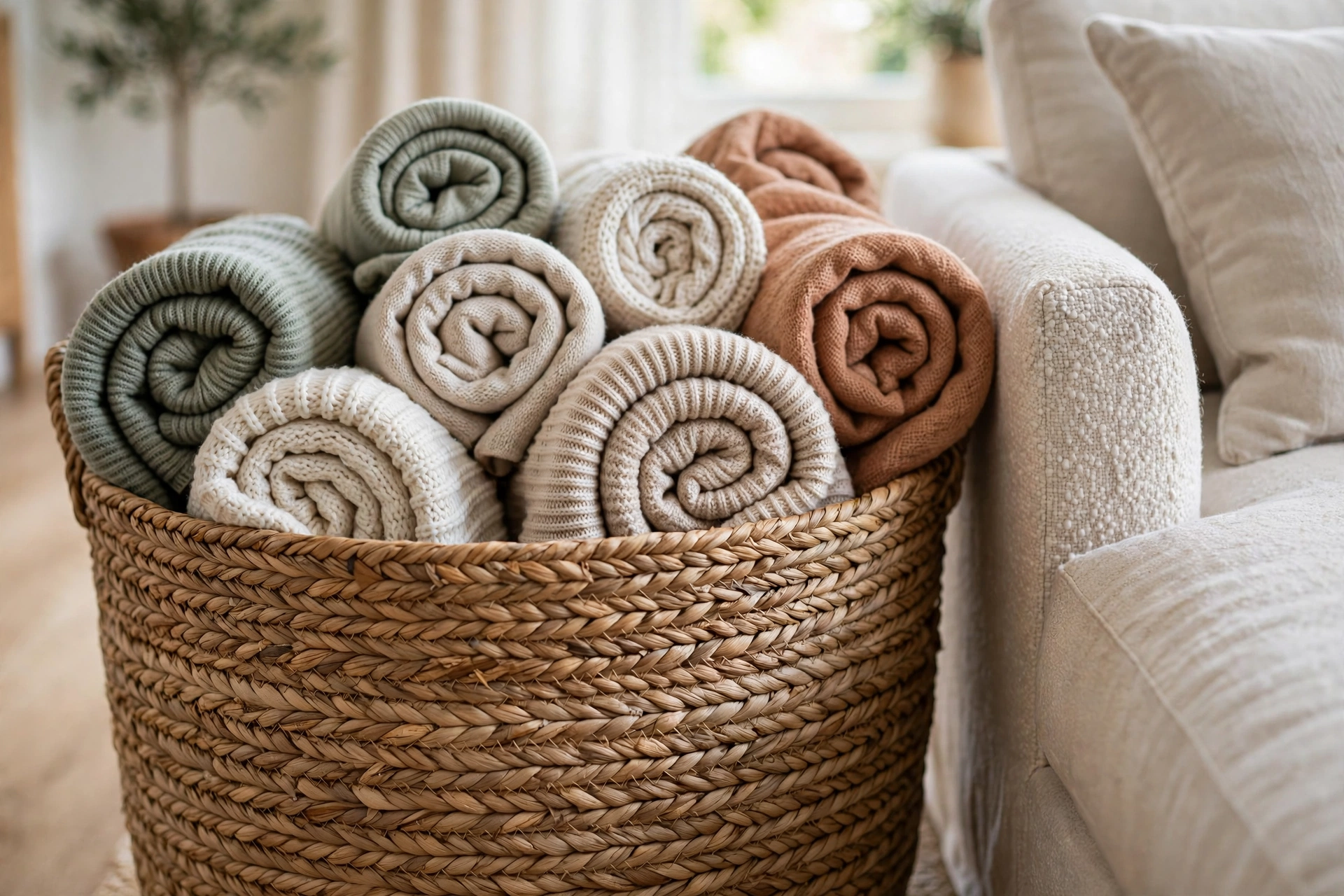
A blanket basket beside the sofa is the easiest win for living room blanket storage. A big woven basket holds three or four folded throws, looks like decor, and keeps the pile off the floor. Grab one, wrap up, drop it back in — the basket does the tidying for you. Pick one with a wide mouth so the blankets go in and out without a fight, and skip lids for the everyday basket: a lid slows you down and the basket stops getting used.
Rolling works better than folding in a basket. Fold the throw in half lengthwise, roll it into a loose cylinder, and stand it upright in the basket. Rolled blankets take up less room, you can see each one at a glance, and they do not crease the way a tight fold does. For more basket styles, see Celebrated Nest’s throw blanket storage ideas for real living rooms.
Keep one basket per seating area. A basket by the sofa and a smaller one by the reading chair means nobody has to cross the room to put a blanket away. If the basket starts to overflow, that is your sign to run the sort again — one blanket in, one blanket out keeps the basket working.
A Blanket Ladder for Throws You Want on Show
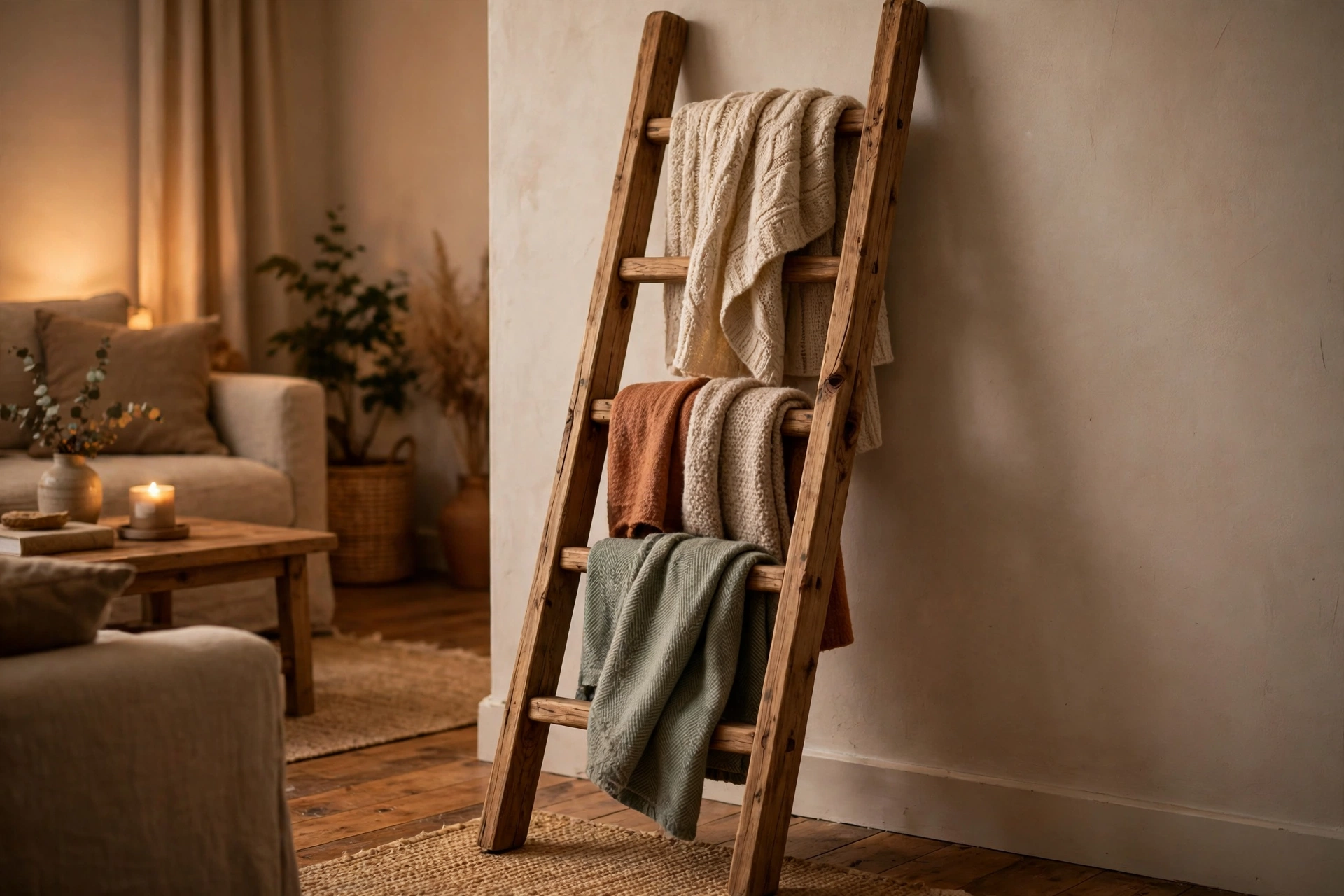
A blanket ladder leans against the wall and turns your prettiest throws into part of the room. Fold a throw in half lengthwise, drape it over a rung, and let it hang straight. It stays aired out, it is easy to grab, and it looks good doing it. A ladder holds two or three throws, so it suits the daily favorites, not the whole collection.
Put the ladder on a wall that is easy to reach but out of the walking path — beside the sofa, behind the reading chair, or in the corner by the window. The throw you use least goes on the highest rung, the daily favorite on the lowest, so you are never stretching for the one you want. A chunky knit blanket looks especially good on a ladder, because the texture shows from across the room.
A ladder is also one of the best blanket storage ideas for small spaces, because it uses wall space instead of floor space. It takes up no more room than a picture frame leaned against the wall, and it keeps two or three throws off the sofa and out of the pile.
Folded Blanket Storage on Shelves and in Closets
For the blankets you use less often, folded blanket storage on a shelf or in a closet works best. Fold each blanket into a neat rectangle, stack them with the heaviest on the bottom, and keep the stack to four or five so nothing topples over. A blanket shelf in the living room or a shelf in the linen closet both work — the point is that the stack has a fixed spot.
Label the shelf if the closet is shared. A small tag that says “guest blankets” or “winter quilts” stops other people from piling random things on top of your neat stack. In a linen closet, keep blankets on a middle shelf where you can reach them without a step stool, and keep the top shelf for things you rarely need.
Quilt storage needs a little extra care. Quilts fold flat and stack well, but they do not like being squeezed under heavy things. Give quilts their own shelf, fold them loosely, and slip a cotton sheet between them if you stack more than three. That keeps the fabric from pressing marks into the one below.
Off-Season Blanket Storage That Protects Your Quilts
Off-season blanket storage is where most blankets get damaged, because people pack them away damp, dirty, or squeezed too tight. Wash and fully dry every blanket before you store it — a blanket put away even slightly damp will smell musty by the time you need it again. Then fold it loosely and put it in a breathable cotton bag or a clean pillowcase, not a sealed plastic bin that traps air.
A blanket storage ottoman or a storage bench at the foot of the bed is a good home for off-season blankets. It hides them completely, keeps them dust-free, and the furniture earns its floor space twice over. A blanket chest works the same way, and it doubles as a seat in a hallway or at the end of the bed. Under bed blanket storage works too — flat boxes or zippered bags slide under the bed and hold two or three folded blankets each.
Weighted blanket storage deserves its own note. A weighted blanket is heavy, so never hang it on a ladder or a hook — the weight pulls the fabric out of shape. Fold it flat, store it in a sturdy box or on a low shelf, and keep it somewhere you can lift it with both hands. The same rule applies to any thick, heavy quilt.
A 10-Minute Weekly Blanket Reset
Once a week, spend ten minutes on a blanket reset. Gather every throw that has drifted onto the sofa, the floor, or the back of a chair, and put each one back in its spot: daily throws in the basket, display throws on the ladder, spares on the shelf. Shake out the ones that need it, and toss any that smell stale into the wash. That weekly reset is the habit that keeps the system working, because it stops the pile from growing back.
Put the reset on the same day as your other small jobs. Our weekly cleaning schedule has a spot for quick tasks like this, and a blanket reset is an easy one to tick off. If a new blanket comes into the house, apply the one-in-one-out rule: a new throw means an old one leaves. Our rental friendly organization ideas guide has more no-drill ways to keep a small living room tidy with the same small habits, and our throw pillow storage ideas guide shows how to store the other half of the cozy pile.
Here is how the main blanket storage ideas compare, so you can pick the one that fits your space:
| Storage option | Best for | Watch out for |
|---|---|---|
| Woven basket | Daily throws, living rooms | Set a limit of 3–4 blankets |
| Blanket ladder | Display throws, small spaces | Holds 2–3 throws only |
| Storage ottoman | Off-season blankets, hidden storage | Check the weight limit |
| Closet shelf | Guest blankets, quilts | Label the shelf clearly |
| Under-bed boxes | Spare blankets, small homes | Keep them dry and dust-free |
A Quick Checklist Before You Put Blankets Away
Run through this list once, and the system mostly looks after itself:
- Sort into use daily, keep for guests, and let go — donate or recycle the let-go pile.
- Keep daily throws in a basket by the sofa, rolled so you can see each one.
- Hang display throws on a ladder, daily favorite on the lowest rung.
- Store off-season blankets washed, dry, and loosely folded in breathable bags.
- Run a 10-minute reset once a week; one in, one out for new blankets.
- Keep the sofa to one throw at a time.
FAQ
How many blankets should I keep in the living room?
Keep three to five throws for daily use within arm’s reach, plus a few spares for guests and cold nights on a closet shelf. Anything nobody reaches for in a season can go.
What is the best way to store blankets so they stay fresh?
Wash and fully dry them first, fold them loosely, and store them where air can move — a basket, a ladder, or a breathable cotton bag. Never pack a damp blanket away, and air out off-season blankets once a month.
How do I store a weighted blanket?
Fold it flat and store it in a sturdy box or on a low shelf where you can lift it with both hands. Never hang a weighted blanket on a ladder or a hook — the weight pulls the fabric out of shape.
Should I roll or fold blankets for storage?
Roll them in a basket, where you can see each one and save space. Fold them on a shelf or in a box, where a neat stack stays put. Roll for daily use, fold for storage.
A Living Room You Can Actually Sit In
Good blanket storage ideas are not about buying special furniture. They are about being able to grab the throw you want, clean and warm, without digging through a pile on the sofa. Sort first, keep daily throws in a basket, hang the pretty ones on a ladder, and store the rest where they stay clean. The sofa goes back to being a sofa — and the next blanket that comes home will already have a place waiting for it.