

Meal prep organization ideas start with a simple problem: you want to cook at home, but by 6 p.m. you are tired, the fridge is a mystery, and takeout feels easier than dinner. The food is there. The time is not.
A weekly system fixes that — one short plan, one shop, one cooking session, and meals that are ready to grab all week. None of it needs a big kitchen or a perfect routine.
The trick is to organize the prep, not just the food. Pick the meals first, then shop from the list, then cook in batches, then store everything where you can see it. When each step has its own place and its own time, the whole week runs on its own. This guide walks through the full loop, so you can set it up this Sunday and feel the difference by Tuesday. That is what good meal prep organization ideas are for: fewer decisions at dinner time, less waste, and lunches that pack themselves.
Start With a Weekly Meal Plan, Not a Shopping Trip
Do not shop first. Plan first. A weekly meal plan is five dinners, not seven — plan for the nights you actually cook, and leave room for leftovers, a takeout night, and one flexible night. Five planned dinners is enough to shop once and cook twice, and it leaves no gap where a missing ingredient sends you back to the store.
Pick your five meals from what you already own. Open the pantry and the fridge, note the pantry staples on hand — rice, pasta, beans, sauces — and build meals around them. A meal planning habit like this cuts the grocery bill fast, because you stop buying a second jar of something you already have. Write the five meals on one page, and tape it to the fridge. That page is the plan for the whole week, and everyone in the house can see it.
Keep the plan simple. Two quick meals for busy nights, two batch meals you cook in larger amounts, and one fun meal to look forward to. Repeat the same five-meal pattern each week with different recipes, and planning takes ten minutes instead of an hour. Our small pantry organization ideas guide shows how to sort the pantry first, so the plan starts from shelves you can actually see.
Build a Grocery List From the Plan
A grocery list that comes from the plan is short and honest. Go through the five meals one by one and write down only what you do not already have. Check the pantry, the fridge, and the freezer before you write anything — that check is the whole point, and it is what stops duplicate buying.
Group the list by store section: produce, dairy, meat, pantry, frozen. A grouped list means one pass through the store, no backtracking, and no forgotten item that forces a second trip. Keep a running list on the fridge all week, and add to it as things run out. By Sunday, the list is mostly written, and shopping takes half the time.
Buy for the prep session, not just the week. If Sunday is your cooking day, shop Saturday or Sunday morning, and buy the containers at the same time if you are running low. Food storage containers are part of the shop, not an afterthought — a week of meals with nowhere to store them is a week that falls apart by Wednesday.
Pick Containers That Stack and Fit
Meal prep containers decide whether the system works. The wrong ones waste space, leak, or hide food until it goes bad. The right ones stack neatly, seal tight, and let you see what is inside without opening every lid.
Use clear bins and matching containers in one or two sizes. Square containers stack better than round ones, and they waste less space on a shelf. Glass containers reheat well and last for years, while light plastic ones are easier to carry for lunches. Pick one type for full meals and one smaller size for sauces, snacks, and sides. When the containers match, they stack into a neat tower instead of a wobbly pile.
Label every container with what is inside and the day you cooked it. A small piece of tape and a marker is enough. Labels stop the mystery-container problem, and they tell you what to eat first. Most cooked meals keep three to four days in the fridge, so eat the oldest first and freeze anything you will not finish in time. Leftover storage works the same way — clear container, date on top, front of the shelf.
Set Up Fridge Zones for Grab-and-Go
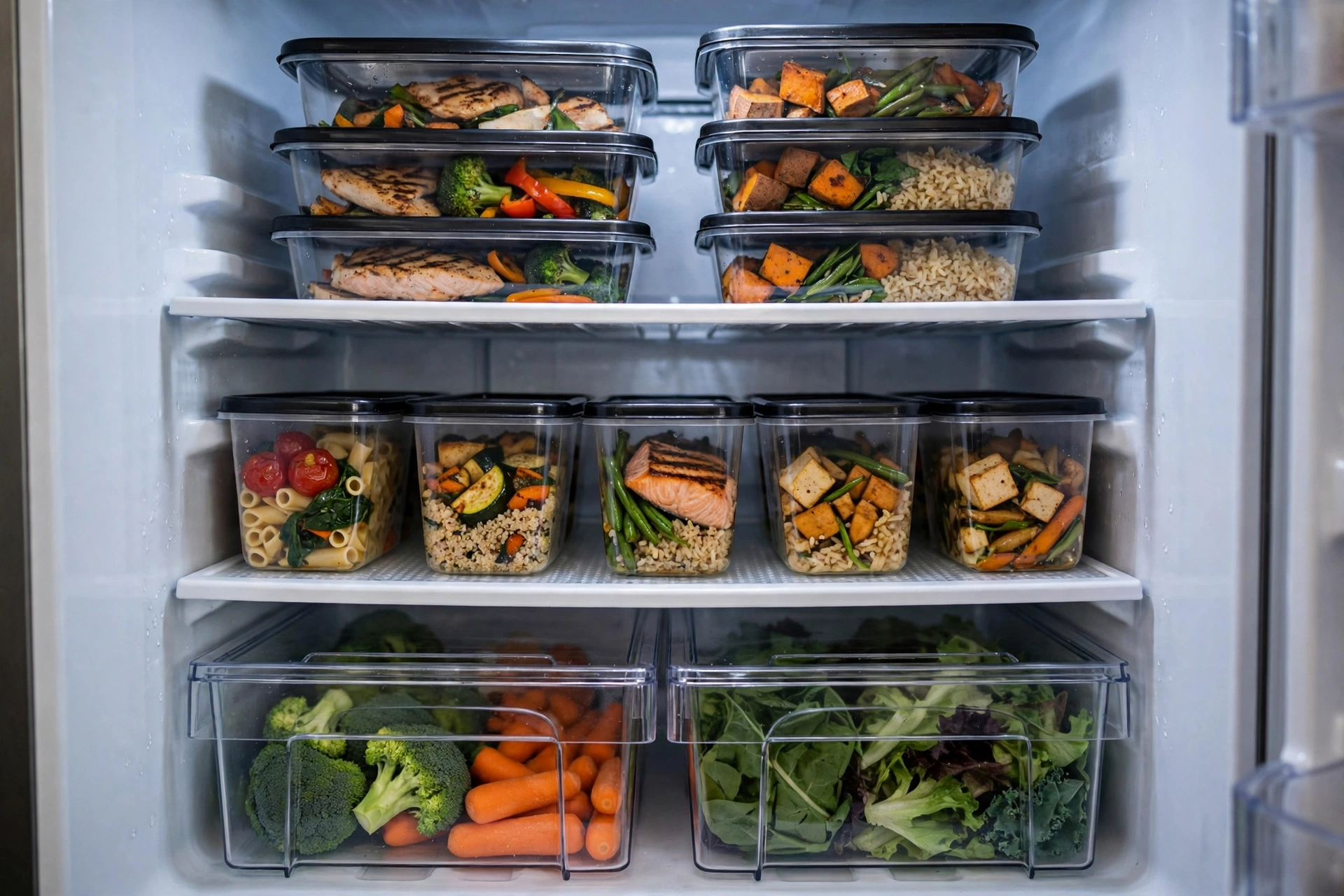
Fridge zones are where meal prep organization ideas pay off every single day. When each shelf has a job, you stop digging, and anyone in the house can find lunch without asking you. Put ready-to-eat meals at eye level on the middle shelf, where you see them the moment you open the door. That one move is why grab-and-go lunches actually get grabbed.
Try this simple zone plan for the week:
- Top shelf: ready meals and leftovers, the “eat first” shelf.
- Middle shelf: meal prep containers, dairy, and eggs.
- Bottom shelf: raw ingredients for the next cooking session, kept low and sealed.
- Crisper drawers: washed and chopped produce, ready to cook or snack on.
- Door shelves: sauces, dressings, and small jars only — never milk or eggs.
Keep the zones steady for at least two weeks before you change anything. Your hand learns where things live, and the system gets faster every day. Our fridge organization ideas for small kitchens guide goes deeper on zones for tight fridges, and the same zone habit works here — one shelf per job, checked once a week.
Batch Cooking: One Session, Five Dinners
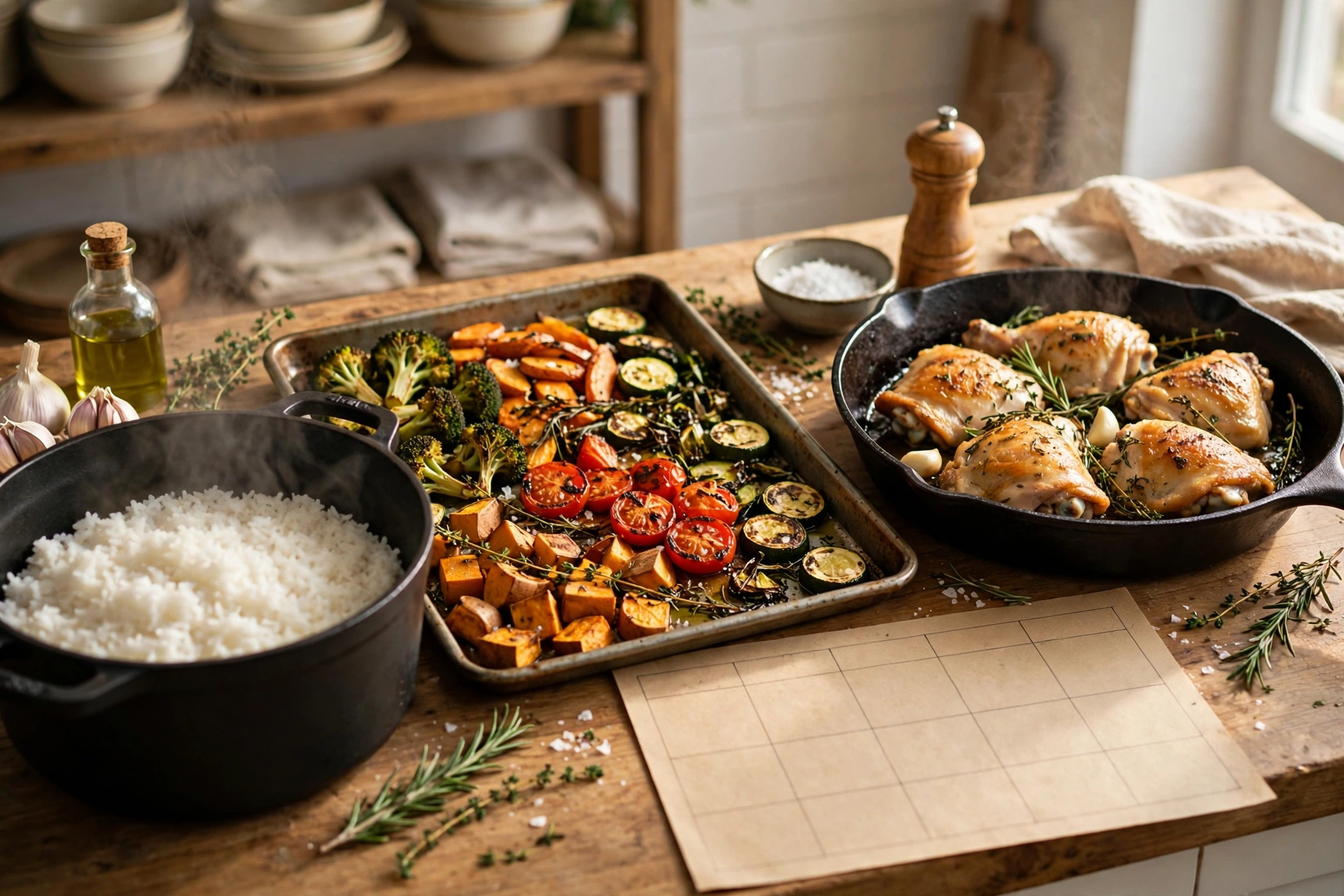
Batch cooking is the engine of the whole system. One cooking session, usually Sunday, makes the food for the week. Cook one grain, one protein, and one tray of roasted vegetables, and you have the parts for five different meals. Rice plus chicken plus vegetables becomes a bowl on Monday, a wrap on Tuesday, and a stir-fry on Wednesday — same parts, different meals, no extra cooking.
Keep the session short. Two hours is plenty, and most of it is waiting while things cook. Start the grain first, then the protein, then the vegetables, and wash up while things simmer. Cook in double batches of the things that freeze well — soup, stew, cooked beans, shredded chicken — and freeze half in single portions. Freezer meals like these are your backup plan for the week everything goes wrong.
Do not cook seven different meals. Cook parts, not plates. A tray of roasted vegetables, a pot of rice, a pan of chicken, and a jar of sauce cover most of the week, and they mix and match without getting boring. Our freezer organization ideas for small kitchens guide shows how to store the frozen half so you can actually find it — flat bags, upright like files, labeled with the date.
The Sunday Routine That Keeps It Going
Meal prep Sunday is not a big event. It is a short routine, done at the same time each week, that keeps the whole system alive. Ninety minutes, once a week, and the rest of the week takes care of itself.
Here is a simple Sunday routine that works:
- Check the fridge and toss anything past its date (10 minutes).
- Pick five dinners and write the grocery list from the plan (10 minutes).
- Shop once, from the grouped list (30 minutes, or shop Saturday instead).
- Cook the batch session: one grain, one protein, one tray of vegetables (60–90 minutes).
- Pack containers, label them, and stack them in the fridge zones (15 minutes).
Do the routine at the same time each week, and it becomes a habit instead of a chore. Put on music or a show while you cook, and let the family help with the packing — kids can label containers and stack them in the fridge. A routine the whole house joins is a routine that lasts.
Portion Control and Packing Lunches
Portion control is easier when you pack meals right after cooking, while the food is still out. Divide the batch into single-meal containers immediately, instead of storing one giant pot and scooping from it all week. Single portions are faster to grab, easier to reheat, and they stop the “just a little more” habit that eats the week’s food by Wednesday.
Pack lunches the night before, not in the morning. A lunch packed at night takes five minutes and uses the same containers already in the fridge. A lunch packed in a rushed morning takes fifteen minutes and usually ends up as a sandwich and a hope. Keep a small lunch shelf in the fridge — one shelf, one bin per person — and the morning runs itself.
Use small containers for snacks and sides inside the same system. Cut vegetables, fruit, and a dip in small boxes mean a snack is ready when hunger hits, instead of a bag of chips from the cupboard. When the healthy option is the easy option, it gets eaten. That is the whole point of the system: make the good choice the easy choice.
Keep the System Alive All Week
A system only works if it survives the week, and survival takes two small habits. First, a five-minute nightly check: move tomorrow’s lunch to the front shelf, toss anything past its date, and note what ran out on the fridge list. Five minutes at night saves fifteen minutes of hunting in the morning.
Second, a short weekly reset. Our weekly cleaning schedule guide uses the same rhythm — small jobs often, big jobs rarely — and it works for meal prep for the same reason. Once a week, wipe one fridge shelf, check the container supply, and rewrite the inventory list. A system that asks for five minutes a day will actually happen. A system that asks for an hour on Sunday will not.
When the week goes wrong — and it will, some weeks — do not throw the system away. Cook one pot of soup, buy a rotisserie chicken, and use the containers you already have. A half-done week still beats a takeout week, and the routine is waiting for you next Sunday. The Our Hungry Home kitchen organization for meal prepping guide has more real-kitchen examples of exactly this — pantry, fridge, and freezer set up together, so the whole kitchen supports the prep instead of fighting it.
Your First Meal Prep Week
Use this table to set the system up in order, then keep it going with small jobs done often.
| When | Job | What done looks like |
|---|---|---|
| Saturday | Plan + shop | Five dinners picked, grouped grocery list shopped once |
| Sunday | Batch cook | One grain, one protein, one tray of vegetables cooked |
| Sunday | Pack + label | Single portions in clear containers, dated, in fridge zones |
| Every night | 5-minute check | Tomorrow’s lunch at the front, list updated, dates checked |
| Wednesday | Midweek top-up | One quick cook or a freezer meal pulled out |
| Every week | Reset | One shelf wiped, container count checked, inventory rewritten |
Start with the plan and the containers this week. Those two changes alone make the biggest difference, and once you feel a weeknight where dinner is already done, you will not want to go back.
Checklist
- Five dinners planned from what you already own
- Grouped grocery list, shopped once
- Matching clear containers, one size for meals, one small size for sides
- Fridge zones set: ready meals at eye level, raw ingredients low
- Batch cooking session done: one grain, one protein, one tray of vegetables
- Every container labeled with contents and date
- Lunches packed the night before, one shelf or bin per person
- Five-minute nightly check and a short weekly reset
- One empty space left in the fridge and freezer for new food
Frequently Asked Questions
How do I start meal prep if I have never done it before?
Start small: plan five dinners, shop once from a grouped list, and cook one batch session on Sunday — one grain, one protein, one tray of vegetables. Pack the food into labeled containers in fridge zones, and let the rest of the week run itself. That is where meal prep organization ideas begin: a plan, containers, and zones, not a perfect routine on day one.
What containers are best for meal prep?
Clear, square, stackable containers in one or two sizes work best, with tight lids that seal. Glass reheats well and lasts for years; light plastic is easier to carry for lunches. Use one size for full meals and a smaller size for sauces and snacks, and label every container with what is inside and the date you cooked it.
How long does meal prep last in the fridge?
Most cooked meals keep three to four days in the fridge, so eat the oldest first and freeze anything you will not finish in time. Store meals in clear containers with the date on top, keep them on the “eat first” shelf, and pull one freezer meal out midweek to stretch the batch through Friday.
How do I organize meal prep in a small fridge?
Use zones and matching containers: ready meals at eye level on the middle shelf, raw ingredients low, chopped produce in the crisper, sauces in the door. Stack square containers instead of round ones, keep one shelf or bin per person for lunches, and leave one empty space so new food always has somewhere to go.
Dinners That Are Already Done
You do not need a bigger kitchen or more willpower. A weekly meal plan, a grouped grocery list, containers that stack, fridge zones you can trust, and one batch cooking session — do those things and these meal prep organization ideas will already feel different this week.
Dinners stop being a 6 p.m. decision, lunches pack themselves, and the fridge stops hiding food until it goes bad. Start with the plan this weekend. The first batch cook can wait until Sunday.