

Spice organization ideas for small kitchens can turn a crowded cabinet into a calm row where you find paprika in seconds and dinner starts on time. You know the mess well. One jar tips over when you reach for cumin, the labels face the wall, and you buy a second jar of oregano because you could not see the first one.
It grows a little each week, until cooking feels slower than it should. The fix is not a bigger kitchen. It is one home for every jar, labels you can read at a glance, and a rule for which spices stay close at hand.
With those three moves, spice organization ideas for small kitchens work even in a kitchen with one drawer and two shelves to spare.
1. Pull Every Spice Out and See What You Actually Use
Good spice organization ideas for small kitchens start with an empty shelf, not a new rack. Take every jar, packet, and tin out of the cabinet, wipe the shelf, and look at what you actually own. Most kitchens find the same surprise: ten jars used every week, a few used once a month, and a few bought for one recipe two years ago. A kitchen declutter at this step saves you from buying storage for spices nobody cooks with.
Sort what you took out into three groups. Daily spices are the ones you reach for most days, like salt, pepper, garlic powder, paprika, and cumin. Weekly spices are ones you use once or twice a week, like chili powder, oregano, cinnamon, and dried herbs. Rare spices are the special jars for holiday baking or one favorite dish, like cardamom, smoked paprika, or a curry blend.
Daily spices stay where your hand lands first. Weekly spices get a clear spot nearby. Rare spices move to a small box on a higher shelf, where they stay clean and out of the way. Toss anything with no smell left, and anything past its best date that tastes like dust. A spice you cannot smell will not flavor your food, no matter how tidy the jar looks.
Put a small tray or a non-slip liner on the shelf before anything goes back. It stops jars from sliding when you pull one out, and it wipes clean in seconds. This one step protects the shelf and keeps the row looking tidy even on busy cooking nights. A clean shelf also shows you how much space you really have, which makes the next step much easier. That clean start is a quiet part of spice organization ideas for small kitchens, because you only store what fits the space.
2. Pick One Home for Your Spices, Not Three
Spices stay tidy when every jar lives in one place and only one place. A spice rack for small kitchen spaces works best when it fits the spot you already have, not the spot you wish you had. If you have a spare drawer, use the drawer. If you have a deep cabinet, use a tiered shelf inside it. If you have almost no cabinet space at all, use the inside of a cabinet door or a small wall strip.
Do not split your spices across a drawer, a rack, and the top of the fridge. That split is how jars get lost, because you check one spot, then another, then give up and buy a duplicate. One home means one place to look, every time. That simple rule is the heart of pantry spice organization, because it ends the hunt before it starts.
Measure before you buy anything. Measure the drawer, the shelf height, and the jar height, and leave room to lift a jar out without knocking the row behind it. A spice shelf organizer that is too tall for your cabinet is just a box you cannot close. Measure first, and the storage you buy will actually fit. Spice organization ideas for small kitchens work best when the storage fits the jars you already own, not the other way round. These small kitchen ideas keep the plan simple: one home, one label style, and one monthly check. Good kitchen organization starts with that one-home rule, not with a shopping trip.
3. Try the Drawer First, If You Have One to Spare
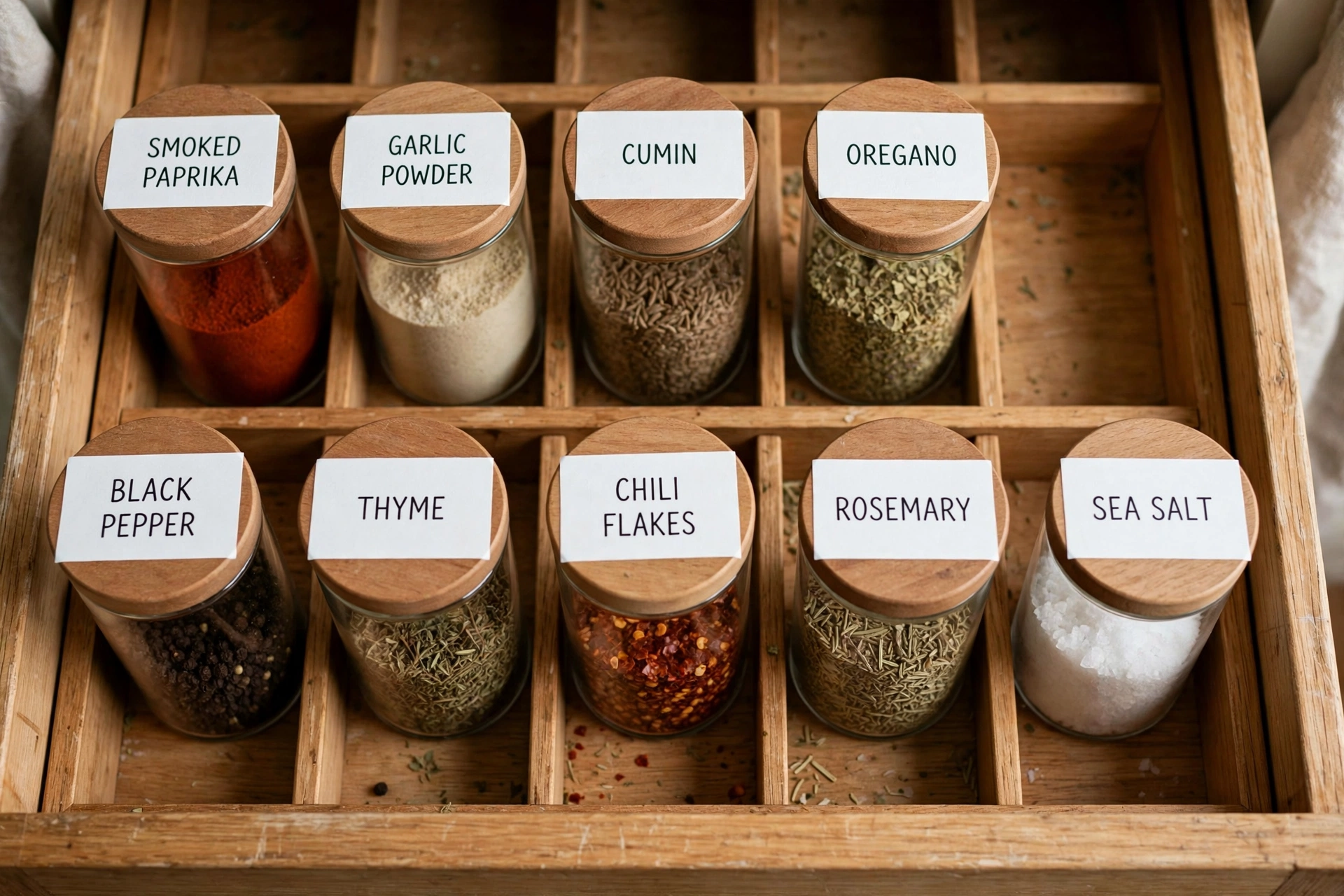
A kitchen spice drawer organizer is a quiet win in a small kitchen, because it hides the jars and keeps the counter clear. Lay jars on their sides in a drawer insert, labels facing up, so you can read every name without moving a jar. A spice drawer insert with sloped rows holds jars in place and stops them from rolling when you open the drawer.
Put daily spices in the front rows, where your hand lands first. Put weekly spices behind them. Keep the drawer near the stove, but not so close that heat dries the spices out. One drawer, kept to one layer of jars, holds more than most people expect, and it keeps cooking spice storage out of sight.
If your drawer is shallow, use small jars that fit flat, and move the big bulk jars to a box on a higher shelf. Refill the small jars from the big ones once a month. That refill habit is a small part of spice organization ideas for small kitchens that saves counter space every day. It also keeps spice containers the same size, which makes the drawer look calm instead of crowded.
4. Use a Tiered Shelf or a Door Rack When Drawers Are Full
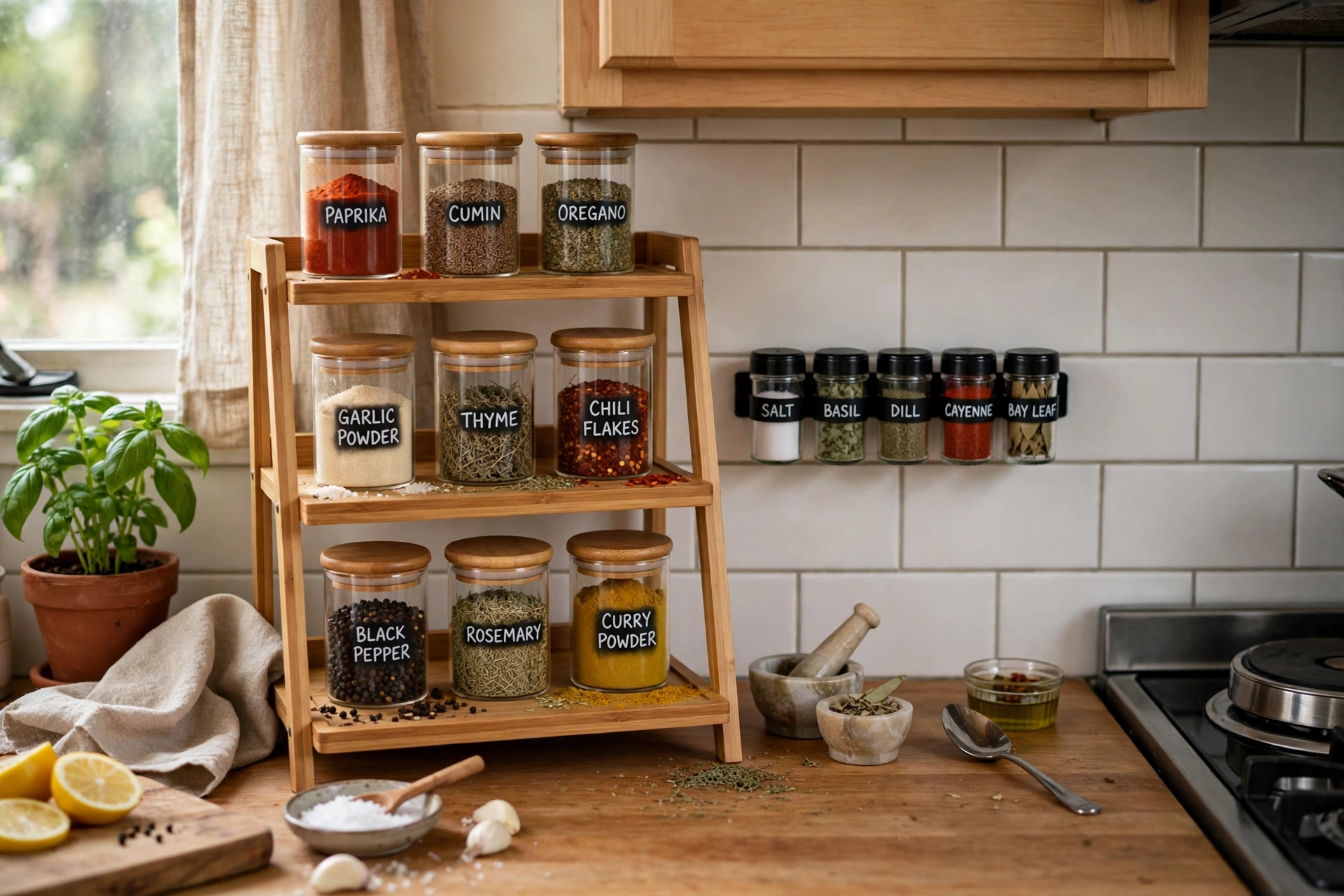
When no drawer is free, a tiered shelf inside a cabinet does the same job standing up. A spice shelf organizer with two or three steps lifts the back row so you can read every label without pulling jars forward. Put daily spices on the front step, weekly spices on the back step, and rare spices in a small bin at the side. That stepped row is a simple form of cabinet spice organizer that works in almost any cabinet.
A wall mounted spice rack is the next best move for a kitchen with no spare drawer or shelf. A slim rack on the inside of a pantry door, or on a narrow strip of wall near the stove, turns wasted space into storage for ten or more jars. Use it for daily spices only, and keep heavy glass jars on a shelf instead, where a door rack will not strain. That door space is a big win in spice organization ideas for small kitchens, where every inch counts.
A countertop spice rack can work too, but only if it holds daily spices and nothing else. A small turntable with six or eight jars, kept by the stove, saves steps on busy nights. If the turntable grows past ten jars, it becomes clutter again, so move the extras back to their one home. Small kitchen storage works best when the counter holds only what you use every day. That counter rule is a small part of spice organization ideas for small kitchens, because the counter stays clear for cooking.
5. Label Every Jar the Same Way, and Keep It Simple
Labels are what make spice organization ideas for small kitchens fast in real life. A jar you cannot read is a jar you will not use. Use spice jar labels that are big enough to read from arm’s length, in plain words: “Paprika,” “Cumin,” “Chili Powder.” Put the label on the top of the jar for a drawer, and on the side of the jar for a shelf or rack, so the name faces you wherever the jar lives.
Keep the label style the same for every jar. Same jar size, same label spot, same plain words. That sameness is what makes alphabetical spice storage work, because your eye learns where to look. Put daily spices in alphabetical order inside their group, so paprika sits near pepper and cumin sits near cinnamon. You do not need to alphabetize every jar in the house, just the daily group you reach for most.
Write the date on the bottom of the jar when you fill it, in pencil or on a small sticker. Spices lose flavor over time, and a date tells you which jar to replace first. That small habit is part of spice storage ideas that keep cooking tasting good, not just looking tidy. For a full kitchen reset, our shoe organization ideas for small closets use the same label-and-zone method for a small closet, and our winter coat closet organization ideas show how one label habit keeps a busy hall tidy too.
6. Keep Cooking Spices Close and Baking Spices Higher Up
Not every spice needs to be within reach. Cooking essentials like salt, pepper, garlic powder, and paprika earn the closest spot, because you use them almost every day. Baking spices like nutmeg, cloves, and cream of tartar can live a little higher, because you reach for them once a week or less. Rare spices for one dish can live in a box on the top shelf.
This split by use is the same idea behind a spice drawer insert that puts daily jars in front and weekly jars behind. It stops the daily row from filling with jars you rarely touch. When the daily row stays small, you find what you need fast, and the rest of the kitchen stays calm.
Magnetic spice jars are a good fit for this split, if you have a fridge side or a metal strip free. Stick daily jars on the magnet strip, where you can see them while you cook, and keep the rest in the cabinet. Magnetic jars only work if the lids close tight and the jars are light, so test one jar before you move the whole set. If a jar slides, it belongs back on a shelf.
For spices you buy in bulk, keep one small jar in daily use and the rest sealed in a bag or tin in a cool, dark spot. Refill the small jar when it runs low, and toss the bulk bag when the spice loses its smell. That refill habit keeps spice bottles small and the daily row easy to read. Keeping bulk jars sealed away is a quiet part of spice organization ideas for small kitchens, because the daily row stays small.
7. Handle Small Bags, Packets, and the Top of the Fridge
Loose packets cause most spice mess, because they slip behind jars and tear open. Put all packets in one small bin or zip bag, labeled “spice packets,” and keep the bin with the weekly spices. When you open a packet, pour it into a small jar right away, or fold the packet closed with a clip and put it back in the bin the same day. A packet left loose on a shelf will end up behind the rack.
Do not store spices on top of the fridge if you can help it. Heat and light wear spices out faster there, and jars on top of the fridge are hard to reach and easy to forget. If the top of the fridge is your only free spot, use it for sealed backup jars only, not for daily spices. Daily spices belong where you can see and reach them.
A small basket for spice packets, a clip for open bags, and one bin for backups is all it takes. That small set of tools is a simple win in spice organization ideas for small kitchens, because packets stop drifting into every corner of the cabinet. Pair this with our under sink bathroom organization ideas for the same bin-and-label method in a small bathroom, and our winter entryway organization ideas for a hall that stays tidy when bags and gear come in together.
8. Keep It Tidy With a Quick Monthly Check
The best spice drawer still needs a tiny habit. Once a month, check the daily row, return drifted jars to their spots, wipe the shelf or drawer, and toss one spice that has lost its smell. Check for duplicate jars, open packets, and labels that have peeled off. Put stray jars back in their group, refold any bags, and move a spice you stopped using to the rare box.
Make the check part of a set day, like the first Sunday of the month, so it takes five minutes instead of turning into a big clean. Smell each daily spice as you check it, and replace any jar that smells like nothing. That small check catches mess before it spreads, and it keeps spice organization ideas for small kitchens working through busy weeks, holiday cooking, and new recipes alike. Spice organization ideas for small kitchens stay working when the check stays short, because a five-minute habit is one you will actually keep.
That five-minute check is what keeps spice organization ideas for small kitchens working after the first tidy-up, not just on day one. If you are planning a bigger tidy-up, our black friday shopping budget organization ideas can help you plan a small purchase like a drawer insert or a set of jars without overspending, and our winter entryway organization ideas use the same zone method for coats, bags, and shoes together.
Spice Organization Table
| Spice group | Best spot | Tip that keeps it tidy |
|---|---|---|
| Daily cooking spices | Drawer front rows or tiered shelf front step | Labels up, one jar per spot |
| Weekly spices | Drawer back rows or tiered shelf back step | Alphabetical order inside the group |
| Baking spices | Higher shelf or side bin | One small jar in use, bulk sealed away |
| Rare and holiday spices | Box on the top shelf | Date on the bottom of each jar |
| Spice packets | One labeled bin with weekly spices | Pour into a jar or clip shut the same day |
| Bulk backup jars | Cool, dark spot, not the fridge top | Refill small jars monthly, toss faded spice |
| Magnetic daily jars | Fridge side or metal strip near the stove | Light jars only, lids closed tight |
| Countertop daily jars | Small turntable by the stove, 6 to 8 jars | Move extras back when it grows past ten |
This table puts spice organization ideas for small kitchens into one glance, so everyone who cooks can see where each jar goes.
Your Spice Organization Week Plan
- Monday: Pull every spice out, wipe the shelf, and sort into daily, weekly, and rare groups.
- Tuesday: Toss faded spices and duplicates, and pick one home for all your jars.
- Wednesday: Set up the drawer insert or tiered shelf, labels facing you.
- Thursday: Label every jar the same way, and put daily spices in alphabetical order.
- Friday: Move baking and rare spices to higher spots, and put packets in one bin.
- Saturday: Set up a small turntable or magnetic strip for daily jars, if you have room.
- Sunday: Five-minute check — return drifted jars, wipe the shelf, and smell the daily spices.
Frequently Asked Questions
Where should I store spices in a small kitchen?
Store spices in one place you can reach while you cook, like a drawer near the stove or a tiered shelf inside a cabinet. Pick the spot that fits your jars and your cooking habits, then keep every jar in that one home. A single home ends the hunt, because you always know where to look first.
What is the best spice rack for a small kitchen?
The best rack is the one that fits your space and your jar size. A drawer insert works best if you have a spare drawer, a tiered shelf works best inside a deep cabinet, and a door rack works best when cabinet space is tight. Measure your drawer, shelf height, and jar height before you buy, and leave room to lift a jar out without knocking the row behind it.
How do I keep spice jars from getting messy again?
Give every jar one spot, label it the same way as the rest, and check the row once a month. Return drifted jars to their spots, toss spices that have lost their smell, and move any jar you stopped using to the rare box. When the daily row stays small, the mess stays away.
Should spices go in the fridge or on top of the fridge?
Most dried spices do best in a cool, dark cabinet, not in the fridge and not on top of it. Heat and light wear them out faster, and jars on top of the fridge are hard to reach. Keep daily jars in a drawer or on a shelf near the stove, and store sealed backups in a cool, dark spot.
Spice organization ideas for small kitchens work best when you start small. Pick one step tonight — pull the jars out, or label the daily row — and see how much faster tomorrow’s dinner feels. Once daily spices have a home, the rest of the kitchen follows, and the hunt for paprika stops coming back. When daily spices have a home, spice organization ideas for small kitchens stop feeling like a project and start feeling like a habit. That calm start is what spice organization ideas for small kitchens are really about: less hunting, less waste, and a kitchen where cooking feels easy again.