

Shoe organization ideas for small closets can turn a messy pile by the door into a calm row where every pair has a spot and mornings feel easier. You know the pile well. One pair of sneakers by the door, boots tipped on their side, and kids shoes in the hall.
It grows a little each day, until finding the shoes you need takes longer than getting dressed. The fix is not a bigger closet. It is a clear rule for each pair, a rack that fits the space you have, and a home for shoes you wear less often.
With those three moves, shoe organization ideas for small closets work even in a tiny hall closet.
1. Empty the Closet and Count What You Really Wear
Good shoe organization ideas for small closets start with an empty floor, not a new rack. Take every pair out of the closet, wipe the floor, and look at what you actually own. Most homes find the same surprise: a few pairs worn every week, a few worn once a month, and a few that have not been worn in a year. A shoe declutter at this step saves you from buying storage for shoes nobody wears.
Sort what you took out into three groups. Daily shoes are the pairs you wear most days, like sneakers, work shoes, and school shoes. Weekly shoes are pairs you wear once or twice a week, like dress shoes, boots, or gym shoes. Spare shoes are out-of-season pairs, special-occasion shoes, and backups.
Daily shoes stay in the closet at hand height. Weekly shoes get a clear spot nearby. Spare shoes move to labeled shoe boxes on a higher shelf or under the bed, where they stay clean and out of the way.
Put a washable mat or a boot tray on the closet floor before anything goes back. It catches mud, rain, and dust, and it wipes clean in seconds. This one step protects the floor and keeps the closet looking tidy even on wet days. A clean floor also shows you how much space you really have, which makes the next step much easier. That clean start is a quiet part of shoe organization ideas for small closets, because you only store what fits the space.
2. Give Every Daily Pair One Spot on a Low Rack
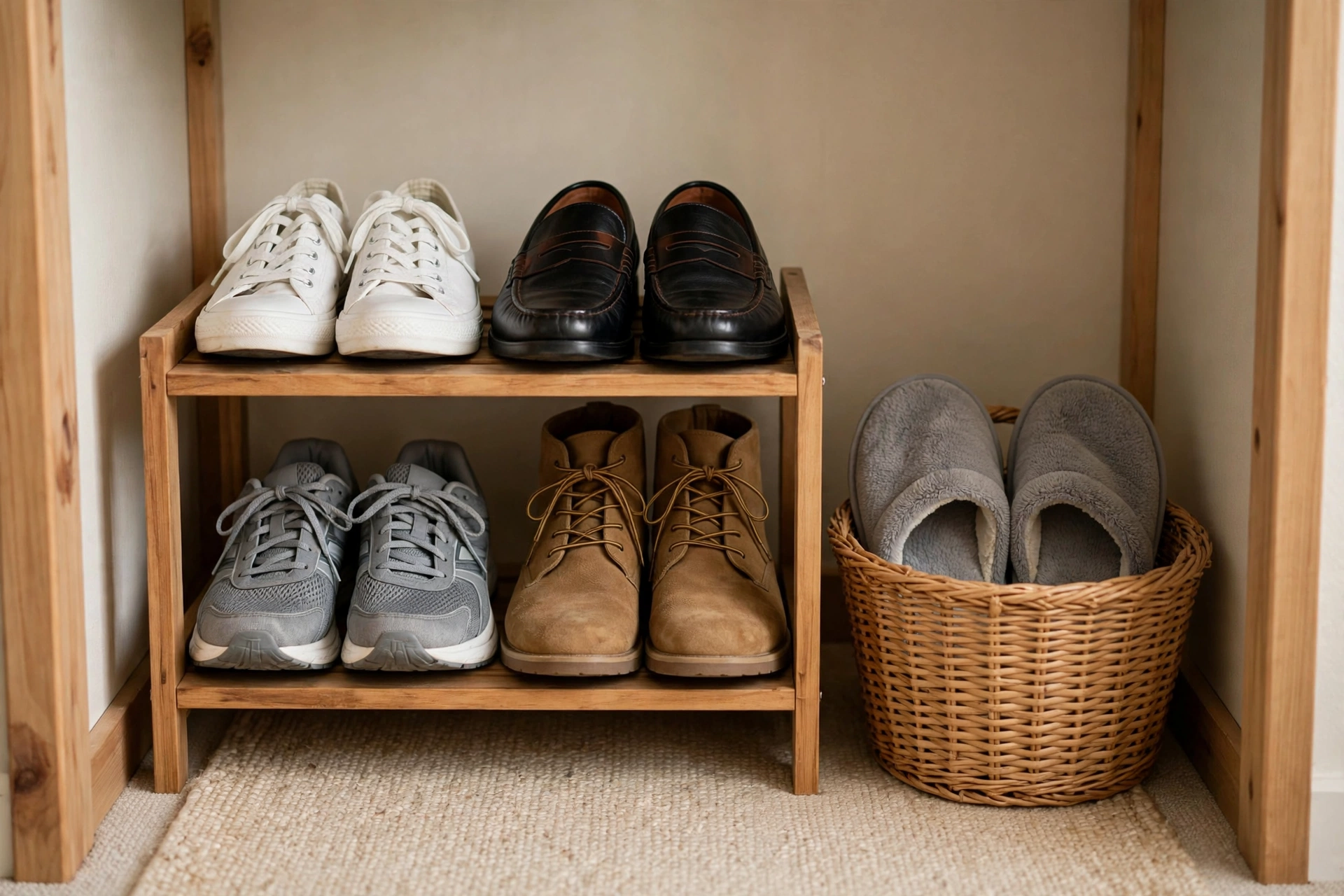
Shoes stay tidy when each pair has one spot and only one spot. A shoe rack for small closet spaces works best when it is low, open, and easy to reach. Put daily shoes in pairs on the rack, toes facing out, with a little space between pairs so you can grab one without knocking the rest over. When two pairs share one slot, both end up on the floor again. One pair per spot sounds strict, but it is the rule that stops the pile from coming back.
Use the bottom of the closet for the rack, not the top shelf. Daily shoes need to be easy to reach when you are in a hurry, and a low rack means kids can put their own shoes away too. If your closet has no floor space for a rack, a row of closet shoe cubbies on a shelf works the same way, as long as each pair keeps its own cubby. For a very narrow closet, a slim stackable rack with two or three tiers fits against one wall and still leaves room to walk past.
This pair-per-spot rule is also the heart of small closet shoe storage in a rental. You do not need to drill holes or build anything. A freestanding rack, a small bench with cubbies, or a set of stackable shelves gives every pair a home without changing the walls. That simple fit is why shoe organization ideas for small closets work for flats, dorm rooms, and family homes alike.
3. Use the Door, Shelves, and Walls on Purpose
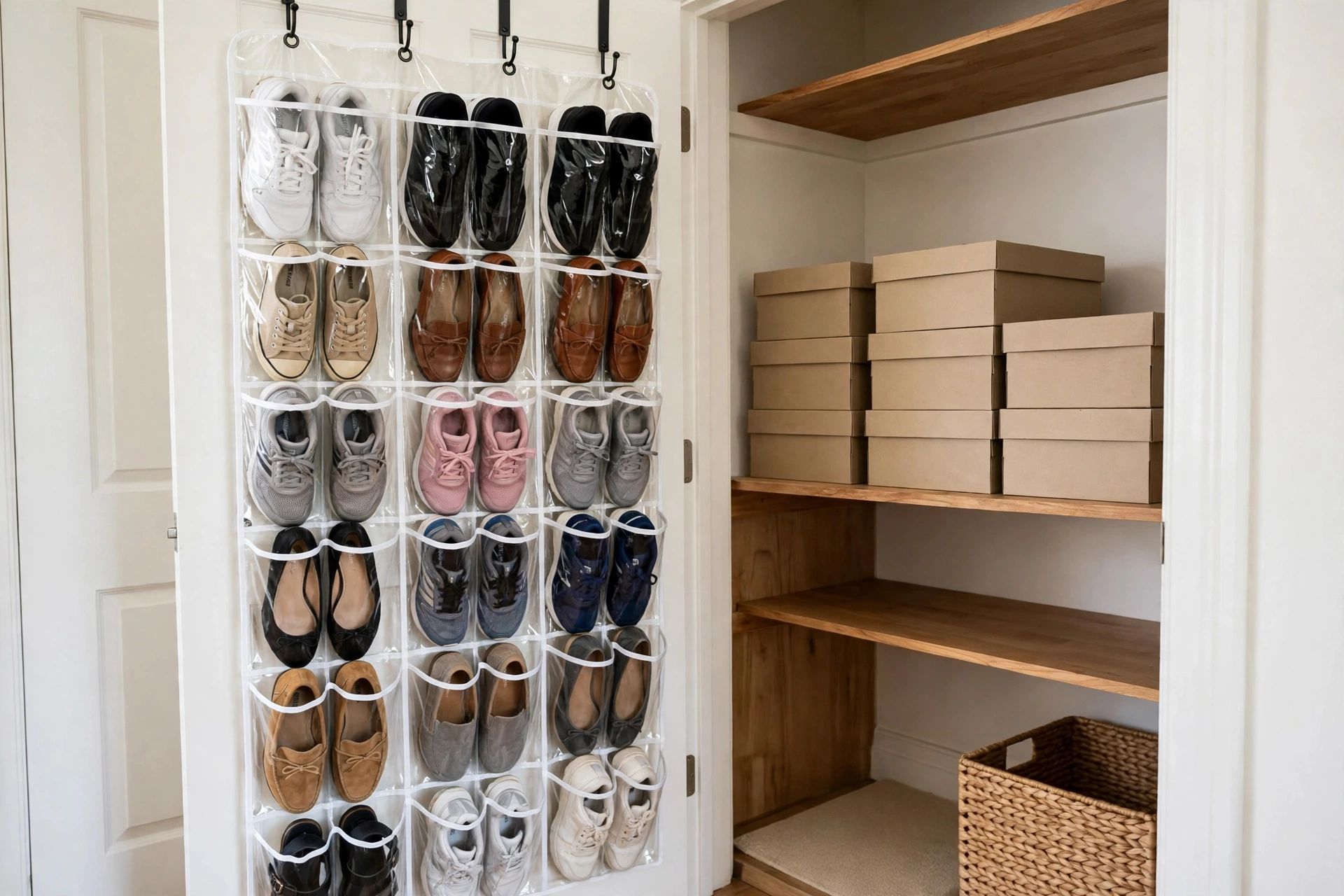
A small closet has more space than the floor alone. An over door shoe organizer with clear pockets is one of the best tools for a tiny closet, because it turns wasted door space into storage for ten or more pairs. Use it for flat shoes, kids shoes, sandals, and slippers, and keep heavy boots on the rack instead, where the door pockets will not stretch or tear. That door space is a big win in shoe organization ideas for small closets, where every inch counts.
Use the shelves above the rack for shoe bins and labeled boxes. A shoe shelf above the rack is a good spot for one bin per person, so weekly shoes stay separate from daily shoes. A shoe bin on a shelf holds one person’s weekly shoes, a pair of slippers, or shoe care items like a brush and a cloth.
Label each bin with a name or a shoe type, so nobody has to open three bins to find one pair. Shelf dividers stop stacks of boxes from sliding, and they keep each person’s section tidy. Vertical shoe storage on a wall, like a row of hooks for bags or a hanging pocket holder, frees shelf space for boxes and keeps small items where you can see them.
If you have no closet at all, the same plan works by the door. A narrow entryway shoe bench with cubbies below, a boot tray beside it, and a few hooks above gives you the same three habits: one pair per spot, one tray for wet shoes, and one bin for small items. Mudroom shoe storage does not need a whole room. A bench, a tray, and a basket by the door can hold a family’s daily shoes without a pile spreading into the hall.
4. Box the Shoes You Wear Less, and Label Every Box
Off-season and spare shoes cause most closet crowding, because they sit in daily spots even when nobody wears them. A seasonal shoe rotation fixes that in one afternoon. When summer ends, move sandals and light shoes into labeled shoe boxes and move boots and warm shoes into daily spots. When spring comes, swap them back. Each swap takes twenty minutes, and it keeps the daily rack from filling with shoes out of season.
Label every box with what is inside and who it belongs to, in plain words: “Maya — summer sandals” or “Dad — dress shoes.” Clear boxes help, but a label still saves time, because you can read it without pulling the box down. This labeling habit is a small part of shoe organization ideas for small closets that saves time every season. Store spare shoes on the top shelf, under the bed, or in a bedroom closet, not on the daily rack. Under bed shoe storage in flat bins works well for spare pairs, as long as the bins are clean and the shoes inside are dry before they go in.
Keep one spare pair of each type, not three. If you own four pairs of black shoes and wear one, move the rest to a donation bag or a spare bin and see if you miss them. This small check is part of a shoe declutter that keeps the closet working all year, and it stops you from buying more storage for shoes you already forgot you owned.
5. Handle Boots, Kids Shoes, and the Hallway Pile
Boots need a different spot than flat shoes, because they are tall, heavy, and often wet. A boot tray under the rack or by the door catches mud and water before it spreads across the floor. Put only the boots you wear most days in the tray, and store extra pairs elsewhere. Stuff tall boots so they stand up and dry evenly, and wipe the tray once a week. That small habit keeps wet boots from turning a tidy closet into a muddy floor.
Kids shoes need low spots kids can reach on their own. Put kids shoes on the bottom row of the rack, in a low basket, or in the lowest pockets of an over door shoe organizer. When kids can reach their own spot, they use it. Those low spots are a simple win in shoe organization ideas for small closets, because kids use what they can reach.
A small basket by the door for school shoes, with one pair per child, also helps on busy mornings, because each child knows exactly where to look. Pair this with our winter coat closet organization ideas for a hall that stays tidy when coats and shoes come in together.
The hallway shoe pile usually starts with one pair left by the door “just for now.” Stop it with a rule everyone can follow: shoes go in the closet or on the tray, never on the hall floor overnight. A small basket by the door for slippers helps too, because people who kick off shoes at the door have a clear spot to put them. When the rule is simple and the spot is easy, the pile stays gone. For a full hall reset, our winter entryway organization ideas use the same zone method for coats, bags, and shoes together.
6. Keep Shoes Clean, Dry, and Easy to Find
A tidy closet still needs a little care, or shoes start to smell and wear out early. Let wet shoes dry before they go back on the rack, and keep a small brush and cloth in a shoe bin for a quick wipe. Rotate daily shoes when you can, so one pair does not wear out while the rest sit clean. A simple shoe care habit, like wiping soles after a rainy walk, keeps the closet floor clean too.
Make pairs easy to find with one more habit: always put shoes back in pairs, in the same spot. It sounds small, but most lost shoes are not lost at all. One shoe is on the rack and the other is under a coat, in a car, or by the back door. A pair-per-spot rule ends that hunt, because a missing shoe is easy to spot when its spot is empty.
That pair-per-spot habit is at the heart of shoe organization ideas for small closets, and it ends the daily hunt for a missing shoe. If you share a closet, give each person a section, a row, or a bin, so pairs stop drifting into someone else’s spot.
For shoes you wear for work or sport, keep a separate spot if you can. Gym shoes in a ventilated bin, work boots on the tray, and dress shoes in a box on the shelf each stay cleaner than a mixed pile on the floor. That split also helps with shoe organization ideas for small closets in shared homes, where different shoes for different days can fill a rack fast. When each type has a spot, the closet stays calm even when the week gets busy.
7. Keep It Tidy With a Quick Weekly Reset
The best shoe closet still needs a tiny weekly habit. Once a week, check the rack, return drifted pairs to their spots, wipe the boot tray, and toss one pair that does not belong. Check for single shoes, wet spots, and boxes that lost their labels. Put stray shoes back in pairs, fold any bags or cloths, and move guest shoes back to their section if visitors left a pair behind.
Make the reset part of a set day, like Sunday evening, so it takes three minutes instead of turning into a big clean. Hang any bag that slipped, wipe mud off the tray, and check that kids shoes are still on the low row. That small check catches mess before it spreads, and it keeps shoe organization ideas for small closets working through busy weeks, school terms, and wet weather alike. That three-minute check is what keeps shoe organization ideas for small closets working after the first tidy-up, not just on day one. If you are planning a bigger tidy-up, our under sink bathroom organization ideas use the same label-and-zone method for a small bathroom, and our black friday shopping budget organization ideas can help you plan a small purchase like a rack or a set of bins without overspending.
Shoe Closet Table
| Daily sneakers and school shoes | Low rack, one pair per spot | Toes out, space between pairs. |
| Boots | Boot tray under the rack | Only daily boots in the tray, wipe weekly. |
| Kids shoes | Bottom row or low basket | Low enough for kids to reach on their own. |
| Dress and weekly shoes | Shelf bin or cubby | One bin per person or shoe type. |
| Sandals and flat shoes | Over door shoe organizer pockets | Light pairs only, so pockets do not stretch. |
| Out-of-season shoes | Labeled shoe boxes, top shelf | Label with name and shoe type. |
| Spare and backup shoes | Under bed bins or bedroom closet | Dry before storing, one spare per type. |
| Slippers | Basket by the door | One pair per person in the basket. |
This table puts shoe organization ideas for small closets into one glance, so everyone in the home can see where each pair goes.
Your Shoe Closet Week Plan
- Monday: Empty the closet, wipe the floor, and lay a mat or boot tray.
- Tuesday: Sort shoes into daily, weekly, and spare groups.
- Wednesday: Set up a low rack with one pair per spot for daily shoes.
- Thursday: Add an over door organizer and label bins and boxes.
- Friday: Move spare and out-of-season shoes to labeled boxes on a high shelf.
- Saturday: Set up a boot tray, a kids low row, and a slipper basket by the door.
- Sunday: Three-minute reset — pair up shoes, wipe the tray, and return drifted pairs.
Frequently Asked Questions
How many pairs of shoes should a small closet hold?
Hold only the shoes you wear each week, plus one spare section. One pair per spot is the rule to follow. If the rack is full, move out-of-season and spare pairs to labeled boxes elsewhere, and let one pair leave before a new pair takes its spot. A shoe declutter once a season keeps the closet working all year.
What is the best shoe rack for a very small closet?
A low, open rack with two or three tiers fits most small closets, because daily shoes stay easy to reach. If floor space is tight, use an over door shoe organizer for flat pairs and a slim stackable rack for the rest. Measure the closet floor first, and leave room to open the door fully before you buy.
How do I stop shoes from piling up by the front door?
Give every pair a spot in the closet or on a boot tray, and make the rule simple: no shoes on the hall floor overnight. A bench with cubbies or a basket for slippers by the door helps, because people who kick off shoes at the door have a clear spot to use. When the spot is easy, the pile stays gone.
How should I store shoes I only wear in another season?
Clean and dry them first, then put them in labeled shoe boxes on a high shelf or in flat bins under the bed. Label each box with the shoe type and owner, and swap them back into daily spots when the season changes. A seasonal shoe rotation twice a year keeps the daily rack from filling with shoes nobody wears.
Shoe organization ideas for small closets work best when you start small. Pick one step tonight — empty the floor, or set up one pair per spot on a low rack — and see how much calmer tomorrow morning feels. Once daily shoes have a home, the rest of the closet follows, and the pile by the door stops coming back. When daily shoes have a home, shoe organization ideas for small closets stop feeling like a project and start feeling like a habit. That calm start is what shoe organization ideas for small closets are really about: less hunting, less tripping, and a hall you can walk through without moving shoes first.