

March kids room organization ideas can turn a bedroom full of winter clutter into a spring room your child can actually keep tidy. If toys cover the floor, the closet still holds heavy winter clothes, and mornings start with a hunt for shoes and school bags, you are not doing anything wrong. Winter just piles up, and March is the right month to clear it out gently, one zone at a time.
This guide gives you a plan you can finish in a few short sessions: a toy rotation that cuts floor clutter, a closet swap for lighter clothes, a homework station that stays put, and a weekly rhythm your child can follow. These march kids room organization ideas work for small bedrooms, shared rooms, and busy families who want calmer mornings without a full room makeover — and that is exactly what these march kids room organization ideas are for.
1. Start with a spring walk-through, not a big clean
Before you buy a single bin, walk through the room with your child and a bag for donations. Ask what they still play with, what they have outgrown, and what is broken or missing pieces. Kids keep rooms tidier when they helped choose what stays, and a ten-minute talk now saves a dozen arguments later.
Sort what stays into three piles: keep in the room, store for rotation, and pass on. Put stored toys in a closet bin, not in a box on the floor. That one move makes the room feel bigger the same day, and it gives you a fresh set of toys to bring out later without spending anything.
Set a timer for 30 minutes per session. Short sessions suit kids far better than a long Saturday clean, and these march kids room organization ideas are built for real family life, where homework, dinner, and tired evenings all compete for time.
2. Set up a toy rotation that actually works
Toy rotation is simple: keep only part of the toys out, store the rest, and swap a few every week or two. When fewer toys are out, kids play longer with each one, and tidy-up takes five minutes instead of twenty. That is why a toy rotation belongs at the heart of any spring kids room plan.
Use low shelves and labeled bins so your child can see and reach everything. Picture labels work well for younger kids, and word labels help early readers. Keep one bin per type: blocks, cars, dolls, puzzles, and art supplies. If a bin will not close, something needs to leave the room, and that rule alone stops most toy pile-ups.
Bring out one stored bin each Sunday and put one current bin back into storage. A weekly swap keeps play fresh, and it turns tidy-up into a game: what goes away, and what comes back? Good march kids room organization ideas always leave room for your child to choose, so let them pick one swap each week. That small choice is part of why march kids room organization ideas work for families, not just for tidy photos.
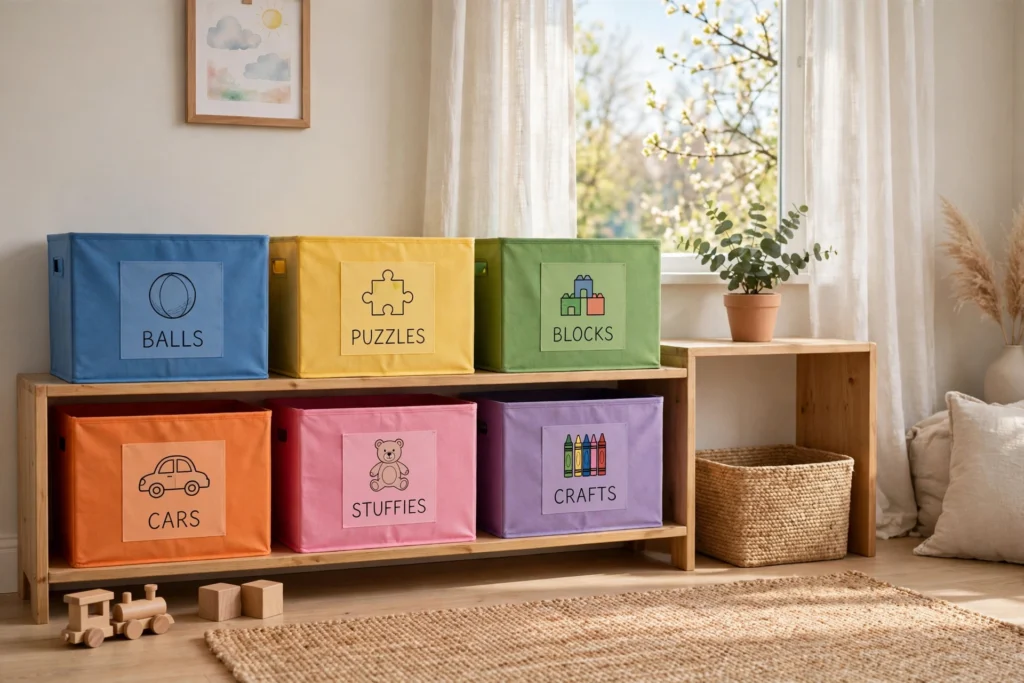
A small bedroom storage trick helps here too. Slide flat bins under the bed for board games and out-of-season toys, and use the back of the door for a hanging pocket organizer for small figures and craft bits. When every toy has a clear home, your child does not need to guess where things go.
Our february kids room organization ideas used the same rotation rule for cold-weather toys indoors. March builds on that with outdoor toys moving to the garage or porch bin, and lighter play items coming back into the room.
3. Do the closet spring swap in one hour
Winter clothes take up a lot of closet space, and March is the right time to move them out. Pull everything from the kids closet, try on the spring clothes, and sort into three groups: fits now, too small, and winter storage. Label the winter bin with the size and season so next autumn is easy.
Hang spring clothes at your child’s height, with everyday outfits at the front. Put school clothes on the left, play clothes on the right, and keep one low shelf for shoes. A small basket for socks and a hook for tomorrow’s outfit cut morning decisions in half, and that is a win every parent feels.
Keep only two weeks of clothes in the closet if space is tight. Store the rest in a labeled bin on a high shelf, and restock once a week. Small bedrooms feel calmer when closets are not stuffed, and a spring clothes swap is one of the fastest march kids room organization ideas to finish. A one-hour swap like this is one of the simplest march kids room organization ideas to check off early in March.
4. Build a homework station that stays put
A homework station does not need a whole desk set-up. A small desk or table by the window, a chair that fits your child, and a cup for pencils will do. Keep books, paper, and chargers in the same spot every day, so homework starts without a search for supplies.
Add a small shelf above or beside the desk for books and a weekly planner. A wall calendar or a simple to-do list helps older kids plan their week, and a quiet corner with good light makes reading feel easier. Keep the station clear of toys, so the brain knows this spot means focus time.
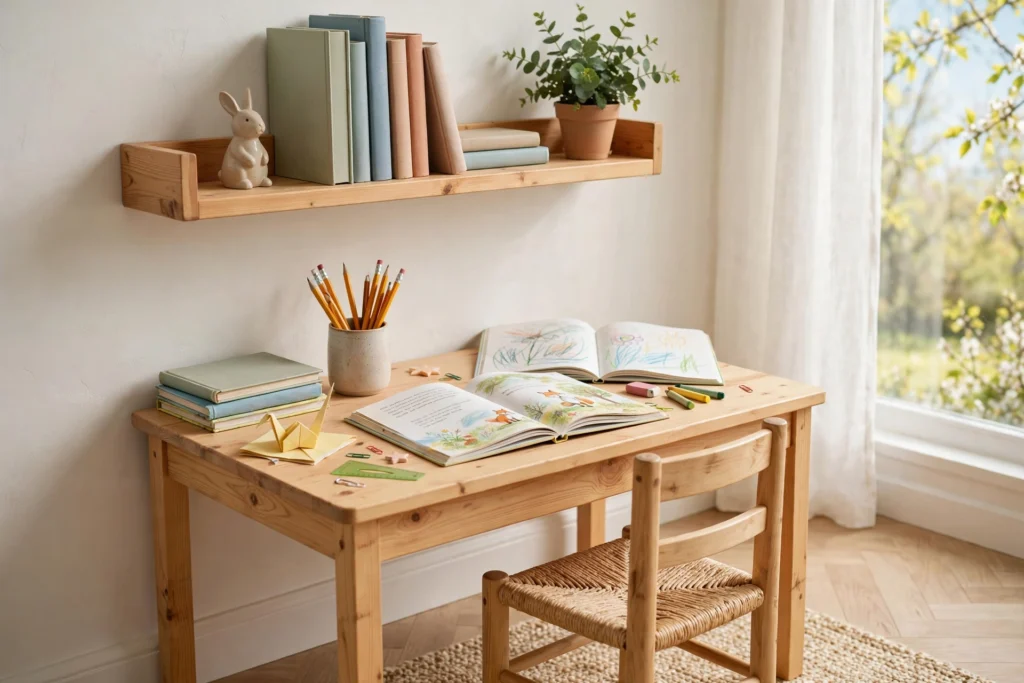
If two children share a room, give each child their own pencil cup and book shelf, even if they share one desk at different times. A clear split stops supply arguments, and a simple shared-desk rule like this keeps evenings peaceful — a small detail that makes march kids room organization ideas easier to keep.
5. Split the room into play, sleep, and study zones
Zones make a small room work harder. A play area near the toy shelves, a sleep zone around the bed, and a study zone at the desk give every activity a home. Kids tidy faster when they know which zone a toy belongs to, and parents can see at a glance what needs attention.
Use a rug to mark the play area, a bedside basket for bedtime books, and a small tray on the desk for homework tools. For safety, anchor tall shelves and dressers to the wall, and follow guidance from an authoritative child safety source on furniture anchoring before you move heavy pieces. A tidy room should also be a safe room, and this step is worth the extra ten minutes.
A bedtime routine gets easier with zones too. Keep pajamas in one drawer, bedtime books in the bedside basket, and a night light within reach. When the room itself supports the routine, bedtime takes less reminding, and mornings start calmer as well.
Our january kids room organization ideas used zones for a fresh-start reset after the holidays. March keeps those zones and adds a spring twist: lighter bedding, a plant on the sill, and outdoor play items near the door for after-school time.
6. Fix mornings with a school bag station
Mornings fall apart at the door, so fix them there. Set up a school bag station near the bedroom door or the front door: one hook for the bag, one hook for a jacket, and a small tray for shoes. Pack the bag the night before, with homework, water bottle, and any notes for school.
A morning routine chart on the wall helps younger kids a lot. List five steps with pictures: get dressed, eat breakfast, brush teeth, pack bag, shoes on. Let your child tick each step off, and mornings stop being a list of reminders from you.
This is also where march kids room organization ideas meet the rest of the house. Our march rental organization ideas use the same door-station rule for small apartments, and our march cleaning schedule ideas pair a weekly room tidy with this daily door habit. Small habits, repeated daily, beat big cleans every time.
7. Books, art supplies, and the stuff that spreads
Books and art supplies spread fastest, so give them firm homes. A low book shelf with books facing forward lets kids choose easily, and a small basket for library books stops fines and lost titles. Rotate books monthly, just like toys, so old favorites feel new again.
Art supplies need one caddy, not five drawers. Put crayons, markers, paper, and glue in a carry box your child can take to the table and put back. If paint or messy crafts live in the room, add a wipeable mat under the art spot. A contained art zone means creative time does not end with a floor full of paper scraps.
Check the room once a week together, for five minutes. One shelf, one drawer, or one bin per week keeps clutter from building up again. That weekly check is the habit that makes march kids room organization ideas last into April and May, long after the spring swap is done.
8. A March week-by-week plan you can copy
Use this table as your spring kids room map, and change the order to fit your family. One focus per week keeps the work short and the room steadily tidier.
Week 1 | Toy rotation | Sort toys, label bins, store extras | 1 hour total
Week 2 | Closet swap | Winter out, spring in, shoe shelf | 1 hour total
Week 3 | Homework + zones | Desk set-up, rug zones, safety check | 1 hour total
Week 4 | Mornings + upkeep | Bag station, routine chart, weekly check | 45 minutes total
A spring kids room checklist, built from these march kids room organization ideas, can sit on the fridge next to this table. Tick off one row per week, and by the end of March the room will feel lighter, mornings will run smoother, and your child will know where everything lives. If you fall behind, just pick up where you left off. There is no penalty for a slow week, and a half-finished plan still beats a room full of good intentions.
Frequently asked questions
How do I start organizing a kids room in March?
Start with a toy rotation and a closet swap, since both free up space fast. Sort toys into keep, rotate, and pass on, then swap winter clothes for spring outfits. These two steps make most march kids room organization ideas work, because the room feels lighter before you buy any bins.
How many toys should stay out at once?
Keep enough for one week of play, usually one bin per toy type on low shelves. Store the rest for rotation, and swap one bin each Sunday. Fewer toys out means longer play and a five-minute tidy, which is the whole point of a rotation system.
What is the best way to organize a small kids bedroom?
Use zones, low shelves, and labeled bins, and keep only two weeks of clothes in the closet. Slide flat bins under the bed, use the door for small-item storage, and give every toy and book a clear home. Small rooms stay tidy when storage is low, labeled, and easy for a child to reach.
How can I help my child keep their room tidy?
Make tidy-up short, daily, and part of a routine: a five-minute evening reset, a weekly shelf check, and a school bag packed the night before. Let your child choose swaps and outfits, and praise the habit, not a perfect room. Tidy rooms come from small habits, not big clean-up days.
A calmer room, one week at a time
Spring in a kids room does not need new furniture or a perfect Pinterest shelf. It needs fewer toys out, a closet that fits the season, a desk that stays clear, and a door station that makes mornings easy. That is what good march kids room organization ideas do: give every toy, book, and jacket a home, and give your child a room they can manage on their own.
Start with toy rotation this week, do the closet swap next, and work through the table at your own pace. By the end of March, you will have a bedroom that feels like spring: light, open, and easy for the whole family to live in.