
Winter Pantry Organization Ideas That Keep Cold-Weather Cooking Simple
Winter pantry organization ideas make cold nights easier, because dinner should not start with digging through a crowded shelf. When snow, rain, or a busy week keeps you home, a stocked pantry means you can still make soup, bake bread, or put together a warm meal without a last-minute trip to the store. The problem is that winter stock builds up fast. One bag of flour, two kinds of beans, a few cans, and a box of oats can turn a small shelf into a pile where nothing is easy to find.
A calm winter pantry does not need more space. It needs a short list, clear groups, and a habit of putting things back in the same spot. When each group has a home, you can see what you have, use what you bought first, and shop with a list instead of guessing. These winter pantry organization ideas will help you set up that kind of pantry in one afternoon, even in a small kitchen.
Start With a Short Winter Pantry List
Before you buy anything new, pull everything out of one shelf at a time and sort it into three piles: keep, use this week, and toss. Toss anything stale, open and past its best date, or damaged. This quick clear-out is the base of good winter pantry organization ideas, because you cannot organize food you forgot you owned.
Next, write a pantry staples checklist for winter. Keep it short and honest about what your family actually eats. A useful winter list often includes oats, rice, pasta, canned tomatoes, beans, lentils, broth, flour, sugar, cocoa, baking powder, spices, tea, and a few canned soups for busy nights. If no one in your house eats lentils, leave them off. A list that fits your real meals is easier to keep than a long list copied from someone else.
Our small pantry organization ideas post covers the same sort-first habit for everyday pantries, and our fall pantry organization ideas post shows how to shift stock as the seasons change. For winter, the goal is simple: fewer items, each one with a clear job in cold weather meal planning. Write the list on your phone or on the inside of a cabinet door, so you can check it before you shop.
Stock Cold-Weather Staples in Groups
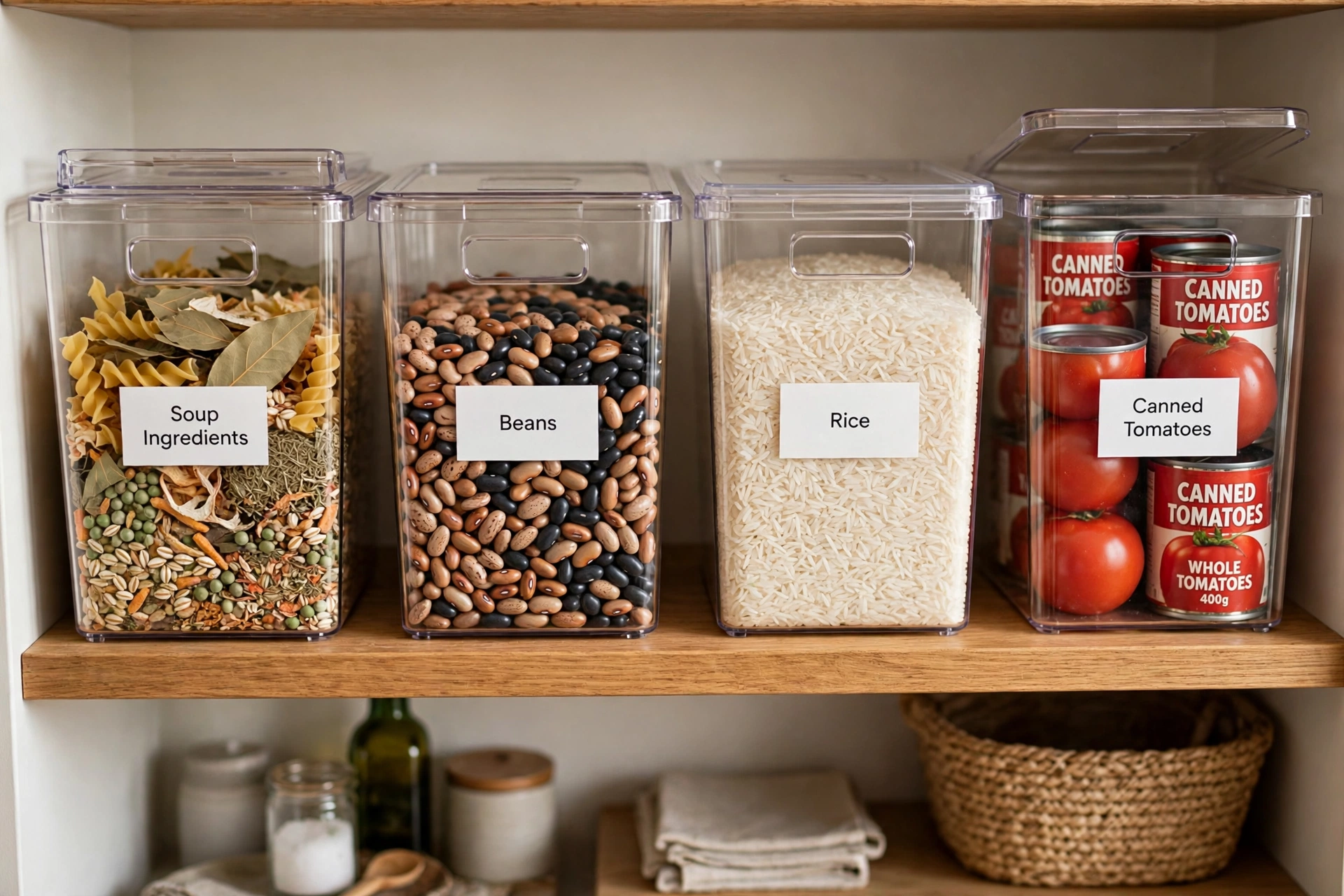
Winter cooking leans on a few repeat meals: soups, stews, pasta, baked goods, and warm breakfasts. Group your stock by how you cook, not by where it happened to land on the shelf. Soup ingredients storage works best when broth, canned tomatoes, beans, lentils, and dried herbs sit together, so you can grab the whole group at once.
Try these groups:
- Soups and stews: broth, canned tomatoes, beans, lentils, dried herbs, rice
- Baking: flour, sugar, cocoa, baking powder, yeast, vanilla, chocolate chips
- Breakfast: oats, cereal, pancake mix, honey, dried fruit, nuts
- Everyday cooking: pasta, canned goods, oils, vinegar, spices, salt
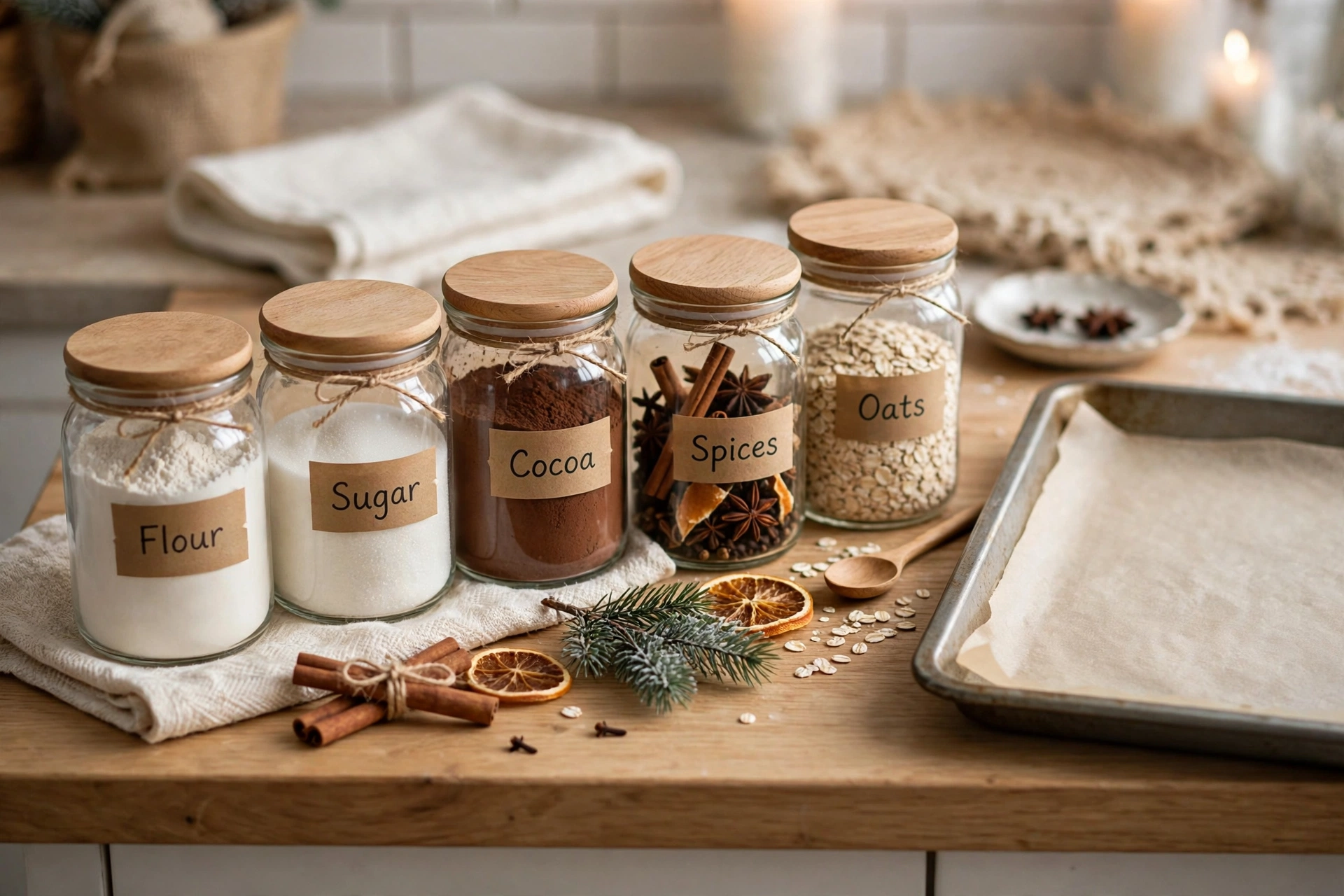
Canned goods organization is easier when cans face forward in one row, with the newest cans at the back. Dry goods storage works best in clear, airtight jars or bins, so you can see at a glance when flour or oats are running low. Bulk pantry bins help here too, especially for rice, oats, and sugar, because one bin replaces three half-open bags that spill and go stale.
Pantry labels make the whole system work in a busy house. Label each bin and jar with the food name and, if it helps, the date you opened it. Other people in the house can then put groceries away in the right spot without asking, and you can spot an empty bin before you start cooking.
Set Up Zones for Soups, Baking, and Breakfast
A zone is just a shelf area with one job. Give soup ingredients the shelf at eye level if you make soup often, so you are not reaching to the top shelf on a cold night. Keep winter baking supplies together on a lower shelf or in one large bin you can pull out, set on the counter, and put back when you are done. That one move turns baking from a search into a simple routine.
Small kitchen storage needs this kind of thinking most. If your pantry is one deep cabinet, put everyday items at the front and baking or backup stock at the back. Use a small turntable for oils and spices, and a narrow bin for packets like soup mix, gravy, and hot chocolate. Cozy winter cooking feels much easier when the ingredients for one meal sit together, rather than spread across three shelves.
Our holiday kitchen organization ideas post covers the same zone idea for big holiday meals, but winter zones are for everyday use. Good winter pantry organization ideas keep soup night simple, because the whole meal group is in one spot when you need it. You do not need a perfect pantry. You need zones you can keep up with on a normal weeknight, when you are tired and hungry and just want dinner to come together fast.
Rotate Stock and Check Dates Once a Month
Food rotation is the habit that saves money in winter. Put new cans and bags behind older ones, so the oldest food gets used first. This is easy to forget when you buy in bulk, and it is why a pantry can look full while good food hides at the back and goes stale.
Pick one day a month, such as the first Saturday, to check dates and wipe one shelf. Toss anything past its best date, move soon-to-expire items to the front, and add them to that week’s meal plan. A soup made from a can that expires next month is a win, not a chore. For storage times and safety guidance, see the USDA Shelf-Stable Food Safety guide, so readers can check how long pantry staples keep.
This monthly check also keeps your shopping list honest. If you still have three bags of rice, you do not need a fourth, even if it is on sale. That is how winter pantry organization ideas protect both your budget and your shelf space. Our holiday budget organization ideas post uses the same check-first habit for holiday spending, and it works just as well for food.
Keep a Simple Winter Layout You Can Maintain
A good winter pantry layout has room to breathe, and that breathing room is part of what makes winter pantry organization ideas last past January. Leave a little empty space on each shelf, so you can put groceries away without shoving. If a shelf is packed tight, it will fall apart the first time someone is in a rush. Empty space is not wasted space. It is what keeps the system working.
Use this simple layout as a starting point:
| Zone | Where it goes | What lives there |
|---|---|---|
| Soups and stews | Eye-level shelf | Broth, canned tomatoes, beans, lentils, herbs |
| Baking | Lower shelf or pull-out bin | Flour, sugar, cocoa, spices, chocolate chips |
| Breakfast | Top or side shelf | Oats, cereal, pancake mix, honey, dried fruit |
| Everyday cooking | Front of each shelf | Pasta, oils, vinegar, canned goods, salt |
If you share the kitchen, tell everyone the zones once, and keep the labels clear. A system only works if the people who use it can follow it without thinking hard. And if a zone stops working, change it. Move baking up if you bake more than you expected, or move soup stock down if you reach for it less. Winter pantry organization ideas should fit your winter, not a photo of someone else’s kitchen.
A Winter Pantry That Works on Busy Nights
The real test of a pantry is not how it looks on setup day. It is how it works on a cold Tuesday when you get home late. Can you find broth, tomatoes, and beans without moving ten other things? Can you see that you are out of oats before breakfast? Can you bake without hunting for baking powder? If the answer is yes, your pantry is doing its job.
Start small if you need to. Clear one shelf, label three bins, and write your winter list. That is how winter pantry organization ideas turn into a habit, rather than a one-week project that falls apart. Then add zones one at a time over the next week. A tidy winter pantry will not cook dinner for you, but it will make dinner faster, cheaper, and far less stressful all season long.
FAQ
How much should I stock in a winter pantry?
Stock foods your family actually eats for soups, stews, pasta, baking, and warm breakfasts: oats, rice, pasta, canned tomatoes, beans, broth, flour, sugar, cocoa, spices, and tea. Keep the list short and check it before you shop, so you buy what you will use.
How do I organize a small winter pantry?
Group food by how you cook: soups together, baking together, breakfast together. Use clear bins, face cans forward, label every jar, and put everyday items at the front. Leave a little empty space on each shelf so the system stays easy to maintain.
How often should I check pantry food dates?
Check dates once a month. Move soon-to-expire items to the front, use them in that week’s meals, and put new stock behind older stock. This simple rotation keeps food fresh and stops good staples from hiding at the back of a shelf.
How can I keep baking supplies tidy in winter?
Keep all baking supplies in one pull-out bin or on one shelf: flour, sugar, cocoa, baking powder, spices, and chocolate chips in labeled, airtight jars. Pull the bin out to bake, then put it back as one unit, so nothing drifts across the pantry.
Try One Shelf This Weekend
Winter pantry organization ideas work best when you start with one shelf, not a whole-kitchen overhaul. Pick the shelf you use most, sort it, label it, and cook one cozy meal from it this week. Once that shelf feels easy, the rest of the pantry will follow, one calm zone at a time.