
Fall budget organization ideas work best when they fit real life, not a strict plan you quit after a week. If autumn always feels expensive — school costs, warmer clothes, holiday gifts creeping in — you are not alone. The season brings a lot of spending at once, and it is easy to lose track of where the money went.
The good news is that a little planning now can make the whole season feel calmer. With these fall budget organization ideas, you can set clear limits, plan for gifts early, and still enjoy cozy autumn days. No guilt trips, no spreadsheets that take hours — just a simple system you can actually keep.
Why Fall Is the Perfect Time to Reset Your Money
Fall sits right between summer spending and holiday spending, which makes it a natural checkpoint. Routines settle down, bills shift as the weather cools, and you still have time to fix problems before December.
A quick money reset now also helps you spot leaks early. Maybe takeout has crept up, or streaming subscriptions you forgot about are still charging. Catching those in October leaves you room to save for gifts, travel, or just a calmer end to the year.
Step 1: Build a Simple Autumn Spending Plan in One Evening
Your autumn spending plan does not need to be fancy. Grab a notebook or a free budget app, look at last month’s bank statement, and sort spending into a few plain groups. Then set a soft limit for each one for the next month.
- Housing and utility bills: rent or mortgage, heat, lights, water, and internet.
- Food: groceries, school lunches, and takeout.
- Transport: gas, bus fare, or car upkeep.
- Autumn extras: coats, boots, school supplies, and fall activities.
- Gifts and holidays: a separate pot you build up slowly (see Step 3).
Give each group a number you can live with, not a perfect number. If takeout is your joy in a busy week, keep some room for it and trim somewhere that hurts less. A plan you enjoy is a plan you will keep, and that is the heart of good fall budget organization ideas.
Step 2: Try Envelope Budgeting for the Tricky Categories
Envelope budgeting is simple: you set cash aside for one category, and when the envelope is empty, spending in that group stops until next month. It works well for groceries, eating out, and fun money — the areas where cards make it too easy to overspend.
You can use real cash envelopes, or separate pots in a banking app if you prefer digital. Label each one clearly, and check the balance before you shop. Many people find that just seeing the cash left changes how they shop, without any strict rules.
Step 3: Start Your Gift Budget Before the Shops Get Busy
A gift budget is where fall planning really pays off. Make a list of everyone you plan to buy for, set a rough amount per person, and add it all up. That total is your holiday target — and now you have weeks, not days, to reach it.
Use a holiday budget tracker to keep it simple: one page with names, ideas, amounts, and what you have already bought. Check it when you see a sale, so you do not buy twice or blow the limit on one big gift. Buying a few gifts in October and November also spreads the cost, so December feels much lighter.
Step 4: Set Up Sinking Funds for the Costs You Know Are Coming
Sinking funds are small pots of money you build up for costs you can see coming. Car repairs, holiday travel, new tires, or a winter coat for a growing kid — none of these should be a shock if you save a little each week.
Pick two or three sinking funds to start. Even $10 or $20 a week adds up by December, and it turns a stressful bill into a planned one. Put the money in a separate account or envelope so it does not get mixed in with everyday spending.
Step 5: Tame the Grocery Budget With a Pantry Stock-Up
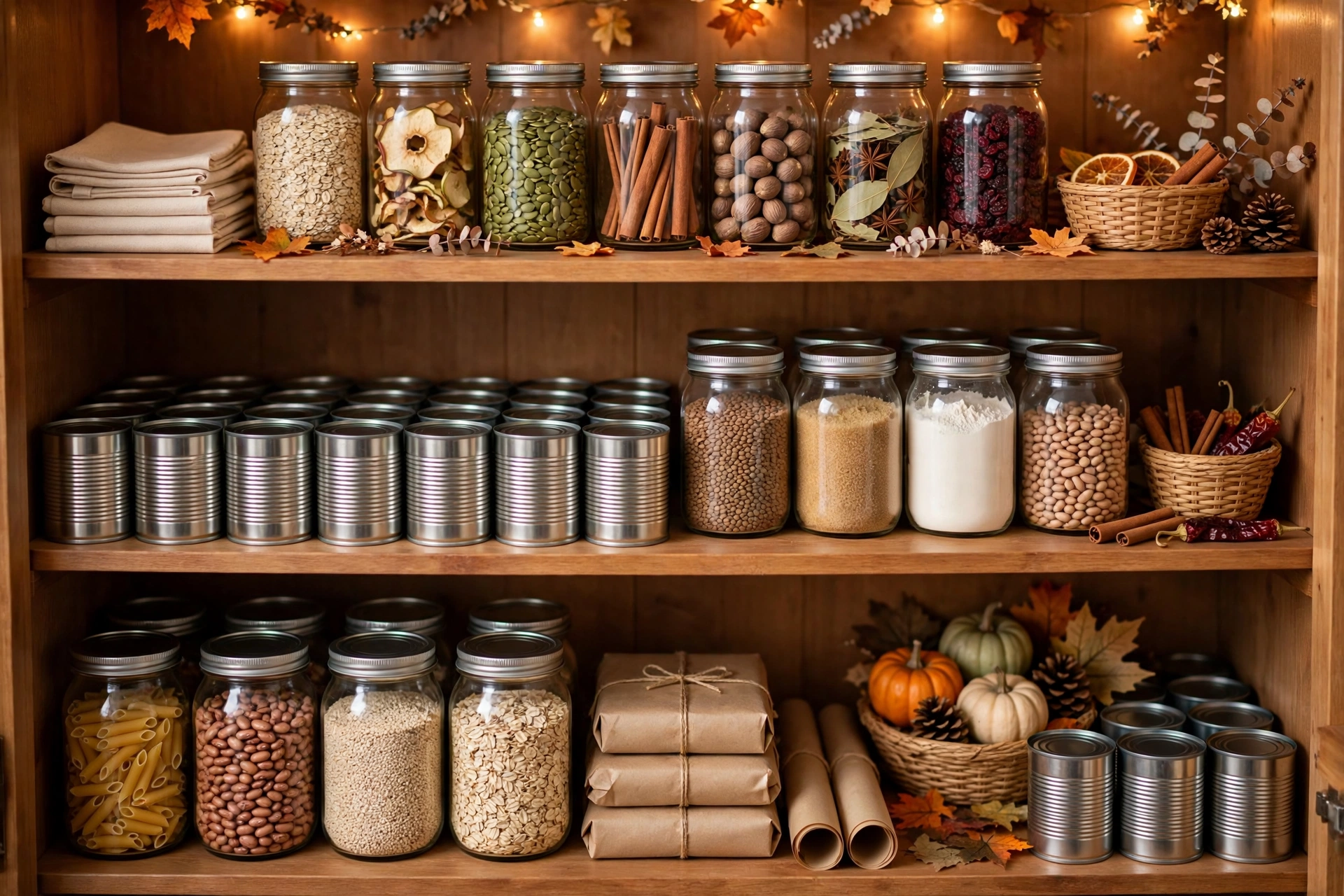
Food is one of the easiest places to save in fall. A pantry stock-up means buying staples when they are on sale — rice, pasta, canned tomatoes, oats, and baking basics — so weeknight meals cost less later. Check what you already have first, so you do not buy duplicates.
Plan three or four simple meals for the week, shop from a list, and keep a few freezer meals ready for busy nights. That one habit can cut takeout spending fast, and it makes the grocery budget much easier to predict.
A Simple Fall Budget at a Glance
These fall budget organization ideas work best as a set: each part covers a different kind of spending, so nothing big slips through.
| Category | What to plan for | Easy first step |
|---|---|---|
| Housing and utility bills | Heating costs as nights get cold | Check your last winter bill and save a little extra |
| Grocery budget | Weekly food and pantry staples | Shop from a list and stock up on sale items |
| Gift budget | Holiday gifts and cards | List names and amounts early, buy a few each month |
| Sinking funds | Car, travel, and winter clothes | Save a small fixed amount every week |
| Savings goals | Emergency fund or a January buffer | Move money to savings on payday, before spending |

Your Weekly Money Routine (15 Minutes, Once a Week)
A seasonal budget planner only helps if you check it, and the same goes for fall budget organization ideas in general. Set aside 15 minutes once a week — Sunday evening works well for most people — and run through a short routine.
- Check your bank balance and this week’s spending.
- Update your holiday budget tracker with any gifts bought.
- Move your sinking funds money to its separate pot.
- Plan next week’s meals and grocery list.
- Note one win from the week, even a small one.
That weekly check keeps small slips from turning into big ones. It also helps with debt payoff: if you have a card balance, put any leftover money toward it each week, even a small amount. Steady progress beats a perfect plan you never look at.
Fall Budget Checklist
Use this quick checklist to turn these fall budget organization ideas into action this week:
- Write your autumn spending plan in one evening.
- Set a gift budget and start your holiday budget tracker.
- Pick two sinking funds and set up weekly savings.
- Try envelope budgeting for groceries or eating out.
- Do a pantry stock-up check before your next shop.
- Review utility bills and plan for colder months.
- Set one savings goal for January, so the new year starts calm.
FAQ
How do I start a fall budget if I have never budgeted before?
Start with one evening and last month’s bank statement. Sort spending into five or six groups, set a soft limit for each, and track just those groups for a month. You do not need a perfect system — a notebook and a weekly check are enough to begin.
How much should I budget for holiday gifts?
Add up a rough amount per person on your list, then divide that total by the weeks left before the holidays. That weekly amount is your gift savings target. If the total feels too high, trim the per-person amounts early, while you still have time.
What are sinking funds, and do I really need them?
Sinking funds are small savings pots for costs you know are coming, like car repairs or holiday travel. They turn surprise bills into planned ones. Start with just two funds and a small weekly amount — even a little saved ahead makes a big difference.
How can I cut my grocery budget in fall?
Shop from a list, plan a few simple meals each week, and stock up on pantry staples when they are on sale. Keep freezer meals ready for busy nights so takeout does not take over. Small changes like these add up over a whole season.
Small Steps, Calmer Autumn
You do not need to fix your whole money life in one weekend. Pick one step from this list — maybe the gift budget, or one sinking fund — and start there. With steady fall budget organization ideas, a short weekly check, and a plan that leaves room for real life, autumn spending feels much more under control. Which step will you try first?