
Small kids room organization ideas work best when the room is set up for the child who lives in it, not just for the adult who cleans it. If toys live in high cupboards, clothes hang out of reach, and every bin is a mystery box, tidying becomes a chore that only a parent can do. Flip that around — low, labeled, and visible — and a small kids room practically tidies itself. Mornings get faster, too, because school clothes, shoes, and backpacks all have one obvious home. The ideas below are built for small rooms, shared rooms, and tight budgets. Nothing here needs a renovation. Start with one zone, keep only what your child actually uses, and let the systems below do the heavy lifting.
1. Start with zones, not containers
Before buying a single bin, divide the room into zones: sleep, play, clothes, and schoolwork or reading. A zone can be as simple as one corner with a rug for play and one shelf for books. Zones stop toys from spreading across the whole room, because everything has a place to return to. In a shared room, give each child one zone of their own — even a single shelf and a labeled bin each — and arguments over space drop fast.
2. Use low, open bins for toys
Kids put toys away when they can see them and reach them. Open bins on a low shelf beat lidded boxes stacked in a closet every time. Sort toys by type — blocks, dolls, cars, art supplies — and put one kind in each bin. Keep the number of bins small: if a bin is overflowing, something inside needs to go. Rotate toys every few weeks by storing half in a closet and swapping them in; the room stays tidy, and old toys feel new again.
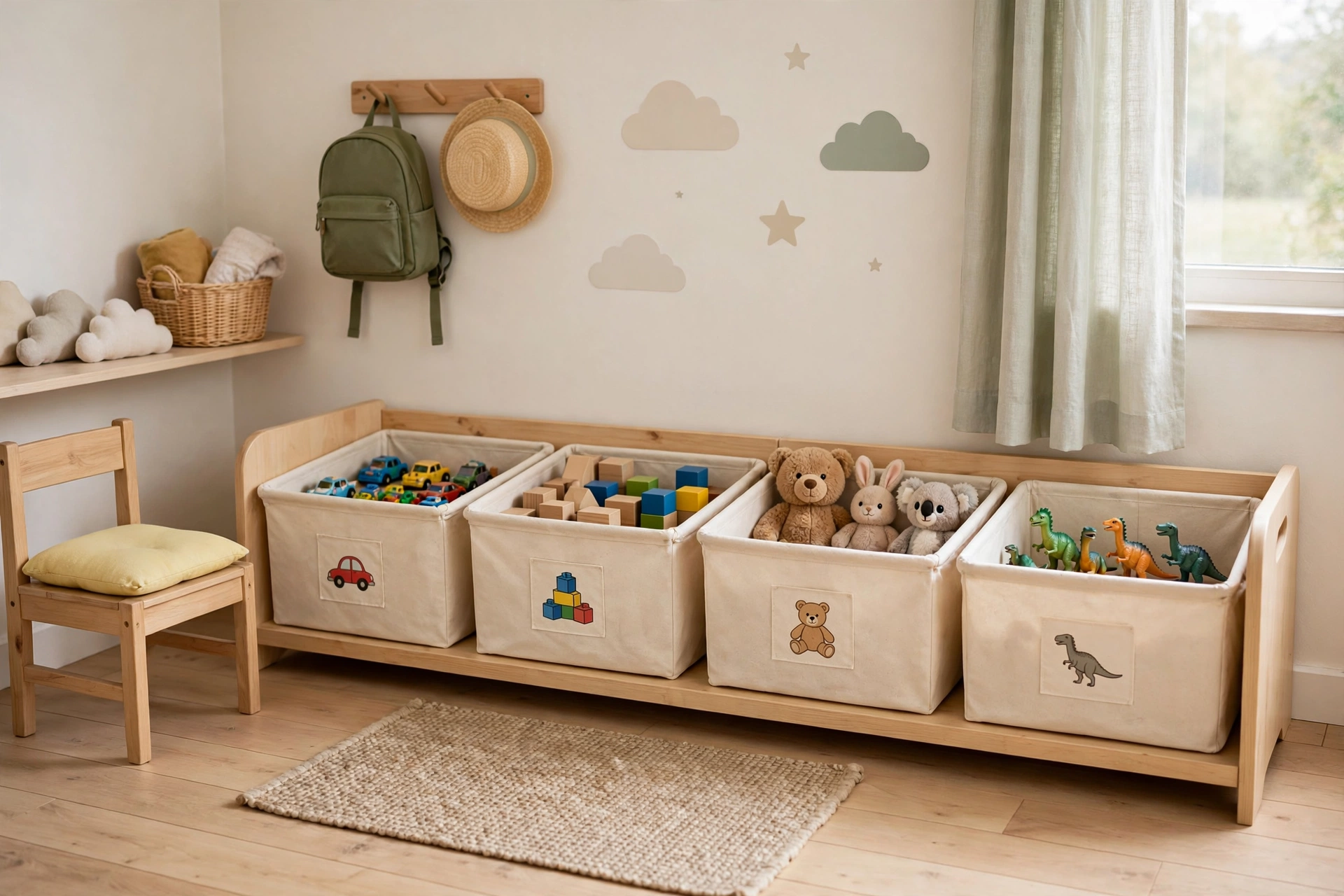
3. Label everything with pictures and words
Labels are what make a system stick, especially for children who cannot read yet. Use a picture of the toy type plus the word underneath, so kids can match items to bins on their own. Label the dresser drawers too — shirts, pants, pajamas — so getting dressed does not turn into a drawer-emptying event. When everything is labeled, anyone can help tidy, including grandparents, babysitters, and the kids themselves.
4. Make mornings easy with a launch station
Mornings fall apart when shoes, bags, and jackets live in five different places. Set up a small launch station by the door or in the kids room: one hook per child, one basket for shoes, and one spot for the school bag. Pack the bag the night before and hang tomorrow’s outfit on the hook. This five-minute evening habit is the single biggest morning-saver in a small kids room, and it works even better when the rest of the room is already organized.
5. Keep clothes small and seasonal
A small kids room cannot hold three seasons of clothes at once. Keep only the current season in the room, in easy reach, and store outgrown or off-season clothes in a labeled box elsewhere. A simple rule helps: when something new comes in, one old item goes out. Fewer clothes means faster outfit choices, less laundry piling up, and drawers that actually close.
6. Build a cozy reading and homework corner
Every kids room needs one calm corner. A small bookshelf facing forward so covers are visible, a cushion or small chair, and a basket for current books is enough. Add a tiny desk or lap tray for homework if space allows, with pencils and paper in one cup. When reading and schoolwork have their own corner, they stop migrating to the bed and the floor, and the rest of the room stays calmer.
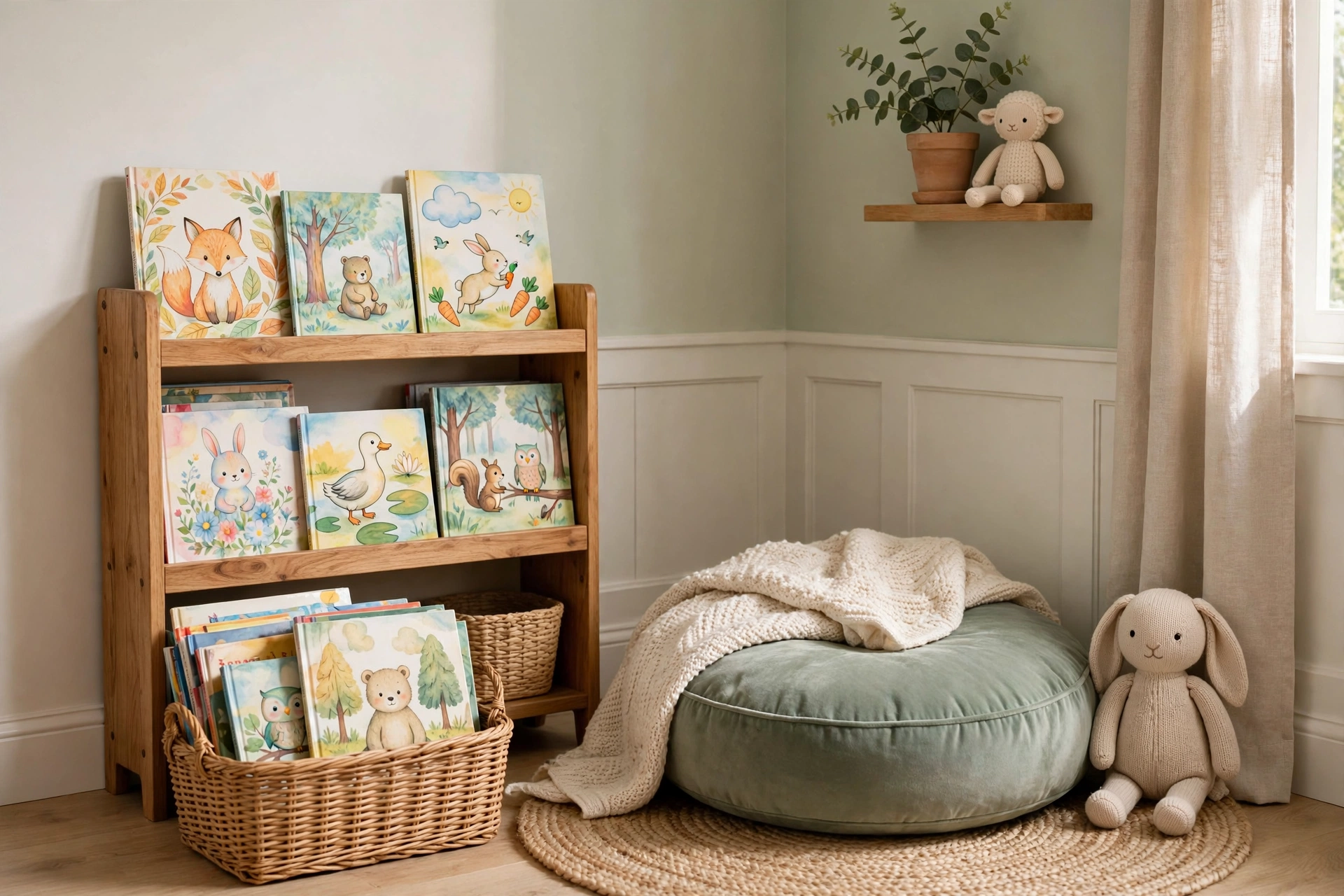
7. Use the walls and the back of the door
Small rooms need vertical storage. Wall shelves for books and soft toys, hooks on the back of the door for bags and dress-up clothes, and a hanging pocket organizer for small items all free up floor space. Keep wall storage at child height where possible, so kids can reach what they use daily and put it back without help. Save the high shelves for items adults control, like craft supplies that need supervision.
8. End the day with a 5-minute tidy routine
No system survives without a daily reset. Make tidying a game, not a punishment: set a timer for five minutes, play a song, and race to return everything to its zone before the music ends. Do it at the same time every day, ideally before bath time, so it becomes a habit rather than a negotiation. A room that gets a five-minute reset every evening never needs a weekend-long cleanout.
Checklist
- Zones for sleep, play, clothes, and reading
- Low, open bins sorted by toy type, with picture labels
- A launch station: hook, shoe basket, and school bag spot
- Only current-season clothes in the room
- A reading corner with forward-facing books
- Wall hooks and shelves for vertical storage
- A 5-minute tidy routine every evening
Start with the toy bins and the launch station this weekend. Those two changes alone make the biggest difference, and once kids see that tidying is quick and easy, they start doing it without being asked.
FAQ
How do I organize a very small kids room?
Use zones, vertical storage, and fewer items. Low open bins, wall hooks, and a hanging door organizer free up floor space, and rotating toys keeps the room from overflowing. Keep only current-season clothes and current favorites in the room.
What is the best way to store kids toys in a small room?
Sort toys by type into low, open bins with picture labels, and rotate half the toys out of the room every few weeks. Open bins work better than lidded boxes because kids can see and reach everything, so they can tidy up on their own.
How can I get my child to keep their room tidy?
Make tidying easy and short: everything labeled, everything within reach, and a five-minute timer routine at the same time each day. Praise the effort, keep the routine fun with music, and keep the system simple enough that a child can do it alone.
How often should I declutter a kids room?
Do a quick declutter every season, and a bigger one whenever a bin overflows or a new batch of toys arrives. Use the one-in, one-out rule, and let kids help choose what to pass on — they are far more willing to part with toys they picked themselves.